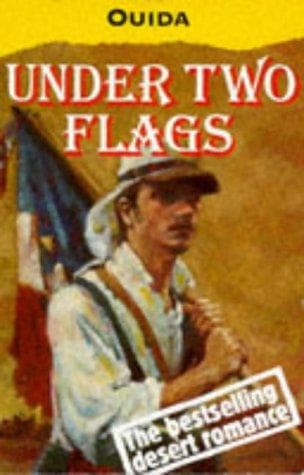
Algeria -- Fiction; British -- Algeria -- Fiction; France. Armée. Légion étrangère -- Fiction; Love stories
“What could bring a man of that talent, with that address, into the
ranks?” she mused. “Persons of good family, of once fine position, come
here, they say, and live and die unrecognized under the Imperial flag.
It is usually some dishonor that drives them out of their own worlds;
it may be so with him. Yet he does not look like one whom shame has
touched; he is proud still--prouder than he knows. More likely it is the
old, old story--a high name and a narrow fortune--the ruin of thousands!
He is French, I suppose; a French aristocrat who has played au roi
depouille, most probably, and buried himself and his history forever
beneath those two names that tell one nothing--Louis Victor. Well, it
is no matter of mine. Very possibly he is a mere adventurer with a good
manner. This army here is a pot-pourri, they say, of all the varied
scoundrelisms of Europe!”
She left the chess-table and went onward to the dressing and bath and
bed chambers, which opened in one suite from her boudoir, and resigned
herself to the hands of her attendants for her dinner toilet.
The Moslem had said aright of her beauty; and now, as her splendid hair
was unloosened and gathered up afresh with a crescent-shaped comb of
gold that was not brighter than the tresses themselves, the brilliant,
haughty, thoughtful face was of a truth, as he had said, the fairest
that had ever come from the Frankish shores to the hot African
sea-board. Many beside the old Moslem had thought it “the fairest that
e'er the sun shone on,” and held one grave, lustrous glance of the blue
imperial eyes above aught else on earth. Many had loved her--all without
return. Yet, although only twenty years had passed over her proud head,
the Princesse Corona d'Amague had been wedded and been widowed.
Wedded, with no other sentiment than that of a certain pity and a
certain honor for the man whose noble Spanish name she took. Widowed,
by a death that was the seal of her marriage sacrament, and left her his
wife only in name and law.
The marriage had left no chain upon her; it had only made her mistress
of wide wealth, of that villa on the Sicilian Sea, of that light,
spacious palace-dwelling in Paris that bore her name, of that vast
majestic old castle throned on brown Estremaduran crags, and looking
down on mighty woods of cork and chestnut, and flashing streams of
falling water hurling through the gorges. The death had left no
regret upon her; it only gave her for a while a graver shadow over the
brilliancy of her youth and of her beauty, and gave her for always--or
for so long, at least, as she chose to use it--a plea for that
indifference to men's worship of her which their sex called
heartlessness; which her own sex thought an ultra-refined coquetry; and
which was, in real truth, neither the one nor the other, but simply the
negligence of a woman very difficult to touch, and, as it had seemed,
impossible to charm.
Public-domain text, read in full here on John Shaqi.
Reviews
Reviews
No reviews yet
Be the first to share your thoughts on this work.
Elsewhere in the archive
Join the Discussion
Join the discussion
Sign in to leave a comment or review.
Sign InorCreate an account