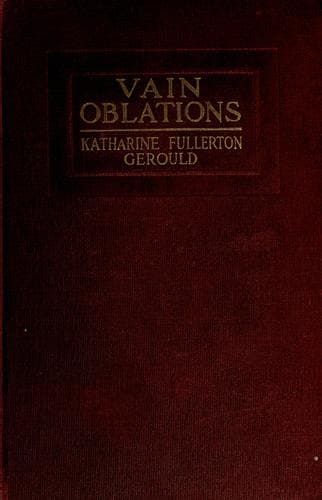
American fiction -- 20th century; Short stories, American
“He must have been a bit of a coward. If he wanted so desperately to
collect those filthy facts, why didn’t he collect them?”
“Bad luck--nothing else. He went as far as he could. But he was no
seasoned traveller, you know. He just came to grief, as any man might,
there in the wilderness. The stars in their courses--and so forth. He
didn’t get so far west as he had meant to. Men went back on him, maps
turned out incorrect, supplies failed awkwardly, everything happened
that can happen. Then his interpreter died--his one absolutely
trustworthy man--and the whole game was up. He lost his head; he
believed his eyes; he believed lying natives. They made game of him, I
dare say, in some grim, neolithic way. They said anything and everything
about marriage customs--quite different things from group to group. He
had bad luck with his own men--half a dozen of them died of dysentery or
something--and he had to recruit on the spot. Why on earth should they
tell him the truth? It was more fun not to. And, of course, now and then
he pushed into some corner where the only use they had for him was to
eat him. From those places he had to withdraw speedily. It’s not an
anthropologist’s business to get killed unless he can be sure of
getting his note-books home. He’s more like a spy, apparently, than a
soldier.
“After eight or ten beastly months, despair was reeking round him like a
mist. I think he said that, himself. His mind tried to peer out through
it. He got nothing but a jumble of reports from those aborigines. Time
after time they’d promise to let him in on some rite, and then their
faces would be shamelessly blank when he kept his appointment. They said
nothing that wasn’t carefully contradicted. Certain things he did get
hold of, of course. Paramore swore to me that a good bit of his book was
true as truth--but not enough to prove anything, to found theories on.
About three of the note-books were genuine, but they made nothing
coherent, he said. He put everything down, always intending to check and
sift later.”
I may have looked a little bored, for Hoyting suddenly interrupted his
narrative. “I’m telling you all this,” he said, “because it’s essential
that you should know everything you can know about it. The thing’s going
to be in your hands, and the more information you have the better. I’m
not dragging you through this biography because I think it’s beautiful.
I can see you loathe it all. Well ... if only you stay-at-home people
would realize how much luck counts! You don’t dream of the mad dance of
incalculable forces. What you really hate Paramore for is his having
luck against him.”
“No,” I protested stiffly; “for lying.”
Public-domain text, read in full here on John Shaqi.
Reviews
Reviews
No reviews yet
Be the first to share your thoughts on this work.
Elsewhere in the archive
Join the Discussion
Join the discussion
Sign in to leave a comment or review.
Sign InorCreate an account