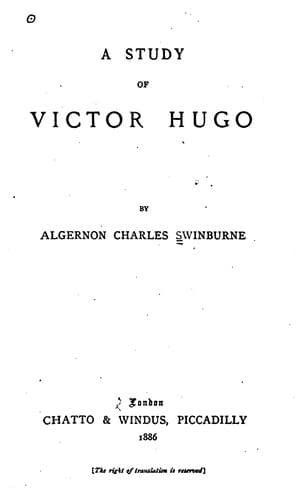
Hugo, Victor, 1802-1885 -- Criticism and interpretation
This poem, which so many hearts must have treasured among their choicest
memories for now so many years, has found at length its fellow in the
final volume of the book. There is even more savor of the sea in the
great lyric landscape called _Les paysans au bord de la mer_ than in the
idyllic interior called _Les pauvres gens._ There we felt the sea-wind
and saw the sea-mist through the chinks of door and window; but here we
feel all the sweep of the west wind's wings, and see all the rush of
rain along the stormy shore that the flock of leaping waves has whitened
with the shreddings of their fleece. We remember in _Les Voix
Intérieures_ the all but matchless music of the song of the sea-wind's
trumpet, and in the notes of this new tune we find at last that music
matched and deepened and prolonged. In the great lyric book which gives
us the third of the four blasts blown from _Les Quatre Vents de
l'Esprit_, there are visions as august and melodies as austere as this;
but outside the vast pale of the master's work we should look for the
likeness of such songs in vain. The key of all its tenderness if not of
all its terror is struck in these two first verses.
Les pauvres gens de la côte,
L'hiver, quand la mer est haute
Et qu'il fait nuit,
Viennent où finit la terre
Voir les flots pleins de mystère
Et pleins de bruit.
Ils sondent la mer sans bornes;
Ils pensent aux écueils mornes
Et triomphants;
L'orpheline pâle et seule
Crie: ô mon père! et l'aïeule
Dit: mes enfants!
The verses which translate the landscape are as absolutely incomparable
in their line as those which render the emotion of the watchers. Witness
this:--
Et l'on se met en prières,
Pendant que joncs et bruyères
Et bois touffus,
Vents sans borne et flots sans nombre,
Jettent dans toute cette ombre
Des cris confus.
Here, as usual, it is the more tragic aspect of the waters that would
appear to have most deeply impressed the sense or appealed to the spirit
of Victor Hugo. He seems to regard the sea with yet more of awe than of
love, as he may be said to regard the earth with even more of love than
of awe. He has put no song of such sweet and profound exultation, such
kind and triumphant motherhood, into the speaking spirit of the sea as
into the voice of the embodied earth. He has heard in the waves no word
so bountiful and benignant as the message of such verses as these:--
La terre est calme auprès de l'océan grondeur;
La terre est belle; elle a la divine pudeur
De se cacher sous les feuillages;
Le printemps son amant vient en mai la baiser;
Elle envoie au tonnerre altier pour l'apaiser
La fumée humble des villages.
Ne frappe pas, tonnerre. Ils sons petits, ceux-ci.
La terre est bonne; elle est grave et sévère aussi;
Les roses sont pures comme elle;
Quiconque pense, espère et travaille lui plaît;
Et l'innocence offerte à tout homme est son lait,
Et la justice est sa mamelle.
Public-domain text, read in full here on John Shaqi.
Reviews
Reviews
No reviews yet
Be the first to share your thoughts on this work.
Elsewhere in the archive
Join the Discussion
Join the discussion
Sign in to leave a comment or review.
Sign InorCreate an account