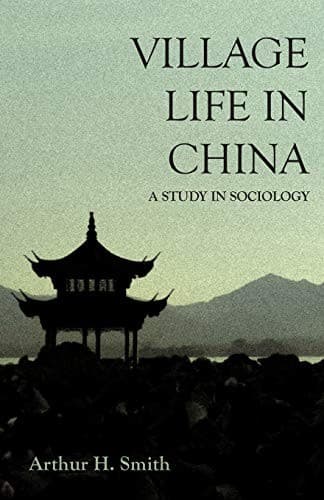
Village Life in China: A Study in SociologySmith, Arthur H.
General
Village Life in China: A Study in Sociology
Smith, Arthur H.
China -- Social life and customs; Villages
Whoever takes even a superficial view of the Chinese in their towns,
cities and villages during the period from the first day of the first moon
to the fifteenth of the same, will be struck with the display of new and
bright-coloured garments. Every article of apparel, both of the men and of
the women, and still more of the children, may be of any or all the colors
of the rainbow. The Chinese do not seem to us to be conspicuous for what
we call good taste, but rather at times to emulate the vagaries of the
African savages, and never more so than at this time of holiday show.
Combinations of colour which would cause Western ladies to shrug their
shoulders, and to shiver with horror, appear to recommend themselves to
the Chinese taste as the correct thing, and as good form. Bright green and
blue, accompanied by deep scarlet, purple, lilac or orange, do not seem to
"kill each other," as our modistes would shudderingly affirm, but they
convey such evident and such universal pleasure to wearers and spectators
alike, that it becomes plain to the most prejudiced foreigner, that here,
at least, his standards do not apply. In consideration of the stress which
the Chinese lay upon this feature of their great anniversary, we should be
justified in assuming fine clothes as a main characteristic of the
occasion.
RELIGIOUS RITES
The very first aspect in which Chinese New Year presents itself, no matter
in what part of the world we happen to meet it, is that of noise. All
night long, there is a bang! bang! bang! of firecrackers large and small,
which, like other calamities, "come, not single spies, but in battalions."
The root of all this is undoubtedly connected with religion, as in other
similar performances all over the world. But though the explosion of
gunpowder is the most prominent, it is far from being the most important
act of New Year worship. There is the despatch of the last year's
kitchen-god, generally on the twenty-third of the twelfth moon, and the
installation of his successor at the close of the year. On the last
evening of the year, there is the family gathering either at the ancestral
temple, or should there not be one, in the dwelling-house, for the worship
of the tablets of the past few generations of ancestors. In some parts of
China ancestral tablets are comparatively rare among the farming and
working people, and the place of them as regards the practical worship at
New Year's eve, is taken by a large scroll, containing a portion of the
family genealogy, which is hung up, and honoured with prostrations and the
burning of incense. On the morning of the second day of the new first
moon, perhaps at other times also, all the males of a suitable age go to
the family or clan graveyard, and there make the customary offerings to
the spirits of the departed. There has been considerable controversy among
foreigners expert in Chinese affairs as to the true value of these various
Public-domain text, read in full here on John Shaqi.
Reviews
Reviews
No reviews yet
Be the first to share your thoughts on this work.
Elsewhere in the archive
Join the Discussion
Join the discussion
Sign in to leave a comment or review.
Sign InorCreate an account