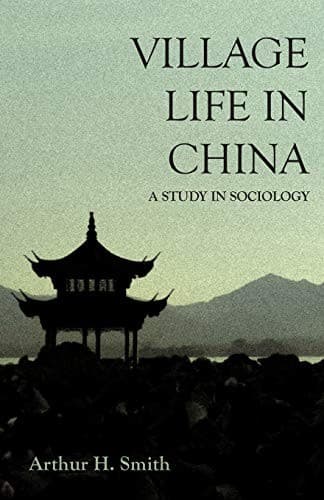
Village Life in China: A Study in SociologySmith, Arthur H.
General
Village Life in China: A Study in Sociology
Smith, Arthur H.
China -- Social life and customs; Villages
Much has already been done by those who have had most opportunity to learn
the facts, toward exhibiting the real practice of the Chinese in the
matter of destroying female infants. Yet no more can be safely predicated
than that this is a crime which to some extent everywhere prevails, and in
some places to such a degree as seriously to affect the proportion of the
sexes. It seems to be most common in the maritime provinces of the
southern part of China, in some districts of which it is by the Chinese
themselves regarded as a terrible and a threatening evil. Native tract
societies publish books exhorting the people against the practice, and
magistrates occasionally issue proclamations forbidding it, but it is
evident that the nature of the offence is such that no laws can touch it,
and nothing short of the elevation of the mothers themselves to a far
higher point of view than they now occupy, can have any permanent effect
upon Chinese female infanticide.
Next to the destruction of the lives of female infants, the Chinese
practice most revolting to our Western ideas is the sale of their
daughters, at all periods from infancy up to a marriageable age. The
usages of different parts of the empire vary widely, but the sale of
girls, like infanticide, seems to flourish most in the maritime provinces
of the south, where it is conducted as openly as any other traffic. That
the parents are generally impelled to this extreme step simply by the
pressure of poverty we are quite ready to believe. Yet the knowledge that
the girl must be separated from her family at a later period, and that
this parting is irrevocable, must tend to reconcile many Chinese parents
to an anticipation, by a few years, of the inevitable. Of the miseries
which girls who have been thus sold are likely to endure, it is
unnecessary to speak in detail, but enough is known on the subject to lead
us to regard the practice with horror. If the parents do not feel able to
keep their daughter until she is old enough to be married, and yet do not
wish to sell her, Chinese custom has invented another expedient, which is
a compromise between the two. This is the well-known "rearing-marriage,"
by which the girl is made over to the family into which she is to be
married, and is by that family brought up, and married whenever their
convenience dictates. There are manifest and grave objections to this
practice, but there can be no doubt that it is far better than the custom
of child marriages, which lead to so much wretchedness in India. In some
instances the relations with the family of the girl are wholly broken off,
when she is taken for a "rearing-marriage," and in all cases it is
regarded as a confession of poverty and weakness, which places the girl's
family at much more than their usual disadvantage, at best sufficiently
great. When a girl is brought up in the family the son of which is to
become her future husband, it is of course wholly out of the question that
Public-domain text, read in full here on John Shaqi.
Reviews
Reviews
No reviews yet
Be the first to share your thoughts on this work.
Elsewhere in the archive
Join the Discussion
Join the discussion
Sign in to leave a comment or review.
Sign InorCreate an account