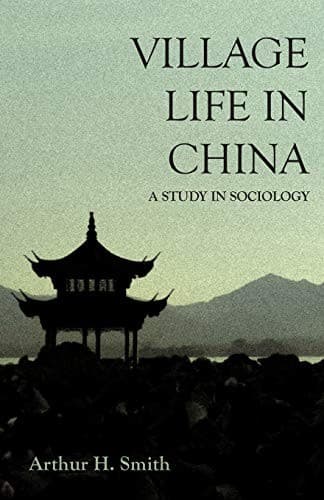
Village Life in China: A Study in SociologySmith, Arthur H.
General
Village Life in China: A Study in Sociology
Smith, Arthur H.
China -- Social life and customs; Villages
The proposition to have a school is made by the parents of the children,
and when it is ascertained that a sufficient number of names can be
secured, these are entered on a red card, called a school list
(_kuan-tan_). This is generally prepared by the time of the winter
solstice (December 21st), though sometimes the matter is left in abeyance
until the very end of the year, some six weeks later. On the other hand,
in some regions, it is customary to have the school card ready by the 15th
of the eighth moon, some time in August or September. The choice of a
teacher, like many other things Chinese, is very much a matter of chance.
It seems to be rather uncommon that a scholar should teach in his own
village, though this does often happen. The reason generally given for
this is that it is inconvenient for the pupils to be too near an
ex-preceptor who may make demands upon them in later years. Sometimes the
same teacher is engaged for a long series of years, while in other places
there is an annual change.
Once the pupil's name has been regularly entered upon the school list, he
must pay the tuition agreed upon, whether he ever attends the school or
not, no matter what the reason for his absence.
Should serious illness prevent the teacher from beginning his duties at
all, the engagement is cancelled; but if he enters upon them, and is then
disabled, the full tuition is exacted from every scholar, just as if the
engagement had been completed.
The wish of the school patron is to get as much work as he can out of the
teacher for the money paid him. The endeavour of the teacher is to get as
much money as he can, and to do as little work as he must. For this reason
he is always glad to have the names added after the school list has been
made out, because that will increase his receipts. The patrons frequently
object to this, because they think their own children will be neglected,
and unless all the patrons consent the addition cannot be made. They also
dislike to have the teacher bring a son or a nephew with him, lest the
slender salary should be insufficient for the food of both. In that event
the master might abandon the school before the year is over, as sometimes
occurs, but such teachers find it difficult to secure another school the
following year.
The schoolhouse is an unoccupied room in a private house, an ancestral, or
other temple, or any other available place borrowed for the purpose.
Renting a place for a school seems to be almost or quite unknown. The
teacher does his own cooking, or if he is unequal to this task, he is
assisted by one of his pupils, perhaps his own son, whom he often brings
with him, albeit, as already mentioned, there is classical authority
against having a son taught by a father.
Public-domain text, read in full here on John Shaqi.
Reviews
Reviews
No reviews yet
Be the first to share your thoughts on this work.
Elsewhere in the archive
Join the Discussion
Join the discussion
Sign in to leave a comment or review.
Sign InorCreate an account