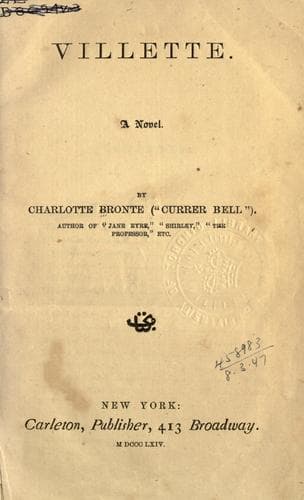
Autobiographical fiction; British -- Belgium -- Fiction; Brussels (Belgium) -- Fiction; Love stories; Women teachers -- Fiction
These struggles with the natural character, the strong native bent of
the heart, may seem futile and fruitless, but in the end they do good.
They tend, however slightly, to give the actions, the conduct, that
turn which Reason approves, and which Feeling, perhaps, too often
opposes: they certainly make a difference in the general tenour of a
life, and enable it to be better regulated, more equable, quieter on
the surface; and it is on the surface only the common gaze will fall.
As to what lies below, leave that with God. Man, your equal, weak as
you, and not fit to be your judge, may be shut out thence: take it to
your Maker—show Him the secrets of the spirit He gave—ask Him how you
are to bear the pains He has appointed—kneel in His presence, and pray
with faith for light in darkness, for strength in piteous weakness, for
patience in extreme need. Certainly, at some hour, though perhaps not
_your_ hour, the waiting waters will stir; in _some_ shape, though
perhaps not the shape you dreamed, which your heart loved, and for
which it bled, the healing herald will descend, the cripple and the
blind, and the dumb, and the possessed will be led to bathe. Herald,
come quickly! Thousands lie round the pool, weeping and despairing, to
see it, through slow years, stagnant. Long are the “times” of Heaven:
the orbits of angel messengers seem wide to mortal vision; they may
enring ages: the cycle of one departure and return may clasp unnumbered
generations; and dust, kindling to brief suffering life, and through
pain, passing back to dust, may meanwhile perish out of memory again,
and yet again. To how many maimed and mourning millions is the first
and sole angel visitant, him easterns call Azrael!
I tried to get up next morning, but while I was dressing, and at
intervals drinking cold water from the _carafe_ on my washstand, with
design to brace up that trembling weakness which made dressing so
difficult, in came Mrs. Bretton.
“Here is an absurdity!” was her morning accost. “Not so,” she added,
and dealing with me at once in her own brusque, energetic fashion—that
fashion which I used formerly to enjoy seeing applied to her son, and
by him vigorously resisted—in two minutes she consigned me captive to
the French bed.
“There you lie till afternoon,” said she. “My boy left orders before he
went out that such should be the case, and I can assure you my son is
master and must be obeyed. Presently you shall have breakfast.”
Public-domain text, read in full here on John Shaqi.
Reviews
Reviews
No reviews yet
Be the first to share your thoughts on this work.
Elsewhere in the archive
Join the Discussion
Join the discussion
Sign in to leave a comment or review.
Sign InorCreate an account