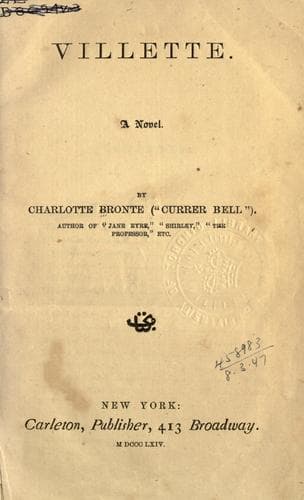
Autobiographical fiction; British -- Belgium -- Fiction; Brussels (Belgium) -- Fiction; Love stories; Women teachers -- Fiction
This little scene took place in the morning; I had to meet him again in
the evening, and then I saw I had done mischief. He was not made of
common clay, not put together out of vulgar materials; while the
outlines of his nature had been shaped with breadth and vigour, the
details embraced workmanship of almost feminine delicacy: finer, much
finer, than you could be prepared to meet with; than you could believe
inherent in him, even after years of acquaintance. Indeed, till some
over-sharp contact with his nerves had betrayed, by its effects, their
acute sensibility, this elaborate construction must be ignored; and the
more especially because the sympathetic faculty was not prominent in
him: to feel, and to seize quickly another’s feelings, are separate
properties; a few constructions possess both, some neither. Dr. John
had the one in exquisite perfection; and because I have admitted that
he was not endowed with the other in equal degree, the reader will
considerately refrain from passing to an extreme, and pronouncing him
_un_sympathizing, unfeeling: on the contrary, he was a kind, generous
man. Make your need known, his hand was open. Put your grief into
words, he turned no deaf ear. Expect refinements of perception,
miracles of intuition, and realize disappointment. This night, when Dr.
John entered the room, and met the evening lamp, I saw well and at one
glance his whole mechanism.
To one who had named him “slave,” and, on any point, banned him from
respect, he must now have peculiar feelings. That the epithet was well
applied, and the ban just, might be; he put forth no denial that it was
so: his mind even candidly revolved that unmanning possibility. He
sought in this accusation the cause of that ill-success which had got
so galling a hold on his mental peace: Amid the worry of a
self-condemnatory soliloquy, his demeanour seemed grave, perhaps cold,
both to me and his mother. And yet there was no bad feeling, no malice,
no rancour, no littleness in his countenance, beautiful with a man’s
best beauty, even in its depression. When I placed his chair at the
table, which I hastened to do, anticipating the servant, and when I
handed him his tea, which I did with trembling care, he said: “Thank
you, Lucy,” in as kindly a tone of his full pleasant voice as ever my
ear welcomed.
Public-domain text, read in full here on John Shaqi.
Reviews
Reviews
No reviews yet
Be the first to share your thoughts on this work.
Elsewhere in the archive
Join the Discussion
Join the discussion
Sign in to leave a comment or review.
Sign InorCreate an account