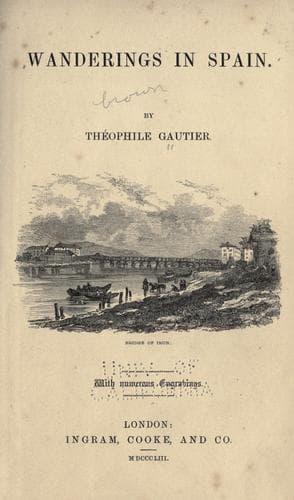
Gautier, Théophile, 1811-1872 -- Travel -- Spain; Spain -- Description and travel; Spain -- Social life and customs -- 19th century
The door by which we entered is formed of bronze, and bears the
following inscription: _Antonio Zurreno del arte de Oro y Plata,
faciebat esta media puerta_. The impression produced upon the mind
of the visitor is one of the most vivid and grandest description.
The church is divided into five naves; the middle one being of
the most unusual height, while the others beside it seem to bow
their heads and kneel down to denote their respect and adoration.
Eighty-eight pillars, each as large as a tower, and composed of
sixteen spindle-shaped columns bound together, sustain the weight
of this enormous edifice; a transept intersects the grand nave
between the choir and the high altar, and forms the arms of the
cross. The style of the entire building is most homogeneous and
perfect, a kind of merit possessed by but few Gothic cathedrals,
which have generally been erected piecemeal. The original plan has
been strictly carried out from beginning to end, with the exception
of a few arrangements in the chapels, which, however, do not in any
way mar the harmony of the whole. Painted windows, glittering with
the splendour of emeralds, sapphires, and rubies, and contained in
stone nervures worked like so much silversmith's work, let in a
mild and mysterious light which inspires you with deep religious
feelings; when the sun is too fierce, spartum blinds let down over
the windows diffuse throughout the building that cool half-state
of obscurity which renders Spanish churches so favourable for
meditation and prayer.
The high altar or _retablo_ alone might be mistaken for a church.
It is an enormous collection of small columns, niches, statues,
foliage, and arabesques, of which the most minute description
would convey but a very faint idea. All this mass of carving and
ornaments, which extends completely up to the roof, is painted and
gilt in the richest imaginable manner. The tawny, warm tones of the
old gilding, cause the thin streaks and patches of light, which
are caught in their passage by the nervures and projections of the
ornaments, to stand out with splendid brightness, producing the
most admirable, picturesque, and rich effect. The paintings, with
their backgrounds of gold, which adorn the panels of the altar,
equal in richness of colouring the most brilliant specimens of the
Venetian school. This union of colour, with the severe and almost
hieratic forms of mediæval art, is met with very rarely; some of
these paintings might be taken for pictures in Giorgione's best
style.
Public-domain text, read in full here on John Shaqi.
Reviews
Reviews
No reviews yet
Be the first to share your thoughts on this work.
Elsewhere in the archive
Join the Discussion
Join the discussion
Sign in to leave a comment or review.
Sign InorCreate an account