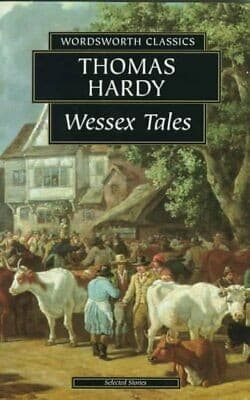
England -- Social life and customs -- 19th century -- Fiction; Wessex (England) -- Fiction
‘With all my heart, man o’ constancy!’ said Dairyman Johns warmly.
‘I’ve lost most of my genteel fair complexion haymaking this hot
weather, ’tis true, but I’ll do your business as well as them that look
better. There be scents and good hair-oil in the world yet, thank God,
and they’ll take off the roughest o’ my edge. I’ll compliment her.
“Better late than never, Sally Hall,” I’ll say.’
‘It is not Sally,’ said Darton hurriedly. ‘It is young Mrs. Hall.’
Japheth’s face, as soon as he really comprehended, became a picture of
reproachful dismay. ‘Not Sally?’ he said. ‘Why not Sally? I can’t
believe it! Young Mrs. Hall! Well, well—where’s your wisdom?’
Darton shortly explained particulars; but Johns would not be
reconciled. ‘She was a woman worth having if ever woman was,’ he cried.
‘And now to let her go!’
‘But I suppose I can marry where I like,’ said Darton.
‘H’m,’ replied the dairyman, lifting his eyebrows expressively. ‘This
don’t become you, Charles—it really do not. If I had done such a thing
you would have sworn I was a curst no’thern fool to be drawn off the
scent by such a red-herring doll-oll-oll.’
Farmer Darton responded in such sharp terms to this laconic opinion
that the two friends finally parted in a way they had never parted
before. Johns was to be no groomsman to Darton after all. He had flatly
declined. Darton went off sorry, and even unhappy, particularly as
Japheth was about to leave that side of the county, so that the words
which had divided them were not likely to be explained away or softened
down.
A short time after the interview Darton was united to Helena at a
simple matter-of fact wedding; and she and her little girl joined the
boy who had already grown to look on Darton’s house as home.
For some months the farmer experienced an unprecedented happiness and
satisfaction. There had been a flaw in his life, and it was as neatly
mended as was humanly possible. But after a season the stream of events
followed less clearly, and there were shades in his reveries. Helena
was a fragile woman, of little staying power, physically or morally,
and since the time that he had originally known her—eight or ten years
before—she had been severely tried. She had loved herself out, in
short, and was now occasionally given to moping. Sometimes she spoke
regretfully of the gentilities of her early life, and instead of
comparing her present state with her condition as the wife of the
unlucky Hall, she mused rather on what it had been before she took the
first fatal step of clandestinely marrying him. She did not care to
please such people as those with whom she was thrown as a thriving
farmer’s wife. She allowed the pretty trifles of agricultural
domesticity to glide by her as sorry details, and had it not been for
the children Darton’s house would have seemed but little brighter than
it had been before.
Public-domain text, read in full here on John Shaqi.
Reviews
Reviews
No reviews yet
Be the first to share your thoughts on this work.
Elsewhere in the archive
Join the Discussion
Join the discussion
Sign in to leave a comment or review.
Sign InorCreate an account