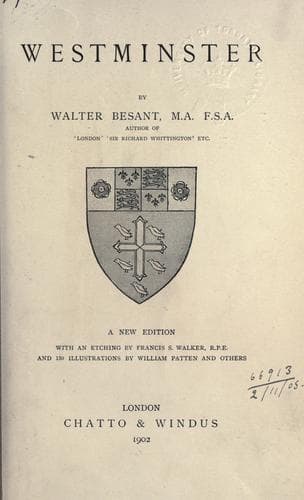
Westminster (London, England) -- Description and travel
There is added a Troop of Genadiers to each Troop of Guards, one
Division of which mounts with a Division of the Troop to which they
belong; they never go out on small Parties from the Guard, only perform
Centry-Duty on Foot, and attend the King also on Foot when he walks
abroad, but always March with great Detachments. The King’s Troop
consists of a Captain, two Lieutenants, three Sergeants, three
Corporals, two Drums, two Hautbois, and eighty private Souldiers
mounted. The Queens troop, of a Captain, two Lieutenants, two Sergeants,
two Corporals, two Hautbois, and sixty private Souldiers mounted. The
Dukes Troop consists of the like number with the Queens.
The Captains of His Majesties Guards always Command as Eldest Colonels
of Horse; the Lieutenants as Eldest Lieutenant-Colonels of Horse; the
Cornets and Guidons, as Eldest Majors of Horse; the Quartermasters, as
Youngest Captains of Horse; the Brigadiers as Eldest Lieutenants of
Horse; and amongst themselves every Officer, according to the Date of
His Commission, takes precedency, when on Detachments, but not when the
Three Troops march with their Colours, for then the Officer of the
Eldest Troop, commands those of equal Rank with him in the others,
though their Commission be of Elder Date.
Next immediately after the Three Troops of Guards, His Majestys Regiment
of Horse, Commanded by the Earl of Oxford takes place, and the Colonel
of it is to have precedency, after the Captains of the Guards, and
before all other Colonels of Horse, whatsoever change may be of the
Colonel; and all the Officers thereof, in their proper Degree, are to
take place according to the Dates of their Commissions. As to the Foot,
the King’s Regiment, Commanded by the Honorable Colonel John Russel,
takes place of all other Regiments, and the Colonel thereof is always to
precede as the first Colonel. The Coldstream Regiment, Commanded by the
Earl of Craven, takes the next; the Duke of Yorks Regiment next, then
His Majestys Holland Regiment, Commanded by the Earl of Mulgrave, and
all other Colonels, according to the dates of their Commissions. All
other Regiments of Horse and Foot, not of the Guards, take place
according to their Respective Seniority, from the time they were first
Raised, and no Regiment loses its precedency by the Death of its
Colonel.
Public-domain text, read in full here on John Shaqi.
Reviews
Reviews
No reviews yet
Be the first to share your thoughts on this work.
Elsewhere in the archive
Join the Discussion
Join the discussion
Sign in to leave a comment or review.
Sign InorCreate an account