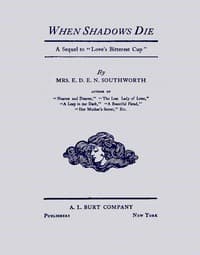
When shadows dieSouthworth, Emma Dorothy Eliza Nevitte
General
When shadows die
Southworth, Emma Dorothy Eliza Nevitte
American fiction -- 19th century
Old Capt. Grandiere led his niece, Rosemary Hedge, up to the altar,
followed by her bridesmaids. There they were met by Roland Saviola and
his groomsman, Ned Grandiere. They formed before the altar, their
friends and relatives standing behind and on either side.
Again the rector advanced and opened his book, and amid the deep silence
commenced the solemn rites.
When they were ended, and the blessing was bestowed, the bride kissed,
and the bridegroom shaken by the hand, both the wedding parties withdrew
to the vestry to register the marriages.
After this they made very slow progress out of the church, their way
being impeded by their acquaintances, who left the pews to offer their
congratulations.
At length they were permitted to enter their carriages and take the road
to Mondreer, where the marriage breakfast was to be given.
It was a great success, of course. The guests remained until two
o’clock, when they departed, well pleased, and leaving their
entertainers to take a few hours’ repose before repairing to Oldfield
for the evening’s ball.
At the farm they all literally:
“Danced all night till broad daylight.”
Then, after coffee, the two brides and grooms put on their traveling
dresses and took leave of their friends.
Leonidas and Odalite went to Greenbushes to spend their honeymoon
quietly.
Roland and Rosemary left for Washington, en route for New York and
Paris. Mrs. Hedge and Miss Grandiere wept freely at parting with their
darling, but were consoled by the assurance from Roland that the trip
across the Atlantic was nothing at all in these days, and that he should
certainly bring Rosemary back to spend Christmas with them, and
afterward, if they pleased, take both of them to Europe to spend a long
time with Rosemary and himself.
To Miss Sibby Bayard, who had been a true mother to the young man, and
who was weeping silently and wiping her eyes surreptitiously, as if she
were ashamed of her tears, Roland said:
“Dearest Aunt Sibby, though I seem to be leaving you finally, yet it is
not so. You will see me much oftener, and for much longer periods, than
you used to do when I was mate on a merchantman and away to sea three
years at a time. Besides, you will come and stay with us on the other
side as often and as long as you please—forever, if you will. We should
like it.”
“Yes, honey! Never mind me! I’m not crying! What should I cry for, when
you are so happy? I love you too true for that! Rale love, sez I, always
rejoices in the good of its objects, sez I! And them as snivels at the
happiness of their children, sez I, hasn’t much love, but a deal of self
in their souls, sez I!” Miss Sibby concluded, with a glance of reproach
on poor Mrs. Hedge and Miss Grandiere.
At last they were gone.
And the invited guests soon followed.
Public-domain text, read in full here on John Shaqi.
Reviews
Reviews
No reviews yet
Be the first to share your thoughts on this work.
Elsewhere in the archive
Join the Discussion
Join the discussion
Sign in to leave a comment or review.
Sign InorCreate an account