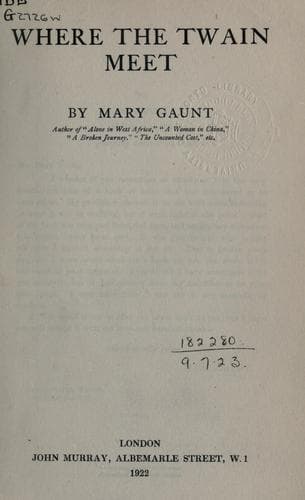
Black people -- Jamaica; Jamaica; Slavery -- Jamaica
There lay in the River the ships _Indian Queen, Duke of York, Nancy_ and
_Concord_ of Bristol, the _Edgar_ of Liverpool, and the _Canterbury_
of London, slavers all, and the slaves were not coming in in this year
1767. Therefore they planned among themselves as coolly as if the black
men had been deer or elephants, or pheasants, how they might best fill
their between decks. The Calabar River is hot and it is unhealthy, for
the percentage of moisture in the air is so great that very gladly I
have sat over a fire when the thermometer registered over 90° in the
shade, so that it is hardly a pleasant place of residence for a white
man. Also the old inhabitants were not very tender of each other, or
very careful of human life, for as I sat there watching a most glorious
sunset a woman, who had come there in the early days, and she was not
then, I think, fifty, told me how she hated to walk along the shore--the
Calabar River is really an arm of the sea--because of the living
sacrifices, generally young girls offered to the envious gods and bound
to stakes, waiting for the tide to come up and put an end to their
misery. Still the blood-thirstiness of the natives does not excuse
that of the slavers. I only mention it because I find that while the
advocates for slavery painted the slave in the blackest colours, the
opponents generally depicted the poor black man as a noble martyr. He
wasn't. He was suffering humanity neither better nor worse than his
station in life allowed, often rising to heights of heroism, but often
out-heroding his tormentors in blackguardism.
Public-domain text, read in full here on John Shaqi.
Reviews
Reviews
No reviews yet
Be the first to share your thoughts on this work.
Elsewhere in the archive
Join the Discussion
Join the discussion
Sign in to leave a comment or review.
Sign InorCreate an account