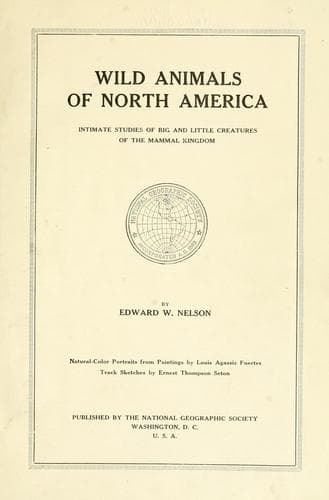
Wild Animals of North America: Intimate Studies of Big and Little Creatures of the Mammal KingdomNelson, Edward William
Science
Wild Animals of North America: Intimate Studies of Big and Little Creatures of the Mammal Kingdom
Nelson, Edward William
Mammals -- North America
In sheltered spots they make underground burrows with nest chamber
and store-rooms excavated along the passages. They usually retire
to these dens to hibernate during the last of September or first of
October, and appear again about March or April, often long before the
snow disappears. During fall and early winter they are sometimes seen
running about over newly fallen snow. One which was dug from its winter
quarters in British Columbia the last of November would move about
slowly and sleepily if teased, but when left undisturbed would curl
up and go to sleep again. This indicates the difference between the
light and often broken hibernation of chipmunks and the deep lethargy
which possesses ground squirrels in the North at this time. Toward
the southern end of their ranges neither chipmunk nor ground squirrel
hibernates. They mate soon after they awake from their winter sleep,
and the young, two to five or six in number, are born from April to
June. Whether more than one litter is born during a season, is, like
many other details concerning the lives of these attractive animals,
still to be learned.
=THE PAINTED CHIPMUNK= (=Eutamias minimus pictus= and its
relatives)
(_For illustration, see page 543_)
The preceding sketch tells how the Oregon chipmunk, living under a
cool, humid climate, in a region of great forests, has responded to
its environment by developing dark colors and a robust physique. The
painted chipmunk of the Great Basin has given an equally perfect
response to entirely different conditions. It is one of the geographic
races of a species peculiar to the sagebrush-covered plains and hills
from the Dakotas across the Rocky Mountains and the Great Basin region
to the east slope of the Cascades and the Sierra Nevada. Its home is on
treeless plains, in a climate characterized by brilliant sunshine and
clear, dry air. In this environment the painted chipmunk has developed
a smaller and slenderer body than the Oregon species, and strikingly
paler colors.
These differences in physique are accompanied by equal differences in
mental and physical expression. These little animals are exceedingly
alert and agile, darting through dense growths of bushes with all
the easy grace of weasels. When running they hold the tail stiffly
erect. When alarmed they utter a shrill chippering cry, especially
when darting into shelter. They also have a chucking call, uttered at
intervals, which may be used merely as a note of sociability or to put
their neighbors on the alert.
Public-domain text, read in full here on John Shaqi.
Reviews
Reviews
No reviews yet
Be the first to share your thoughts on this work.
Elsewhere in the archive
Join the Discussion
Join the discussion
Sign in to leave a comment or review.
Sign InorCreate an account