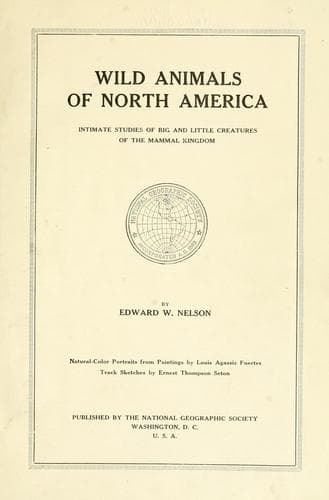
Wild Animals of North America: Intimate Studies of Big and Little Creatures of the Mammal KingdomNelson, Edward William
Science
Wild Animals of North America: Intimate Studies of Big and Little Creatures of the Mammal Kingdom
Nelson, Edward William
Mammals -- North America
In the days of the Russian occupation of Alaska the discovery of the
abundance of sea otters led to intense activity in their pursuit.
Otter-hunting expeditions were organized by the Russians along the
storm-swept coast from Unalaska to Sitka, sailing vessels being used
as convoys for hundreds of Aleut hunters in their skin-covered boats.
The loss of life among the hunters under their brutal taskmasters was
appalling and resulted in seriously and permanently reducing the native
population of the Aleutian Islands. At the same time enormous numbers
of sea-otter skins were taken. Afterward both English and American
ships engaged in the pursuit of otters farther down the coast.
The first year after the discovery of the Pribilof Islands the records
show that 5,000 sea otters were taken there. Many expeditions in other
directions secured from one to several thousand skins. When sea otters
were most abundant they were found all down the coast, even in San
Francisco Bay, and one American trading vessel obtained 7,000 skins in
a few weeks from the natives of the northern coast of Lower California.
The otters formerly frequented the shores of rocky islands and outlying
reefs, but constant persecution has driven the few survivors to remain
almost constantly at sea, where they seek resting places among kelp
beds. They are now excessively shy and, aided by keen eyes and an acute
sense of smell, are difficult to approach. When anything excites their
curiosity they commonly raise the body upright, the head high above
water, and gaze steadily at the object. If alarmed, they dive and
reappear at a long distance.
Otter hunters report the animals very playful in pleasant weather, and
sometimes floating on their backs and playing with pieces of kelp. The
mother is devoted to her young and is said to play with it in the water
for hours at a time.
All efforts to rear the young in captivity have failed. The food of the
sea otter is mainly of shellfish of various kinds, secured by them from
the bottom of the sea.
Practically the only sea otters left among the hordes which once
frequented the American shores of the North Pacific are now scattered
along the Aleutian Islands. Government regulations prohibit their being
hunted and it is hoped that enough still remain to restock the wild and
stormy sea where they have their home.
NORTHERN SEA-ELEPHANT, OR ELEPHANT SEAL (Mirounga augustirostris)
Sea-elephants are the largest and among the most remarkable of the
seals. Two species are known--one from islands on the borders of the
Antarctic Ocean and the other from the Pacific coast of Upper and Lower
California. The northern species formerly existed in vast numbers along
the coast and among outlying islands from Point Reyes, north of San
Francisco, south to Cedros Island, but is now reduced to a single small
herd living about Guadalupe Island, off Lower California.
Public-domain text, read in full here on John Shaqi.
Reviews
Reviews
No reviews yet
Be the first to share your thoughts on this work.
Join the Discussion
Join the discussion
Sign in to leave a comment or review.
Sign InorCreate an account