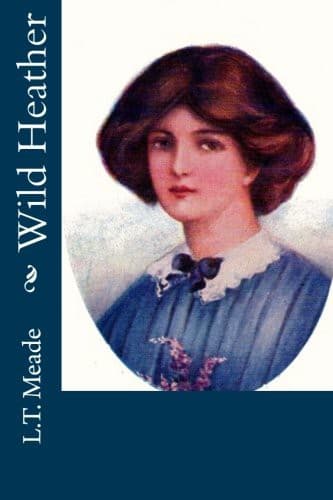
Aunts -- Fiction; England -- Social life and customs -- Fiction; Fathers and daughters -- Fiction; Love stories; Stepmothers -- Fiction
"And why not?" said one very burly-looking farmer. "I'd a whole nest of
'em once, and purtier little dears I never handled."
The third-class carriage was, indeed, packed full; the endless luggage,
the boxes little and big, boxes that went on the rack and boxes that
would not go on the rack, but stuck out all over the narrow passage and
got into everyone's way. There were shawls, and a pretty bird in a cage,
and a white rabbit in another cage, and bundles innumerable. But
everyone talked and laughed and became chatty and agreeable. The boy was
the first to tell his story. It was a very simple one. He was poor; his
father and mother had just saved up money enough to apprentice him to
Uncle Ben Rogers. He was going to him; he was off his parents now, and
would never trouble them again, God helping him.
By and by the people in the carriage turned their attention full on me.
They had confided their histories each to the other, their simple
stories of love and of hate, of ill-nature and of good-nature, of stormy
days of privation and full days of plenty. Now it was my turn. I was
assailed by innumerable questions. "Why did I wear such smart clothes?
Where did I get the feather that was in my hat? Why did I, being a lydy,
travel with the likes of them?"
I told these good, kind creatures that I loved to travel with them, and
that I hated wealth and grand people. I said also that I was going back
to a kind aunt of mine, who hated fine clothes as much as I was
beginning to hate them, and that I earnestly hoped she would let me stay
with her. I said that I was a very miserable girl, and then they all
pitied me, and one woman said, "Poor thing, poor, pretty young thing!"
and another took my hand and squeezed it, and said, "Bear up, my deary,
God tempers the wind to the shorn lamb." I did not exactly know what she
meant, but I took comfort from her kindly words and kindly face. And so
at last we got out at the big junction and then I took the little train
to Cherton. One or two of my fellow-travellers, amongst others the boy
with the weasel, accompanied me. He was looking a little nervous, and
when I said:
"I'll come and see you some day," his little woebegone face brightened
up considerably, and he answered:
"Don't forget, lydy, as I'm mostly known as Jack Tar, although I was
never at sea in the whole course of my life; but my father makes tar,
and I was christened Jack, so what could be more likely than that I
should be called Jack Tar?" He then added again that his real name was
Martin; but that was no use to him at all, he was always "Jack Tar," and
he would not like to be anything else.
Public-domain text, read in full here on John Shaqi.
Reviews
Reviews
No reviews yet
Be the first to share your thoughts on this work.
Elsewhere in the archive
Join the Discussion
Join the discussion
Sign in to leave a comment or review.
Sign InorCreate an account