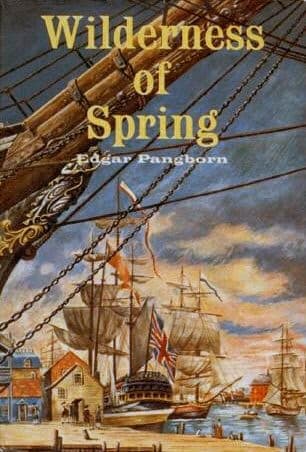
Historical fiction; United States -- History -- Colonial period, ca. 1600-1775 -- Fiction
"I am twenty-seven, Mr. Coree. I know it to the very day, because
Monsieur Lafourche--of Lyons, who later settled at Guadeloupe--used
often to say that I was born but two days after his other--after his
daughter. He wished me bred up as maid and companion to her. I had
lessons with the same teachers when we were little girls, even the
reading and writing. I cannot read English with any comfort. She, the
little Mademoiselle, she died at sixteen of a consumption. I think my
presence hurt him with reminders of her." Clarissa's voice was
passionless, cool and distant; Ben noticed his hands were no longer
shaking. "Monsieur Lafourche his fortune was much impaired in the war
of--of your King William's time. Then in 'ninety-eight, between the
wars, he sold his plantation at Guadeloupe and returned to France, and
so was obliged to let me go, to a merchant of Boston, who later sold me
here. Where," she said mildly and remotely, "I have received much
kindness."
Anger moved in Ben, severe but directionless, formless, thwarted,
without an object and seeking one. One _could_ not be angry with Uncle
John. He must have meant it for the best--somehow, somehow. "Where--do
you know where _Artemis_ is bound for?"
"Barbados, sir."
"I see.... Clarissa, I cannot think of you as a slave."
She moved into the light at the window, looking out; presently said with
neutral calm: "But I am a slave."
The anger moved blindly, a flooded river seeking any low spot, any
outlet at all. "Don't you know there's talk in these times that slavery
itself is wrong? Why, Judge Samuel Sewall hath said it, written it too,
and maybe not many will agree with him, but--but before God, I do," Ben
said, wondering at the wiry clang of his own voice.
"One hears of it," she said gently, "but I think there will alway be
slavery."
"Oh, why?"
"Perhaps because no one is ever wholly free."
"Oh, don't put me off with philosophy! I understand you, but--that was
not--well, my brother, and my Uncle John too--I have heard my Uncle John
say he would never own a slave, for that the thing itself is wrong. And
later I talked of it with my brother, he was most passionate, he said it
was vile and contemptible that any man should pretend to possess the
life of another, or be privileged to command it and drive it where he
may please. My brother is strangely wise--younger but a better scholar
than I, much wiser. Somehow I can't ever do anything without first
wondering, how would he do it, what would he think of it? I lean on him
too much--well, I suppose it's because we went through much together,
and I love him so, and we--I don't know--I'm confused."
"I am not so sure," she said, speaking into the light. "I think you have
your own wisdom, Mr. Cory. Perhaps, if he be the quicker scholar, it is
only that your brother can speak his thoughts more easily."
Public-domain text, read in full here on John Shaqi.
Reviews
Reviews
No reviews yet
Be the first to share your thoughts on this work.
Elsewhere in the archive
Join the Discussion
Join the discussion
Sign in to leave a comment or review.
Sign InorCreate an account