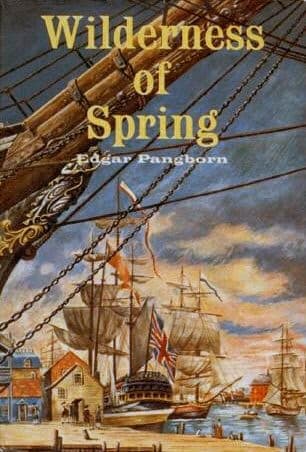
Historical fiction; United States -- History -- Colonial period, ca. 1600-1775 -- Fiction
A certain order had been established at the house in Roxbury by the end
of the summer months of confusion. Four friends--Reuben was well aware
of it--had built a sort of wall of defense around a youth who was
legally not yet a man and an old man who could scarcely move or speak:
Amadeus Welland, William Heath the captain of the sloop _Hebe_, Sam
Tench, and Gideon Hibbs. Reuben was formally apprenticed to the doctor;
Harvard, by Reuben's wish, vetoed. On a morning when, according to his
own tortured speech, his mind was very clear, John Kenny wrote out in a
wild but readable scrawl his desire that Welland, Heath, Tench and Hibbs
be appointed trustees for his affairs while he remained disabled; the
court allowed it, giving Tench a limited power of attorney. The
warehouse and wharf were mortgaged, and rented to Mr. Riggs of Salem,
the most merciful of Kenny's creditors.
Reuben discovered with no surprise that it was quite simple to get along
without five pairs of shoes; also to tend the garden and scythe the lawn
at odd moments without the aid of Rob Grimes. Hibbs too had been obliged
to find employment with another family at Roxbury whose son and heir
required cramming, but he continued to live at Kenny's house, insisting
on paying for his room and board, nagging Reuben to continue his
Greek--was not Hippocrates a Greek?--and trying to drive a little more
general learning into the boy, but underhandedly as it were, under the
pretense that he was merely keeping up with his own studies at the
borders of philosophy. The sloop _Hebe_, unmortgaged, ran her small
profitable errands between Boston and Newport like a dog who will go on
herding sheep or guarding the house into the shadows of old age, not
even asking for a pat on the head. Even Rob Grimes strolled over
occasionally, pecking peevishly at odd jobs and refusing pay for it; he
ceased perhaps only because Kate was singularly short and cold with him.
It seemed to Reuben that by spending a lifetime in contemplation of
human love and loyalty, you might learn one or two things about people,
but not their limits. One could simply note: under certain conditions,
certain members of the human race--most, maybe--are capable of supreme
goodness. The Preacher Ecclesiastes was old, weary, holding some unreal
scale of value; disappointed, like enough, because these bewildered
passion-ridden beings fell so far short of his private image of the
godlike. You could not watch Amadeus Welland making grave monkey faces
under his wig for the hilarious comfort of a sick child, and say that
all is vanity. That was no fair example, because Amadeus was not as
other men; so consider--well, Kate Dobson, who called herself common and
stupid, and would be spending uncalculated kindness to the day she died.
The Preacher's namesake was loyal too. Through all vicissitudes he
remained a beat-up yellow tomcat, charging not a farthing for the
privilege of scratching him under his evil chin....
Public-domain text, read in full here on John Shaqi.
Reviews
Reviews
No reviews yet
Be the first to share your thoughts on this work.
Elsewhere in the archive
Join the Discussion
Join the discussion
Sign in to leave a comment or review.
Sign InorCreate an account