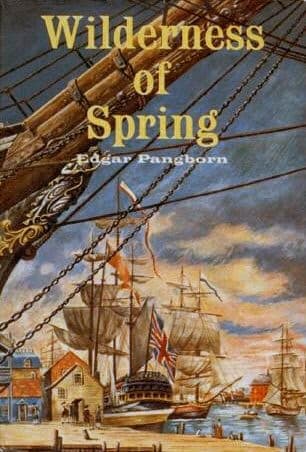
Historical fiction; United States -- History -- Colonial period, ca. 1600-1775 -- Fiction
_And will again._ She thought: How else could it be, after all?
Certainly he would go again, and many times again. And it might be that
God would bring him safe through tempest and calm and war, but no
daughter of Peter Jenks would dare to predict safe harbor, least of all
perhaps for anyone so loved, since the Lord is a jealous God. There
could be that final time when even Ben would not come home; his place
would be empty, and so then--and so--as if one of those fleecy tranquil
clouds over in the blue clean east were advancing on her for her dubious
entertainment, Charity observed the beginning of a daydream. It was
nothing in her mind, as yet; it could become the familiar indulgence, if
she wished: herself receiving the news of her widowhood and bearing it
as best she might, maybe accepting the Romish faith so to join a
nunnery, or--much better!--going out among the Indians--(why not? Did
not John Eliot do so?)--to heal their sick and bind up their wounds and
teach them, becoming gray and old in this dispensation of decent mercies
until such time as God was willing to--_Hey! Misty dreams for silly
maids. I don't want you--go away!..._ Well, it was partly Ben's fault
for falling silent so long, when there was so much more to tell;
Reuben's too--Reuben sitting there radiantly quiet, and skimming a
pebble out beyond the line of foam whenever a wave spent itself
whispering at the open side of their sanctuary. Why dream now, when the
one dream (so unlike all the others!) had amazed and somewhat frightened
her by coming true? It might have been well enough in the long year past
to dream. Not now. Anyway not of widowhood--_when he ha'n't even asked
me!--but his eyes inquire of many things this afternoon_--and other such
matters far-off and cold and surely unwelcome. It might have been well
enough, once, to dwell in that labyrinthine refuge of fantasy; and
certain treasures brought back from the labyrinth might be saved--as for
instance the created moment when his face would turn to her gravely
astonished in discovery, and he would say: 'Why, Mistress Charity,
you're no longer an awkward child at all'--or something like
that--something.... But why flee from the present even for an instant?
Was he not close in the here-and-now? A very tall stranger who was not a
stranger; vastly older, a whole year older, the mobile miracle of his
face transformed by the bitter dissonance of the great scar still livid
and not quite healed, that angled across his high forehead and then ran
from his cheekbone to the edge of his jaw. Mouth and eyes were spared.
He could look far and curiously, as he always had, and deep. His smile
was--almost the same. Surely it would be altogether the same when the
scar was fully healed: probably now the torn muscles pained him when his
mouth widened; and maybe he felt less often in a mood for smiling since
his homecoming and the death of John Kenny. While a part of her
Public-domain text, read in full here on John Shaqi.
Reviews
Reviews
No reviews yet
Be the first to share your thoughts on this work.
Elsewhere in the archive
Join the Discussion
Join the discussion
Sign in to leave a comment or review.
Sign InorCreate an account