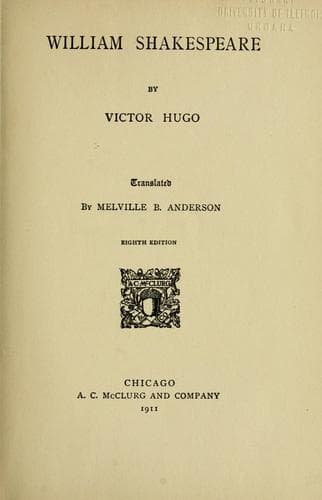
Dramatists, English -- Early modern, 1500-1700 -- Biography; Shakespeare, William, 1564-1616; Stratford-upon-Avon (England) -- Biography
We live in a time when orations are heard praising the magnanimity of
white bears and the tender feelings of panthers. Amnesty, clemency,
grandeur of soul; an era of felicity opens; fatherly love is the order
of the day; see all that is already done; it must not be thought that
the march of the age is not understood; august arms are open; rally
still closer round the emperor; Muscovy is kind-hearted. See how happy
the serfs are! The streams are to flow with milk, with prosperity and
liberty for all. Your princes groan like you over the past; they are
excellent. Come, fear nothing, little ones! so far as we are concerned,
we confess candidly that we are of those who put no reliance in the
lachrymal gland of crocodiles.
The actual public monstrosities impose stem obligations on the
conscience of the thinker, philosopher, or poet. Incorruptibility must
resist corruption. It is more than ever necessary to show men the
ideal,--that mirror in which is seen the face of God.
CHAPTER V.
There are in literature and philosophy men who have tears and laughter
at command,--Heraclituses wearing the mask of a Democritus; men often
very great, like Voltaire. They are irony keeping a serious, sometimes
tragic countenance.
These men, under the pressure of the influences and prejudices of
their time, speak with a double meaning. One of the most profound is
Bayle,[1] the man of Rotterdam, the powerful thinker. When Bayle coolly
utters this maxim, "It is better worth our while to weaken the grace
of a thought than to anger a tyrant," I smile; I know the man. I think
of the persecuted, almost proscribed one, and I know well that he has
given way to the temptation of affirming merely to give me the longing
to contest. But when it is a poet who speaks,--a poet wholly free,
rich, happy, prosperous almost to inviolability,--one expects a clear,
open, and healthy teaching, one cannot believe that from such a man can
emanate anything like a desertion of his own conscience; and it is with
a blush that one reads this:--
"Here below, in time of peace, let every man sweep his own
street-door. In war, if conquered, let every man fraternize
with the soldiery.... Let every enthusiast be put on the
cross when he reaches his thirtieth year. If he has once
experienced the world as it is, from the dupe he becomes
the rogue.... What utility, what result, what advantage
does the holy liberty of the press offer you? The complete
demonstration of it is this: a profound contempt of
public opinion.... There are people who have a mania for
railing at everything that is great,--they are the men who
have attacked the Holy Alliance; and yet nothing has been
invented more august and more salutary for humanity."
Public-domain text, read in full here on John Shaqi.
Reviews
Reviews
No reviews yet
Be the first to share your thoughts on this work.
Elsewhere in the archive
Join the Discussion
Join the discussion
Sign in to leave a comment or review.
Sign InorCreate an account