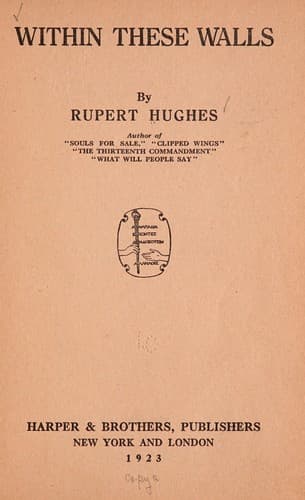
Families -- Fiction; Man-woman relationships -- Fiction; New York (N.Y.) -- History -- 19th century -- Fiction
Another exodus. But they were scapegoats now, fleeing into the
wilderness with a mystic burden of guilt, anonymous guilt; for Immy
would not speak.
Complete was the contrast between that first flight from the cholera
and this fleeing where no man pursued, but all men waited.
Then David and Patty RoBards were part of a stampede, striving to save
their romance from the plague. Then they were bride and groom; now they
carried with them a daughter, unforeseen then, but older to-day than
her mother was when she married RoBards. But Immy’s bridegroom was
where?—was who?
In that other journey to Tuliptree Farm the streets were smothered with
dust and the waterless city stifled under a rainless sky.
Now water was everywhere. The fountains were still, but the pipes
underground were thick as veins and arteries. Water in the form of snow
lay on the ground, on the roofs, on the shoulders of the men, on their
eyelashes, on the women’s veils and in their hair and the feathers of
their hats. It lay in long ridges on the backs of the horses plunging,
slipping, falling. It plastered the panes of the lamp-posts and the
telegraph-posts that had grown up in a new forest all over town; it lay
along the wires that strung spider webs from wall and chimney and tree.
The banners that hung from all the shops and stretched across the
street were illegible. The busses and the hacks were moving dunes of
white.
There was a fog of snow. Everybody walked mincingly, except the
children, who rejoiced to slide on their brass-toed boots or on the
sleds that ran like great, prong-horned beetles among the legs of the
anxious wayfarers.
The RoBards trio was glad of the snow, for it gave concealment. Immy
was silent, morose, and with reason enough. If ever a soul had the
right to cry out against the unfairness, the malice of heaven, it was
Immy. She could have used the bitter words of Job:
“He destroyeth the perfect and the wicked.... He will laugh at the
trial of the innocent.”
She did not feel innocent. She felt worse than wicked; she felt a fool.
But other people had been fools and vicious fools and no one learned
of it. She had been wicked and foolish before without punishment; with
reward rather, laughter, rapture, escape. Now for a flash of insane
weakness this sudden, awful, eternal penalty.
To her father and mother speech was impossible, thought almost
forbidden. If they had been taking Immy’s dead body up to a Westchester
burial, they could hardly have felt more benumbed. Only, if she had
been dead, the problem of her future would have been God’s. Now it was
theirs.
The gamble of it was that they could not foreknow the result of this
journey; whether it would mean one more life, or one death, or two.
In any case, RoBards must hasten back to his legal duties as soon as
he had placed Immy on the farm. Patty must stay and share the jail
sentence with her for—how long, who could tell?
Public-domain text, read in full here on John Shaqi.
Reviews
Reviews
No reviews yet
Be the first to share your thoughts on this work.
Elsewhere in the archive
Join the Discussion
Join the discussion
Sign in to leave a comment or review.
Sign InorCreate an account