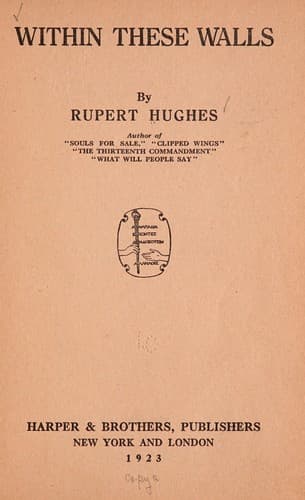
Families -- Fiction; Man-woman relationships -- Fiction; New York (N.Y.) -- History -- 19th century -- Fiction
But Chalender with that almost infallible intuition of his for escaping
bad quarters-of-an-hour, sent merely a gay little note:
“Dear Papa and Mamma-in-law:
“It grieves me deeply to be unable to call and pay you both my filial
devoirs, but I am to be shipped South at once for cannon-fodder.
“Our dear Immy sent you all sorts of loving messages, which I beg you
to imagine. She is well and beautiful and would be the belle of San
Francisco if she were not so devoted a mother to the three perfect
grandchildren, whom you have never seen.
“‘When this cruel war is over,’ as the song goes, I shall hope to
come tramp-tramp-tramping to your doorstep. Until then and always be
assured, dear Patty and David (if I may be so familiar) that I am
The most devoted of
“Sons-in-law.”
The next day’s paper told of his departure as the lieutenant colonel
of a new regiment. Before the regiment reached the front, he was its
colonel owing to the sudden demise of his superior. People died to get
out of his way!
The next they knew he was shot in the throat as he led a magnificent
and successful charge. He drew a dirty handkerchief through the red
tunnel, remounted, and galloped to the head of his line and hurdled the
Confederate breastworks as if he were fox-hunting again in Westchester.
As soon as possible he was brevetted a brigadier and with uncanny speed
a major general of Volunteers. His men adored him and while other
generals rose and fell in a sickening reiteration of disasters, his own
command always shone in victory or plucked a laurel from defeat.
His nickname was “Our Harry” or “Harry of Navarre,” but patriot as
RoBards was, he could find no comfort in the triumphs that led the
neighbors to exclaim:
“By gollies, it must make you proud to be the father-in-law of such a
military genius! It’s a shame Old Abe don’t give him a chance like he
gives those blundering butchers he picks out.”
Poor RoBards had to agree publicly that he was proud of New York’s
pet, but Patty would not stoop to such hypocrisy. She would snap at
Chalender’s partisans:
“Surely you can’t expect a good word for the wretch from his
mother-in-law.”
To escape from the irony of these eulogies, Patty and David went up
to Tuliptree, though it kept them longer from the newspapers, and the
daily directories of killed, wounded, and missing which made almost
their only reading.
One day Patty came across a paragraph in one of the Westchester papers
that called Lincoln a “tyrant,” and a “buffoon,” and the Abolitionists
“cowards,” in terms hardly to be expected north of Mason and Dixon’s
line. She read it to RoBards:
“Among the most recent victims of Abe Lincoln’s iniquitous war is
Corporal Gideon Lasher of Kensico, who was murdered at Elmira while
arresting a deserter. He had been previously wounded at Brandy Station
during the advance from Rappahannock.”
Patty looked up from the paper and said:
“Gideon Lasher! Could he have been a brother of the Lasher who——”
Public-domain text, read in full here on John Shaqi.
Reviews
Reviews
No reviews yet
Be the first to share your thoughts on this work.
Elsewhere in the archive
Join the Discussion
Join the discussion
Sign in to leave a comment or review.
Sign InorCreate an account