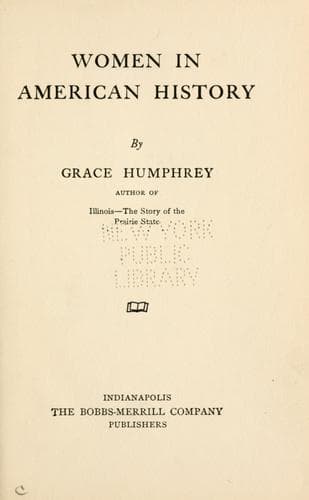
Women -- Biography; Women -- United States -- Biography
Gradually the opposition to slavery, which she had been fostering,
won adherents to its cause. The Garrison campaign began. Friends of
freedom came out openly and spoke their views. In 1833 a national
anti-slavery society was formed in Philadelphia. Of the sixty or
seventy delegates, four were women, Lucretia Mott among them. They were
present by invitation, as listeners only. But during the discussion of
the proposed constitution, when one of the women briefly, modestly,
suggested transposing certain sentences, to put first the reference
to the Declaration of Independence, the men were so impressed that
they made the change immediately. But more than this Mrs. Mott, a
listener, accomplished. Her encouragement strengthened and confirmed
their purpose at a critical moment when some overcautious souls urged a
policy of delay.
The following year the Female Anti-slavery Society was formed, the
majority of its members Friends, and Lucretia Mott served as president
during most of its existence. For women to have an association of
their own was almost unheard of, in the eighteen thirties. They had no
idea of the meaning of preambles, resolutions and voting; and later
they confessed with amusement that they had to invite a colored man to
preside at their first meeting, to get them started.
In 1840 came a world’s anti-slavery convention in London, and Lucretia
Mott was one of the delegates from the United States. Full of
enthusiasm the first group arrived, only to find that women were not to
be recognized. The doors were shut against them, because of the old,
old prejudice--women should stay at home and be entertaining, public
affairs would rob them of their sweetest charm.
Wendell Phillips protested and moved that the ladies be admitted. The
excited discussion lasted for several hours, but when the vote was
taken the majority against the resolution was overwhelming. So in
the gallery sat Lucretia Mott, with Harriet Martineau, Mrs. Wendell
Phillips, and other women delegates, and their recruit, Elizabeth Cady
Stanton.
Arriving some days later, Garrison felt so outraged at this treatment
of his co-workers that he refused to take his seat in the convention.
With two other masculine members from the American Society he sat
up-stairs with the ladies. The British were scandalized--what sort
of world’s convention was this, with the founder of the greatest
anti-slavery movement of the century debarred from taking his seat on
the floor? They sent him a special invitation, but Garrison was firm.
He remembered that Lucretia Mott had been the first to shake his hand
when he came out of prison!
But before the meetings were over a tea was given with more than
four hundred guests; and there, much to the men’s consternation,
Lucretia Mott spoke. With a dignity that carried great force, with
real eloquence, she chose this way of addressing the convention. The
delegates found themselves listening with pleasure and admiration, and
broke into applause.
Public-domain text, read in full here on John Shaqi.
Reviews
Reviews
No reviews yet
Be the first to share your thoughts on this work.
Join the Discussion
Join the discussion
Sign in to leave a comment or review.
Sign InorCreate an account