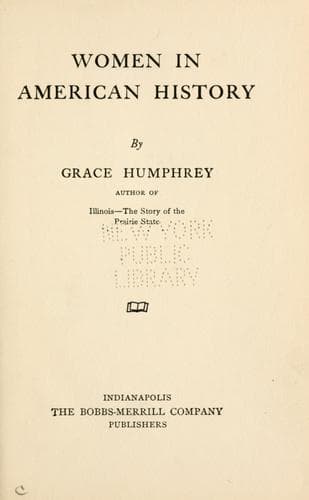
Women -- Biography; Women -- United States -- Biography
Mataoka, 1, 2, 6.
Monmouth, battle of, 50-2.
Morris, Robert, 33, 35.
Mott, Lucretia:
childhood at Nantucket, 115;
early interest in slavery, 117;
preaches in Quaker meeting-houses, 117-20, 126-7, 165;
member of anti-slavery societies, 120-1;
delegate to London convention, 121;
excluded from its meetings, 121-2;
abused and attacked, 123-7;
her part in Dangerfield trial, 128-9;
pioneer work for abolition, 130-1.
Mount Vernon, 59, 63, 66-8, 70, 71.
Murray, Mary Lindley:
delays Howe’s march across Manhattan Island, 43-5;
saves patriot army, 45-6.
Phillips, Wendell, 118, 121, 131.
Pitcher, Molly (Mary Ludwig Hays):
childhood on farm, 47;
accompanies husband to war, 48-50;
carries water for soldiers, 51;
takes husband’s place at cannon, 51-2;
honors given her, 52-4;
monument, 54.
Pocahontas:
saves John Smith, 4-6;
how she got her name, 1, 2, 6;
befriends Jamestown colony, 7;
taken prisoner, 8-10;
marries Rolfe, 11;
visits England, 12-5;
descendants, 16.
Powhatan, 2-6, 8-13.
Putnam, Israel, 41-6.
Red Cross, 202-6.
Rolfe, John, 11, 12, 15.
Ross, Betsy:
apprenticed, 30;
marriage, 30;
reputation as needlewoman, 31, 33;
widowed, 32;
five-pointed star, 35;
her flag adopted by Congress, 35-7.
Ross, Colonel George, 33.
Sacajawea (Bird-woman):
taken prisoner, 80-1;
marries Chaboneau, 81;
meets Lewis and Clark, 81-2;
engaged as interpreter, 82;
birth of son, 82;
heroine of expedition, 83-4;
saves papers and instruments, 84-5;
illness, 85-6;
escape from cloudburst, 86-7;
guides expedition, 88, 92-3;
meets friend and brother, 89-90;
persuades tribe to help white men, 90, 92;
bargaining with Indians, 91;
resourcefulness, 94;
rapid return trip, 95-6;
bids farewell to leaders, 96;
later years and death on Indian reservation, 98-9;
memorials, 99-100.
Sanitary Commission, 168-72.
Smith, John, 2-8, 14.
Stanton, Elizabeth Cady, 122.
Stars and Stripes, 34-7.
Stowe, Harriet Beecher:
early interest in compositions, 133-4;
moves to Cincinnati, 134;
marries Professor Stowe, 135;
discussions over slavery, 135-7;
her own experiences with negroes, 136-7, 141-2;
writing, 135, 138;
excitement over fugitive slave bill, 138-9;
how _Uncle Tom’s Cabin_ was written, 139-43;
its reception and results, 144-9;
translations, 145;
trip to England, 149-50;
helps change public sentiment in England during Civil War, 152.
_Uncle Tom’s Cabin_, 139-50.
Valley Forge, 62, 64-6.
Washington, George, 32-5, 39, 41, 42, 46, 49-54, 56-71, 110-1, 180.
Public-domain text, read in full here on John Shaqi.
Reviews
Reviews
No reviews yet
Be the first to share your thoughts on this work.
Elsewhere in the archive
Join the Discussion
Join the discussion
Sign in to leave a comment or review.
Sign InorCreate an account