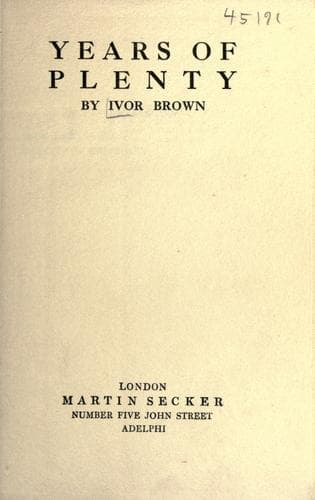
Boarding schools -- England -- Fiction; University of Oxford -- Fiction
On an evening of early June Martin, Rendell and Lawrence punted up a
backwater of the Thames. It was cool on the water's surface and a
lingering remnant of breeze stole across the silent meadows and played
gently with the willows. They had escaped from Oxford and the
gas-works, from gramophones and the university boathouse. It was a
special haunt of their own to which they had come, one of Hinksey's
unpathed waters, very narrow and remote. At length they made fast to a
stump of wood and smoked in peace.
It was all over. They had lived through a week of sweltering agony, of
darting to the Schools in cap and gown and stuffy clothes, of darting
out again to see how many words they had got wrong in their
translation. Such is the dignity of Greats. Abiding by their plans,
they had worked their philosophy according to schedule and answered
their questions on grimly practical lines. They hadn't made bold to
know about Beauty.
"Well," said Rendell, "that's the end of that."
"What?" yawned Martin. He was tired alike by his exertions and recent
celebration of the end.
"Of everything."
"Edified?"
"I think so. It's been rather majestic somehow. To have to know about
everything and keep a theory about every branch of thought and action.
One doesn't do it, but it's rather good to think one is supposed to do
it."
"Depressing enough before the event," Martin remembered nights of wild
battling with insoluble problems and days when he had gazed in despair
at papers recently set and realised his complete incapacity to inform
the examiners about modality or the legal aspects of the Caesar-Pompey
quarrel.
"You used to get jolly black?" said Lawrence, remembering silences and
outbursts or the lonely walks that Martin sometimes took.
"It's all very well for you," retorted Martin. "You may have to look
forward to dull sort of work, but you're secure enough. I'm just
beginning this business of getting a job and it's poor fun. I suppose
it means India."
"You'll get a decent screw," said Rendell by way of comfort.
"And come back without a liver or an idea."
"Except about curry and cigars."
"I can't imagine our gloomy Martin as a sun-dried bureaucrat," Lawrence
remarked. "But I suppose he'll have punkahs and khitmutgars and syces
and be the devil of a chap. I daresay it's all right when you're
there."
"There are few people who loathe the British Empire more cordially than
I do," said Martin. "But there seems to be no way of keeping clear of
it. Anyway I've quite settled not to starve as a journalist. Sooner
the White Man's Burden than that."
"Anyhow," said Rendell, still eager to comfort, "we don't know anything
about the Burden, do we? There may be something in it."
Public-domain text, read in full here on John Shaqi.
Reviews
Reviews
No reviews yet
Be the first to share your thoughts on this work.
Elsewhere in the archive
Join the Discussion
Join the discussion
Sign in to leave a comment or review.
Sign InorCreate an account