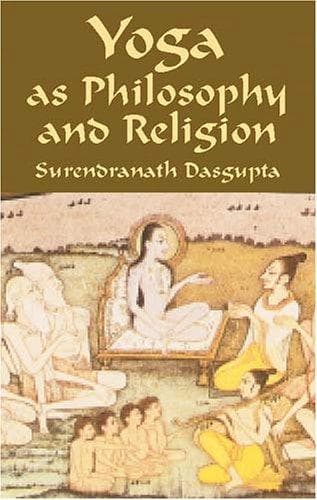
Yoga as philosophy and religionDasgupta, Surendranath
Religion
Yoga as philosophy and religion
Dasgupta, Surendranath
Hindu philosophy; Patañjali; Yoga
_Vyāsa-bhāshya_, 3 n., 5 n., 7 n., 10, 11, 12, 16, 17, 18, 33, 36, 37,
43 n., 50, 56, 58, 59, 60, 66 n., 68 n., 70, 71 n., 79, 84, 85, 94,
99, 101, 117, 119, 121, 133, 171
vyoman, 75
vyutthāna, 155, 156, 170
_vyutthāna citta_, 95
Ward, 2 n.
Wicked, 102
World-phenomena, 16
World-process, 91
_yadyaliṅgāvasthā śabdādyupabhogaṃ vā sattvapurushānyatākhyātim vā
purushārtham nirvarttayet tannrvarttane hi na sāmyāvasthā syāt_, 8
Yama, 136, 138, 139, 142, 143, 148
Yatamāna, 127
_yathā rathādi yantradibhiḥ_, 25
_yathāyaskāntamaṇiḥ svasminneva ayaḥsannidhīkaraṇamātrāt
śalyanishkarshaṇākhyam upakāram kurvat purushasya svāminaḥ svam
bhavati bhogasādhanatvāt_, 22
_ye cāsyānupasthitā bhāgaste cāsya na syurevaṃ nāsti pṛshṭhamiti
udaramapi na gṛhyeta_, 36
Yoga, 14, 29, 48, 62, 89, 96, 122, 123, 124, 129, 130, 131, 140, 144,
147, 155, 162, 177;
its points of difference with Sāṃkhya, 163–165
Yoga metaphysics, 1
_Yoga philosophy in relation to other Indian systems of thought_, 165
Yoga system, 2
Yoga theory, 5
yogāṅga, 122, 130, 131, 132, 135, 136, 144, 145, 149
_Yoga-sūtra_, 5 n., 11, 17, 35 n., 43 n., 45, 47, 108, 117, 142, 153
_Yoga-vārttika_, 4 n., 6 n., 9, 10, 12 n., 22, 29 n., 43 n., 45 n., 60,
61, 65, 66, 67, 87, 110, 126, 127, 129, 134 n., 143, 154, 176
Yogins, 79, 87, 95, 97, 98, 121, 125, 127, 128, 129, 136, 139, 143,
147, 153, 155, 156, 158, 160;
nine kinds of, 129
_yogyatāvacchinnā dharmiṇaḥ śaktireva dharmaḥ_, 82
Yudhishṭhira, 140
_yutasiddhāvayaba_, 168
-----
Footnote 1:
See Ward’s _Naturalism and Agnosticism_.
Footnote 2:
Vācaspati’s _Tattvavaiśāradī_ on the _Vyāsa-bhāshya_, III. 47.
Footnote 3:
_Sāṃkhyapravacanabhāshya_, I. 120.
Footnote 4:
It is indeed difficult to say what was the earliest conception of the
guṇas. But there is reason to believe, as I have said elsewhere, that
guṇa in its earliest acceptance meant qualities. It is very probable
that as the Sāṃkhya philosophy became more and more systematised it
was realised that there was no ultimate distinction between substance
and qualities. In consequence of such a view the guṇas which were
originally regarded as qualities began to be regarded as substantive
entities and no contradiction was felt. Bhikshu in many places
describes the guṇas as substantive entities (_dravya_) and their
division into three classes as being due to the presence of three
kinds of class-characteristics. This would naturally mean that within
the same class there were many other differences which have not been
taken into account (_Yoga-vārttika_, II. 18). But it cannot be said
that the view that the guṇas are substantive entities and that there
is no difference between qualities and substances is regarded as a
genuine Sāṃkhya view even as early as Śaṅkara. See _Ghābhāshya_, XIV.
5.
Footnote 5:
Public-domain text, read in full here on John Shaqi.
Reviews
Reviews
No reviews yet
Be the first to share your thoughts on this work.
Elsewhere in the archive
Join the Discussion
Join the discussion
Sign in to leave a comment or review.
Sign InorCreate an account