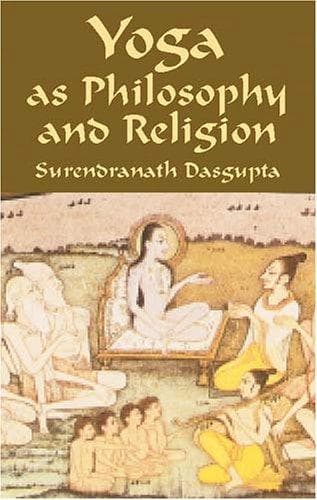
Yoga as philosophy and religionDasgupta, Surendranath
Religion
Yoga as philosophy and religion
Dasgupta, Surendranath
Hindu philosophy; Patañjali; Yoga
Although the pioneers of modern scientific evolution have tried to
observe scientifically some of the stages of the growth of the inorganic
and of the animal worlds into the man, yet they do not give any reason
for it. Theirs is more an experimental assertion of facts than a
metaphysical account of evolution. According to Darwin the general form
of the evolutionary process is that which is accomplished by “very
slight variations which are accumulated by the effect of natural
selection.” And according to a later theory, we see that a new species
is constituted all at once by the simultaneous appearance of several new
characteristics very different from the old. But why this accidental
variation, this seeming departure from the causal chain, comes into
being, the evolutionists cannot explain. But the Sāṃkhya-Pātañjala
doctrine explains it from the standpoint of teleology or the final goal
inherent in all matter, so that it may be serviceable to the purusha. To
be serviceable to the purusha is the one moral purpose in all prakṛti
and its manifestations in the whole material world, which guide the
course and direction of the smallest particle of matter. From the
scientific point of view, the Sāṃkhya-Pātañjala doctrine is very much in
the same position as modern science, for it does not explain the cause
of the accidental variation noticed in all the stages of evolutionary
process from any physical point of view based on the observation of
facts.
But it does much credit to the Pātañjala doctrines that they explain
this accidental variation, this _avyapadeśyatva_ or unpredicability of
the onward course of evolution from a moral point of view, that of
teleology, the serviceability of the purusha. They found, however, that
this teleology should not be used to usurp the whole nature and function
of matter. We find that the atoms are always moving by virtue of the
rajas or energy, and it is to this movement of the atoms in space that
all the products of evolution are due. We have found that the difference
between the juices of Coco-nut, Palm, Bel, Tinduka (Diospyros
Embryopteries), Āmalaka (Emblic Myrobalan) can be accounted for by the
particular and peculiar arrangement of the atoms of earth and water
alone, by their stress and strain; and we see also that the evolution of
the organic from the inorganic is due to this change of position of the
atoms themselves; for the unit of change is the change in an atom of its
own dimension of spatial position. There is always the transformation of
energy from the inorganic to the organic and back again from the
organic. Thus the differences among things are solely due to the
different stages which they occupy in the scale of evolution, as
different expressions of the transformation of energy; but virtually
there is no intrinsic difference among things _sarvaṃ sarvātmakaṃ_; the
change of the collocation of atoms only changes potentiality into
actuality, for there is potentiality of everything for every thing
Public-domain text, read in full here on John Shaqi.
Reviews
Reviews
No reviews yet
Be the first to share your thoughts on this work.
Elsewhere in the archive
Join the Discussion
Join the discussion
Sign in to leave a comment or review.
Sign InorCreate an account