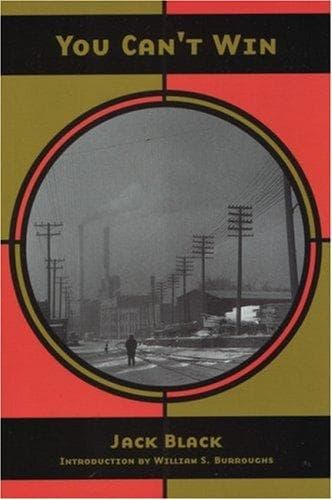
Black, Jack, 1871-1932; Criminals -- Canada -- Biography; Criminals -- United States -- Biography
At the provincial jail I found a drunken Scotchman in charge. He was
assisted by two half-breed Indian boys serving six months each. One of
them cooked for the jailer and any prisoners that came in; the other
scrubbed the jail. Both of them watched me faithfully and fed me
regularly when the jailer was drunk. I was locked in a cell and never
got out except for a bath once a week. The Indian boys slept on the
floor in front of my cell by a big stove that was always hot and kept
the jail warm.
There was not a fixture in the cell but a bucket. I had plenty of
blankets and slept on the floor. My clothes were taken and I was dressed
in a pair of white duck pants and a hickory shirt. They left me my shoes
and hat. I was never so bare and helpless before or since. Not a smoke,
nor a paper, book, nor magazine was allowed in the jail. When I asked
the Scotchman for something to read, he got me a Bible, which I read and
re-read with much interest but no profit. I was pestered daily for weeks
by the Crown prosecutor to return the balance of the money taken from
the hotel safe, eight hundred dollars. He offered me a short jail
sentence if I would give it up, but I mistrusted him and decided to let
some car cleaner find it rather than admit anything and get myself in
deeper.
I gave my case a good thinking over and concluded there was no way out.
Judge Powers, J. Hamilton Lewis, and Tom Patterson of Colorado, all
rolled into one, couldn’t have acquitted me. All day, every day, I read
my Bible and prayed that the conductor might fall under his train before
the day of my trial.
A priest visited the jail one day and gave me a pamphlet on which he had
printed the Chinook language. In answer to my question he told me it
contained about three hundred words—nouns, verbs, and adjectives. It was
created by the Hudson Bay traders, years before, and taught to all the
Northwest Indians to simplify trading with the different tribes.
I soon mastered Chinook, practicing on the two “breed” boys and any
Indians that happened into the jail. I had given up hope of escape. I
was bare-handed. Even the tin spoon I ate my stew with was taken away
when the meal was finished. The jailer disliked me from the first. He
would come into the jail corridor roaring drunk at night, rout out the
two “breeds,” and have them unlock my cell and search “the damned Yank,”
while he stood away brandishing a big gun. They never found anything;
there was nothing there.
One day he came in with a scared-looking China boy about twenty years
old. “Yank, here’s a cellmate for you.” He locked the Chinese in,
thinking he was punishing me. The China boy later proved the jailer’s
undoing and my deliverance. He knew some Chinook, but not one word of
English. I learned from the Indian trusty that he was held for trial,
charged with stealing a considerable sum of money from his employer, and
that his case was about as hopeless as mine.
Public-domain text, read in full here on John Shaqi.
Reviews
Reviews
No reviews yet
Be the first to share your thoughts on this work.
Elsewhere in the archive
Join the Discussion
Join the discussion
Sign in to leave a comment or review.
Sign InorCreate an account