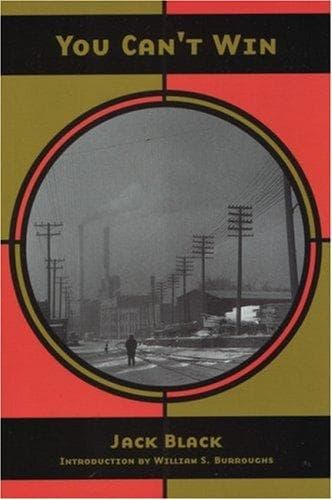
Black, Jack, 1871-1932; Criminals -- Canada -- Biography; Criminals -- United States -- Biography
I always figured that when I had a man’s money or valuables he had
suffered enough. What sense in destroying his personal papers, or
keeping heirlooms of no value except to him, or subjecting him to any
loss that would be profitless to me? In the case of this sleeper in his
private car, I saw the money and watch meant little to him. The papers
meant much. On top of that, his peace of mind was disturbed, and his
sense of safety and security shattered. He would probably lock his doors
and sleep in a stuffy room the balance of his life, another great
hardship. I had his valuables and intended to keep them. I could not
restore his peace of mind or his sense of safety and security. I could
restore his papers, and, at some small risk, did. Had I been chased or
suspected I would have thrown them away, or in the fire without a
thought. I took his property coolly, impersonally, as a picker removes
the feathers from a fat goose. I returned his papers as the last touch
to a workman-like job, as the cabinetmaker softly gives the last nail
its last light tap.
To any thief who reads this and criticizes me as being over-thoughtful
of the “sucker,” I reply that he is probably one of those guys that
beats his victim up after robbing him; who strikes down women and
children if they get in his way; who destroys paintings, vases,
tapestries, and clothing wantonly, and winds up by letting some
housewife chase him under a bed, where she holds him with her broomstick
till the coppers arrive. He is not a thief, but a “mental case,” and
belongs in a psychopathic ward.
At Victoria I put in a few very pleasant months. I joined the colony of
Chinese and opium smugglers who ran their freight across the line in
fast, small boats at night into Port Townsend, Anacortes, or Seattle,
Washington. The manufacture of smoking opium was then a legalized
industry in Canada, and the smugglers were welcomed and harbored because
they brought much American gold to the Canadian side. Being in the
company of these characters I was accepted by the police as one of them,
and went my way unmolested.
One fatal evening, as I stood watching a faro game making mental bets
and winning every one, the devilish hunch came to me that I was lucky
and ought to make a play. My resistance reached the vanishing point. I
made a bet, lost it, got stuck, and feverishly played in my last dollar.
This gambling habit is the curse of a thief’s life. He loses his last
dime and is forced to go out in haste for more money. Like a mechanic
broke and out of a job, he takes the first one in sight. He has no time
to pick and choose, or calculate carefully what he is about; he must
eat, and the minute he goes broke he gets hungry. Gambling keeps him
broke, forces him to steal small money on short notice and take
prohibitive and unnatural chances.
Public-domain text, read in full here on John Shaqi.
Reviews
Reviews
No reviews yet
Be the first to share your thoughts on this work.
Elsewhere in the archive
Join the Discussion
Join the discussion
Sign in to leave a comment or review.
Sign InorCreate an account