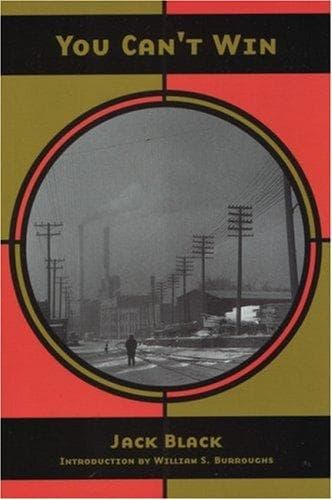
Black, Jack, 1871-1932; Criminals -- Canada -- Biography; Criminals -- United States -- Biography
Eddie Graney needs no introduction here. I only hope this story has as
many readers as he has friends. While he is known and respected for his
square decisions as a referee of big fights, I think his fame rests
chiefly on the fact that while he has the finest billiard rooms west
of—oh, well, west of anywhere—he has not yet learned how to play
billiards.
Graney gave me my first job—cashier in his pool room—handling his money.
After a few months a better job appeared. With a letter of introduction
I saw Mr. B. F. Schlesinger of the Emporium.
“Where did you work last?” he asked.
“At Eddie Graney’s.”
“And before that?”
“At San Quentin, in the jute mill.”
He knew all about me and put me to work as salesman in the book
department. I knew something about books—I had been librarian at the
county jail. I was honest—hadn’t stolen any of Graney’s money. I felt
perfectly at ease among the books, and made good. Book selling grew
dull later, and I was slated for a transfer to another department. At
the manager’s office I was told that the only vacancy was on the ribbon
counter. I looked in a mirror on the wall and saw a face in it that
didn’t seem to belong behind the ribbon counter.
I said: “Mr. Schlesinger, this is a great life if you know when to
weaken. I think this is where I’ll weaken.”
At lunch time I saw Mr. Older and told him about it. Fortunately, there
was a vacancy at the *Bulletin* in the circulation department just then
and I got the job. I left the Emporium with the best wishes and good
will of everybody I met there. When Mr. Older became editor of *The
Call* he found a place there for me as librarian; I still have that job.
In thirteen years I have learned to work—some day I may learn to like
it. Yet it is so easy and simple and safe and secure that I now wonder
how any man coming out of prison could think of doing anything else.
The pity of it is that so many ex-prisoners who do think of trying to
work can’t get it. I take no credit whatever for going to work. I could
have done that years before.
I quit stealing and learned working because I was in a hole where I
could not do otherwise. I was in hock to friends who saved me from a
heavy sentence, provided me with work, and expected only that I stay out
of jail. That’s not asking much of a man—to keep out of jail. The judge
who cut my sentence took a greater chance than I ever did. If I had gone
back “sticking up” people, the judge’s critics could have said that he,
and he alone, made it possible—and that’s precisely why I quit.
Public-domain text, read in full here on John Shaqi.
Reviews
Reviews
No reviews yet
Be the first to share your thoughts on this work.
Elsewhere in the archive
Join the Discussion
Join the discussion
Sign in to leave a comment or review.
Sign InorCreate an account