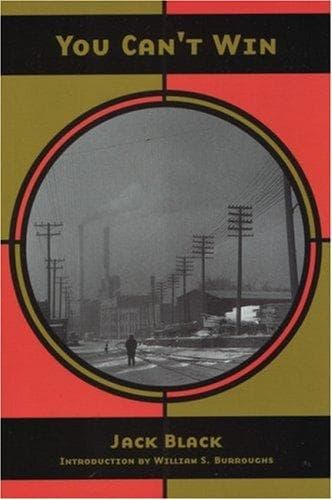
Black, Jack, 1871-1932; Criminals -- Canada -- Biography; Criminals -- United States -- Biography
Utah then was a territory and all persons indicted were at once
transferred to the custody of the United States marshal who, in addition
to his other duties, acted as warden of the territorial penitentiary. An
hour later I was taken out of my cell and turned over to a big, rawboned
man with a worn pistol swinging from a holster on his belt.
“Young feller, I don’t put irons on none of ’em,” he said to me, tapping
his gun. “Ef you want ter run, that’s yore business.”
In an hour I was at the penitentiary, where I made friends and incurred
obligations that turned my thoughts away from home and sent me back on
the road.
CHAPTER IX
To say I was shocked, stunned, or humiliated on entering the
penitentiary would not be the truth. It would not be true in nine cases
out of any ten. It would be true if a man were picked up on the street
and taken directly to a penitentiary, but that isn’t done. He is first
thrown into a dirty, lousy, foul-smelling cell in some city prison,
sometimes with an awful beating in the bargain, and after two or three
days of that nothing in the world can shock, stun, or humiliate him. He
is actually happy to get removed to a county jail where he can perhaps
get rid of the vermin and wash his body. By the time he is tried,
convicted, and sentenced, he has learned from other prisoners just what
the penitentiary is like and just what to do and what to expect. You
start doing time the minute the handcuffs are on your wrists. The first
day you are locked up is the hardest, and the last day is the easiest.
There comes a feeling of helplessness when the prison gates swallow you
up—cut you off from the sunshine and flowers out in the world—but that
feeling soon wears away if you have guts. Some men despair. I am sure I
did not.
Inside the prison I was brought before a convict clerk who took my name,
age, and nativity. I lied about them all. I couldn’t cheat the scales or
a measuring machine, and they got my correct weight and height. I did
screw my face up a little when I was photographed, and felt good about
it. My clothes were not taken, nor was my hair cut. I had a bath and was
turned loose in the yard where there were about one hundred prisoners,
some, like myself, in outside clothes awaiting trial, and others in
convict stripes doing time. The penitentiary was small then. There was
no work except farming and gardening, which was all done by “cohabs,”
Mormons convicted of unlawful cohabitation, and a very decent lot of men
they were, never complaining of persecution, always ready to help their
fellow prisoners, and freely dividing the food, money, and tobacco with
which they were well supplied by friends and relatives.
Public-domain text, read in full here on John Shaqi.
Reviews
Reviews
No reviews yet
Be the first to share your thoughts on this work.
Elsewhere in the archive
Join the Discussion
Join the discussion
Sign in to leave a comment or review.
Sign InorCreate an account