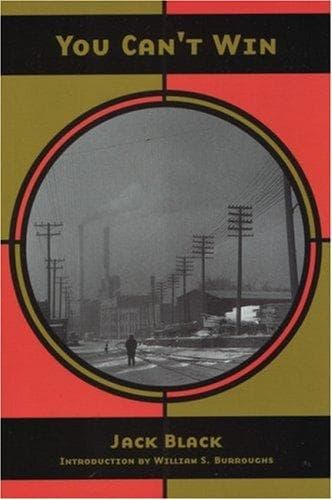
Black, Jack, 1871-1932; Criminals -- Canada -- Biography; Criminals -- United States -- Biography
“I know him,” Sanc said. “He is in Powers’ firm. Powers will tell him
what to do. You are all right. True, he is but a second-class man, but
that’s not so bad. These second-class lawyers can skin a first-class
bunko man any day in the week. I see no reason why he cannot skin a
third-class judge in a territorial court.”
I soon saw that these three cellmates of mine practically controlled the
inside of the prison. They had brains and character backed by courage
and the valuable background of a reputation for doing things outside.
I say they had character because, while they did wrong things, they
always tried to do them in the right way and at the right time. The
thief who goes out and steals money to pay back room rent rather than
swindle his poor landlady has character. The one who runs away without
paying her has no character. The thief who holds out a lady’s watch on
his pal to give to his girl has no character.
In the underworld one has good or bad character as in any other layer of
society. The thief who pays off borrowed money, debts, or grudges has a
good character among his fellows; and the thief who does the reverse has
a bad character. Thieves strive for good character and make as great
sacrifices to keep it as men do anywhere else. A burglar can have
friends, but he has to pay his room rent or he will lose them, and they
will despise him.
Because of this quality these three men had money in the prison office,
sent them by friends at liberty.
They had visitors frequently, who kept them well supplied with books and
magazines. The evening mail brought newspapers from many cities. They
kept well informed, particularly about criminal and legal doings. The
papers were carefully read at night, and the next morning “routed”
throughout the prison till, torn and read ragged, they found their way
into the hands of the lowliest “bindle stiff” in the farthest corner of
the yard.
There were fat times when we didn’t go into the dining room for a week.
A half-gallon bucket of milk was left at the cell every evening. Loaves
of fresh, hot bread were smuggled up from the bakeshop, and juicy steaks
from the guards’ quarters. These creature comforts helped to take the
curse off the place, and mitigate the prison pangs. Our light was put
out, not when the nine o’clock bell rang, but when George, or Sanc, or
Johnnie felt like going to sleep. The guards looked the other way when
they went by in their felt-soled shoes, on their night rounds through
the prison.
Public-domain text, read in full here on John Shaqi.
Reviews
Reviews
No reviews yet
Be the first to share your thoughts on this work.
Elsewhere in the archive
Join the Discussion
Join the discussion
Sign in to leave a comment or review.
Sign InorCreate an account