Art in itself, if not necessarily typical, is essentially a suggester of
something subtler than that which it embodies to the sense. What Pliny
tells us of a great painter of old, is true of most great painters;
“their works express something beyond the works,”--“more felt than
understood.” This belongs to the concentration of intellect which high
art demands, and which, of all the arts, sculpture best illustrates.
Take Thorwaldsen’s Statue of Mercury,--it is but a single figure, yet
it tells to those conversant with mythology a whole legend. The god has
removed the pipe from his lips, because he has already lulled to sleep
the Argus, whom you do not see. He is pressing his heel against his
sword, because the moment is come when he may slay his victim. Apply the
principle of this noble concentration of art to the moral writer: he,
too, gives to your eye but a single figure; yet each attitude, each
expression, may refer to events and truths you must have the learning to
remember, the acuteness to penetrate, or the imagination to conjecture.
But to a classical judge of sculpture, would not the exquisite pleasure
of discovering the all not told in Thorwaldsen’s masterpiece be
destroyed if the artist had engraved in detail his meaning at the base
of the statue? Is it not the same with the typical sense which the
artist in words conveys? The pleasure of divining art in each is the
noble exercise of all by whom art is worthily regarded.
We of the humbler race not unreasonably shelter ourselves under the
authority of the masters, on whom the world’s judgment is pronounced;
and great names are cited, not with the arrogance of equals, but with
the humility of inferiors.
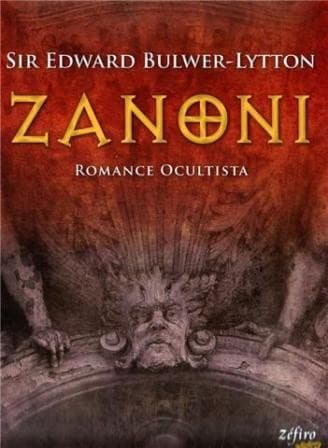
The author of Zanoni gives, then, no key to mysteries, be they trivial
or important, which may be found in the secret chambers by those who
lift the tapestry from the wall; but out of the many solutions of the
main enigma--if enigma, indeed, there be--which have been sent to him,
he ventures to select the one which he subjoins, from the ingenuity and
thought which it displays, and from respect for the distinguished writer
(one of the most eminent our time has produced) who deemed him worthy
of an honour he is proud to display. He leaves it to the reader to agree
with, or dissent from the explanation. “A hundred men,” says the old
Platonist, “may read the book by the help of the same lamp, yet all may
differ on the text, for the lamp only lights the characters,--the mind
must divine the meaning.” The object of a parable is not that of a
problem; it does not seek to convince, but to suggest. It takes
the thought below the surface of the understanding to the deeper
intelligence which the world rarely tasks. It is not sunlight on the
water; it is a hymn chanted to the nymph who hearkens and awakes below.
....
“ZANONI EXPLAINED.
BY--.”
Public-domain text, read in full here on John Shaqi.
Reviews
Reviews
No reviews yet
Be the first to share your thoughts on this work.
Elsewhere in the archive
Join the Discussion
Join the discussion
Sign in to leave a comment or review.
Sign InorCreate an account