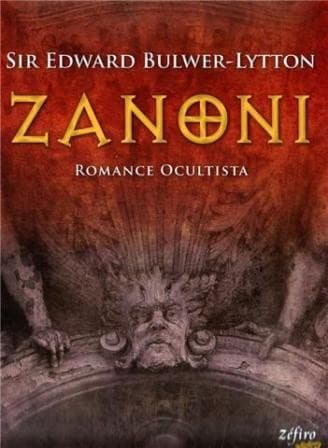
He felt an unjust resentment towards Viola at having secured such an
ally. But with that resentment was mingled a natural jealousy. Zanoni
threatened him with rivalry. Zanoni, who, whatever his character or his
arts, possessed at least all the external attributes that dazzle and
command. Impatient of his own doubts, he plunged into the society of
such acquaintances as he had made at Naples--chiefly artists, like
himself, men of letters, and the rich commercialists, who were already
vying with the splendour, though debarred from the privileges, of the
nobles. From these he heard much of Zanoni, already with them, as with
the idler classes, an object of curiosity and speculation.
He had noticed, as a thing remarkable, that Zanoni had conversed with
him in English, and with a command of the language so complete that he
might have passed for a native. On the other hand, in Italian, Zanoni
was equally at ease. Glyndon found that it was the same in languages
less usually learned by foreigners. A painter from Sweden, who had
conversed with him, was positive that he was a Swede; and a merchant
from Constantinople, who had sold some of his goods to Zanoni, professed
his conviction that none but a Turk, or at least a native of the East,
could have so thoroughly mastered the soft Oriental intonations. Yet
in all these languages, when they came to compare their several
recollections, there was a slight, scarce perceptible distinction, not
in pronunciation, nor even accent, but in the key and chime, as it were,
of the voice, between himself and a native. This faculty was one which
Glyndon called to mind, that sect, whose tenets and powers have never
been more than most partially explored, the Rosicrucians, especially
arrogated. He remembered to have heard in Germany of the work of John
Bringeret (Printed in 1615.), asserting that all the languages of the
earth were known to the genuine Brotherhood of the Rosy Cross. Did
Zanoni belong to this mystical Fraternity, who, in an earlier age,
boasted of secrets of which the Philosopher’s Stone was but the least;
who considered themselves the heirs of all that the Chaldeans, the Magi,
the Gymnosophists, and the Platonists had taught; and who differed from
all the darker Sons of Magic in the virtue of their lives, the purity of
their doctrines, and their insisting, as the foundation of all wisdom,
on the subjugation of the senses, and the intensity of Religious
Faith?--a glorious sect, if they lied not! And, in truth, if Zanoni
had powers beyond the race of worldly sages, they seemed not unworthily
exercised. The little known of his life was in his favour. Some acts,
not of indiscriminate, but judicious generosity and beneficence, were
recorded; in repeating which, still, however, the narrators shook their
heads, and expressed surprise how a stranger should have possessed so
minute a knowledge of the quiet and obscure distresses he had relieved.
Two or three sick persons, when abandoned by their physicians, he had
Public-domain text, read in full here on John Shaqi.
Reviews
Reviews
No reviews yet
Be the first to share your thoughts on this work.
Elsewhere in the archive
Join the Discussion
Join the discussion
Sign in to leave a comment or review.
Sign InorCreate an account