Adon
Adon literally means "lord. " Adon has an uncertain etymology, although it is generally believed to be derived from the Ugaritic ad, “father.
Pantheon
Every entry the archive files to this pantheon, with the record for each shown as it stands.
30 entries
These three are recorded for the Canaanite pantheon as a whole. The archive holds no separate culture, civilization or period for the individual entries below.
Entries
Showing 1–30 of 30, alphabetically.
Adon literally means "lord. " Adon has an uncertain etymology, although it is generally believed to be derived from the Ugaritic ad, “father.
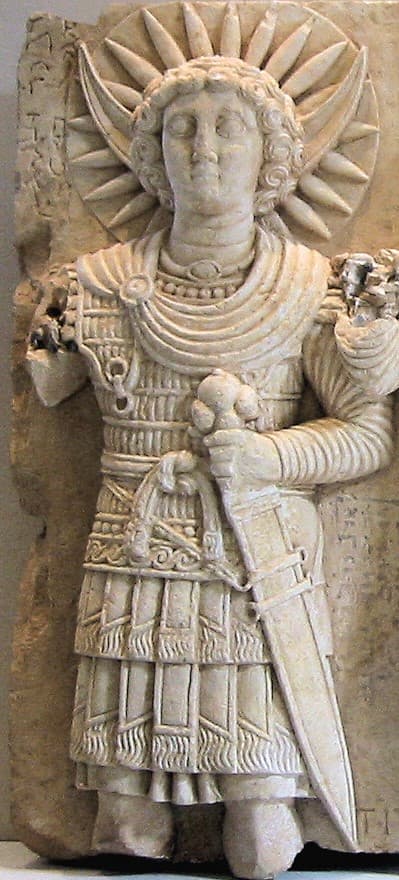
Aglibol is a god from Palmyra, originating from a people in what is now northwestern Syria. He is a moon god who was worshiped in the ancient Syrian city of Palmyra as part of a triad alongside Bel and Yarhibol, and associated with the sun god Malakbel.
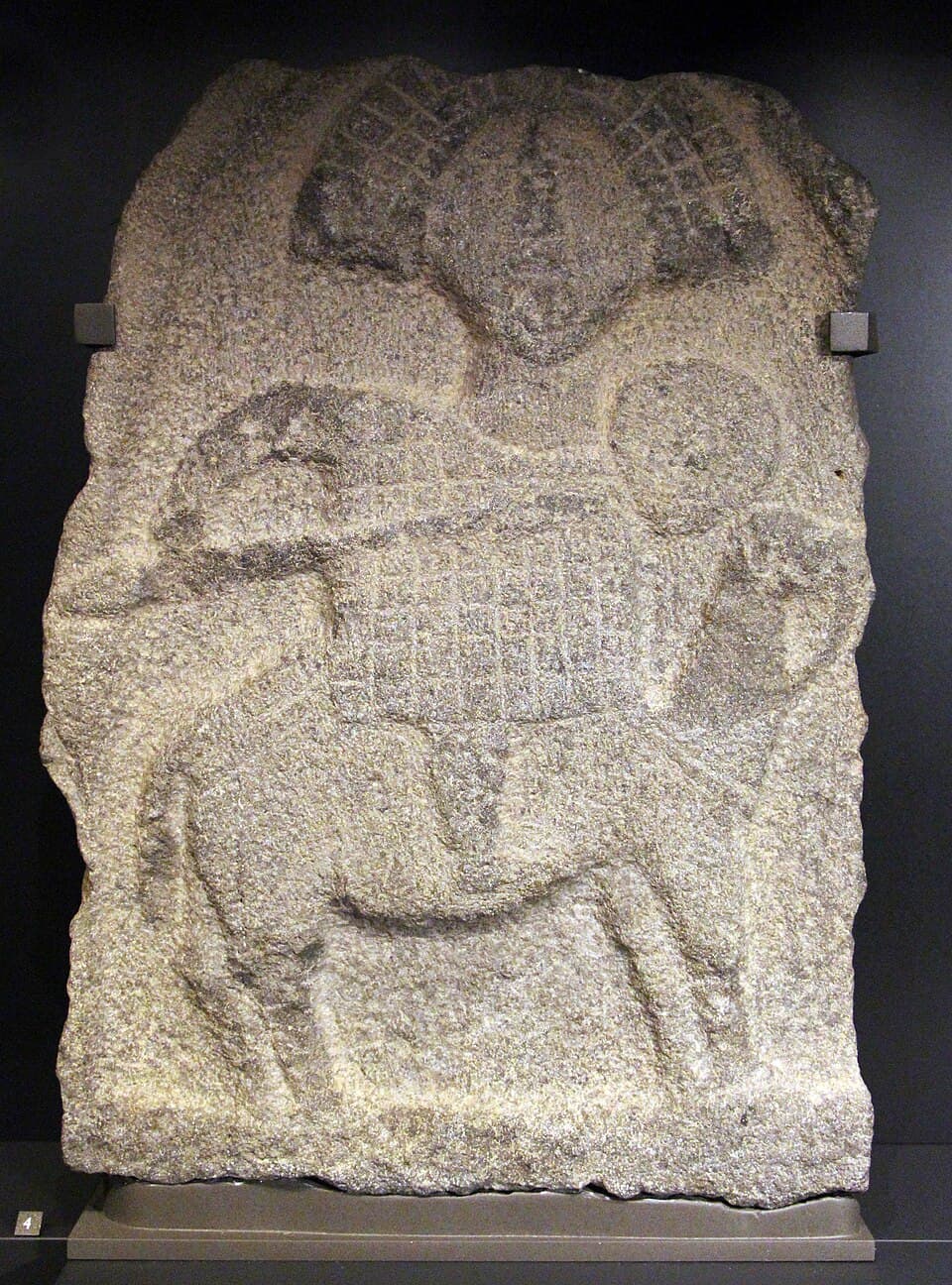
In ancient Arab mythology, Azizos or Aziz is the Palmyran Arab god of the morning star. He is portrayed as riding a camel with his twin brother Arsu, although one source says that "Azizos is depicted as a horseman, whereas Arşu is a cameleer. " He was venerated separately in Syria as god of the morning star, Phosphoros, in company with the astral god Monimos, Hesperos.
In ancient Canaanite religion, Ba'al Hermon was the titular local deity of Mount Hermon. The mountain was inhabited by the Hivites.
Baʿal Berith and El Berith are titles of a god or gods worshiped in Shechem, in ancient Canaan, according to the Bible.
Baal Marqod was a Phoenician god of dancing. He is attested in Greek and Latin inscriptions from the Maronite monastery in Deir al-Qal'a, which was built on a sanctuary dedicated to Baal Marqod, built in the first century CE. Although 19th century scholar had made some different hypotheses of the nature of this god, he is commonly explained as "Baal of dancing" or "lord of dancing".
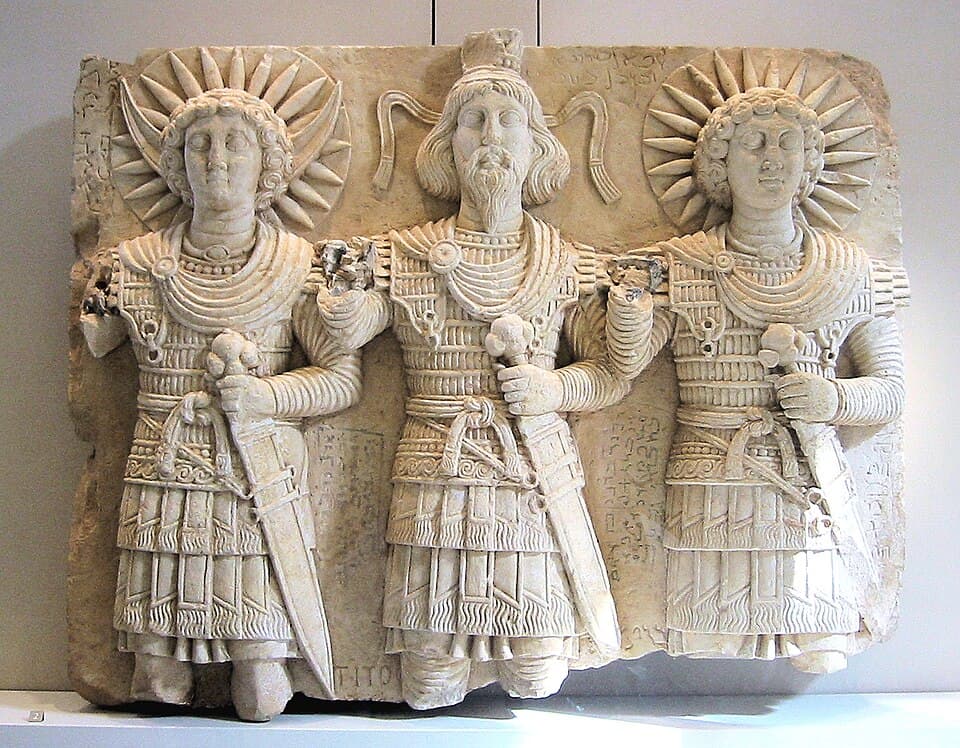
Baalshamin, also called Baal Shamem and Baal Shamaim, was a Northwest Semitic god and a title applied to different gods at different places or times in ancient Middle Eastern inscriptions, especially in Canaan/Phoenicia and Syria. The title was most often applied to Hadad, who is also often titled just Ba‘al. Baalshamin was one of the two supreme gods and the sky god of pre-Islamic Palmyra in ancient Syria.
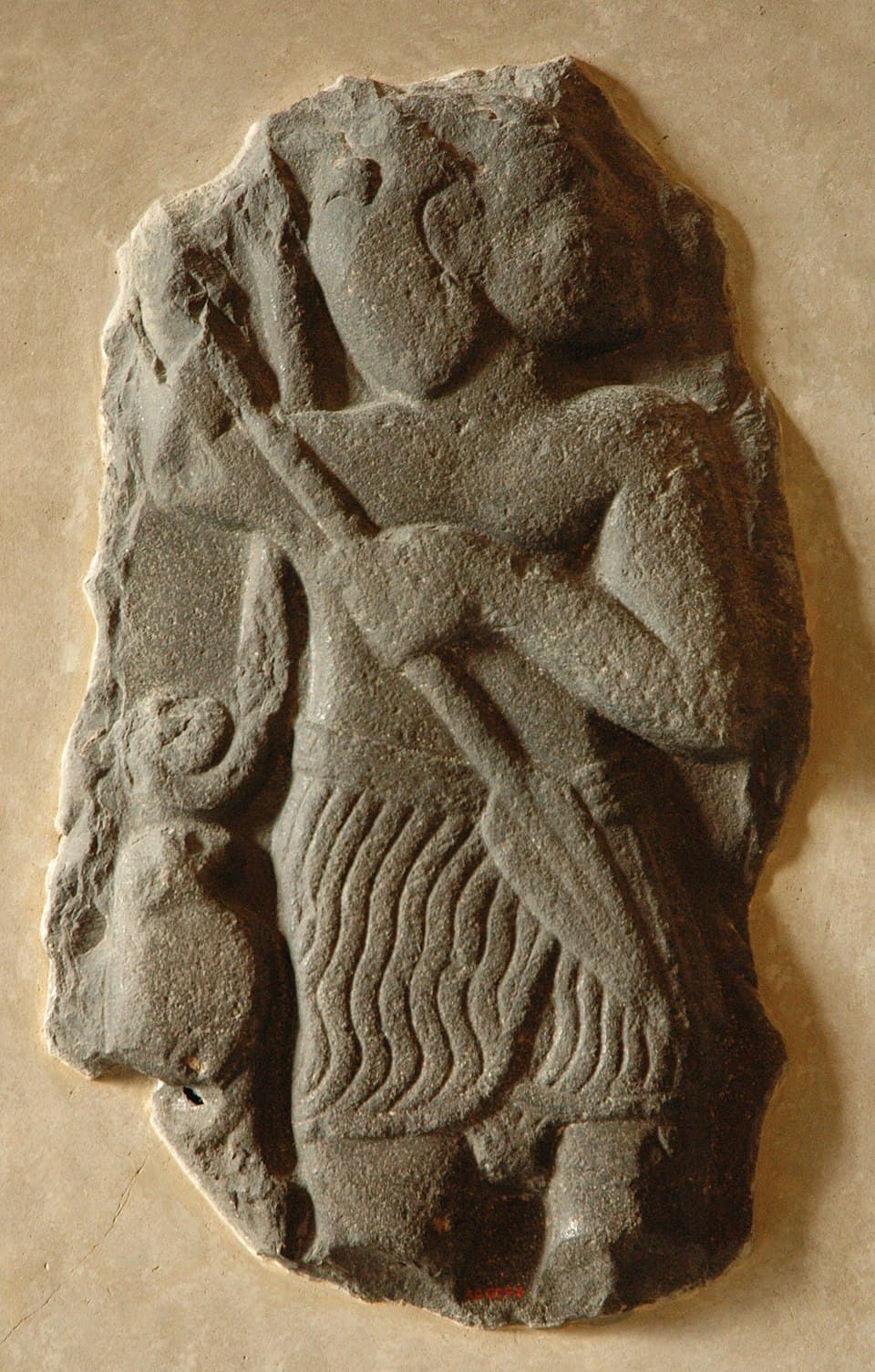
Chemosh is a Canaanite deity worshipped by Ancient Semitic-speaking peoples who occupied the region known as Moab, in modern-day Jordan east of the Dead Sea, during the Levantine Bronze and Iron Ages.
Elyon or El Elyon, is an epithet that appears in the Hebrew Bible and in other ancient writings. ʾĒl ʿElyōn is usually rendered in English as "God Most High", and similarly in the Septuagint as ὁ Θεός ὁ ὕψιστος. The title ʿElyōn is a common topic of scholarly debate, sometimes interpreted as equivalent to the Abrahamic God, and otherwise theorized as a reference to a separate deity of its own kind, potentially above that of Yahweh.
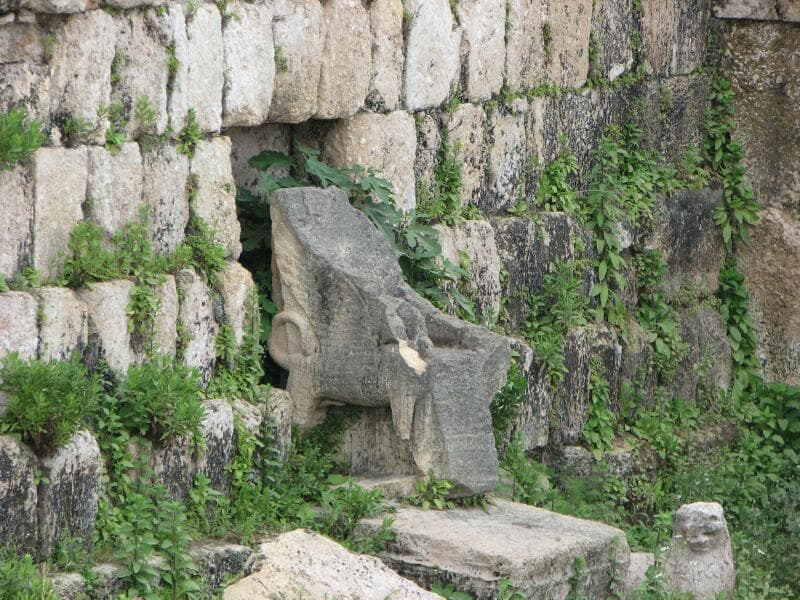
Eshmun was a Phoenician god of healing and the tutelary god of Sidon. His name, which means "eighth," may reference his status as the eighth son of the god Sydyk.

Hauron, Horon, Haurun or Hawran was an ancient Egyptian god worshiped in Giza. He was closely associated with Harmachis, with the names in some cases used interchangeably, and his name as a result could be used as a designation of the Great Sphinx of Giza. While Egyptologists were familiar with Hauron since the nineteenth century, his origin was initially unknown, and only in the 1930s it was established that he originated outside Egypt.
Kothar-wa-Khasis, also known as Kothar or Hayyānu, was an Ugaritic god regarded as a divine artisan. He could variously play the roles of an architect, smith, musician or magician. Some scholars believe that this name represents two gods, Kothar and Khasis, combined into one.
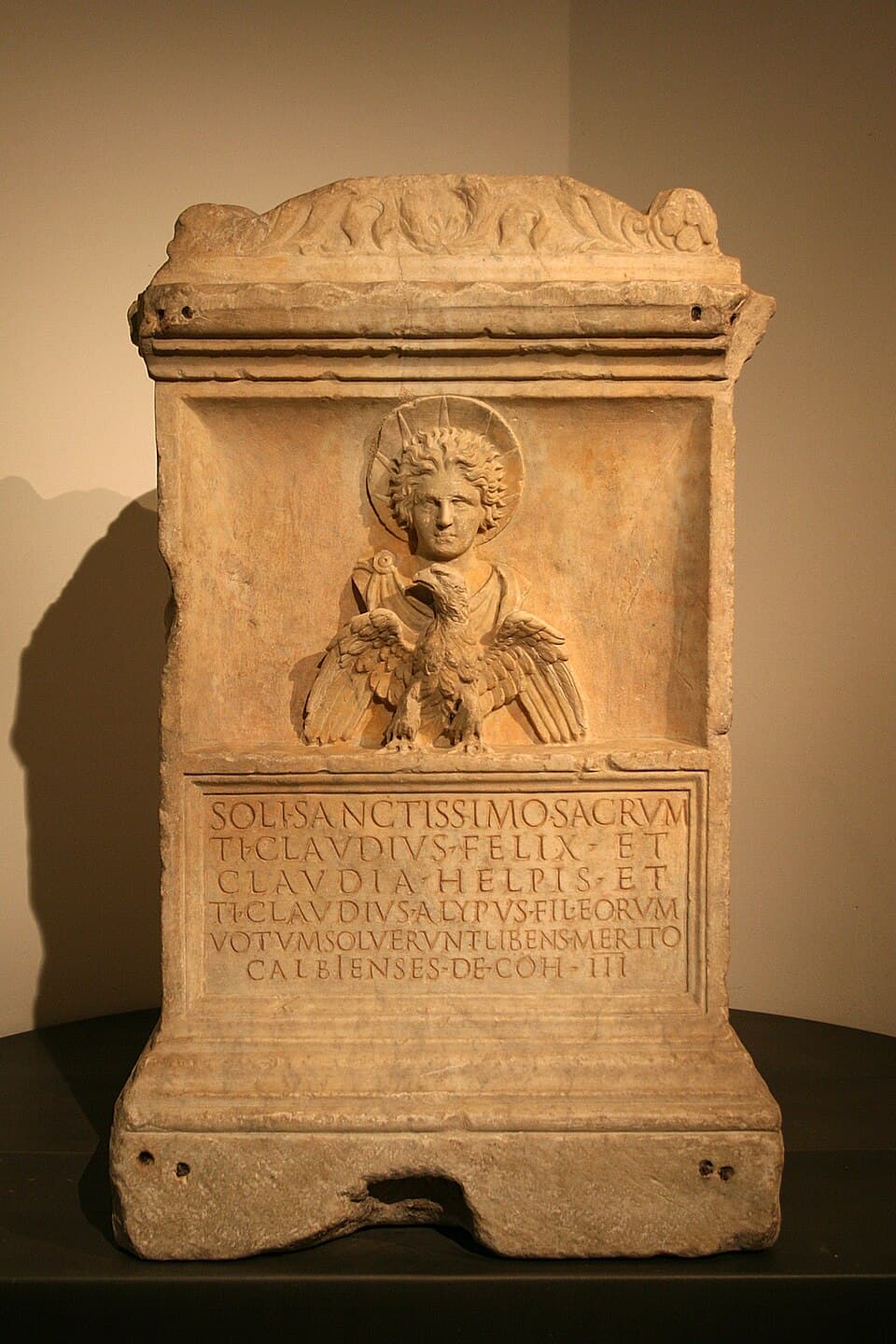
Malakbel was a sun god worshipped in the ancient Syrian city of Palmyra, frequently associated and worshipped with the moon god Aglibol as a part of a trinity involving the sky god Baalshamin.
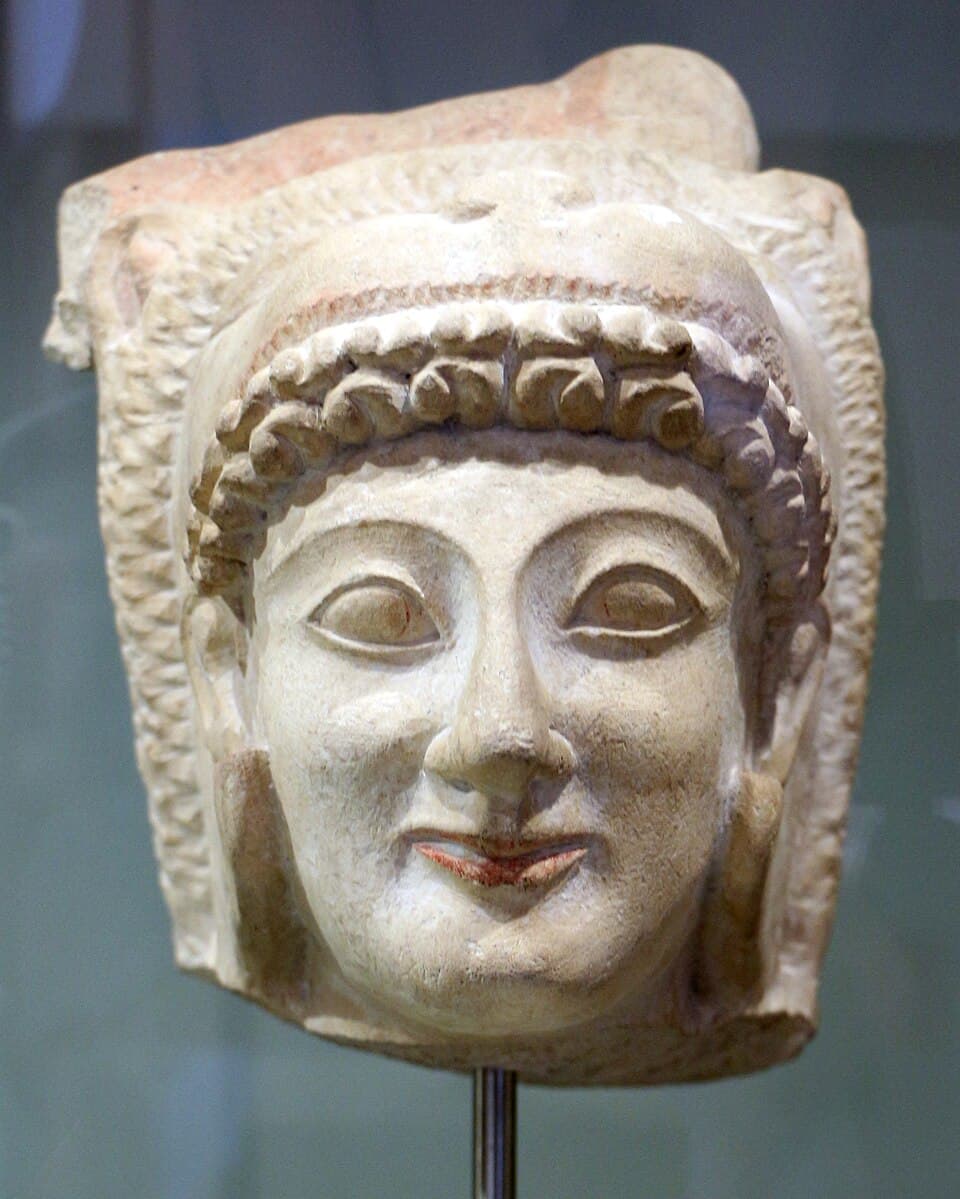
Melqart was the tutelary god of the Phoenician city-state of Tyre and a major deity in the Phoenician and Punic pantheons. He may have been central to the founding-myths of various Phoenician colonies throughout the Mediterranean, as well as the source of several myths concerning the exploits of Heracles. Many cities were thought to be founded and protected by Melqart, no doubt springing from the original Phoenician practice of building a Temple of Melqart at new colonies.
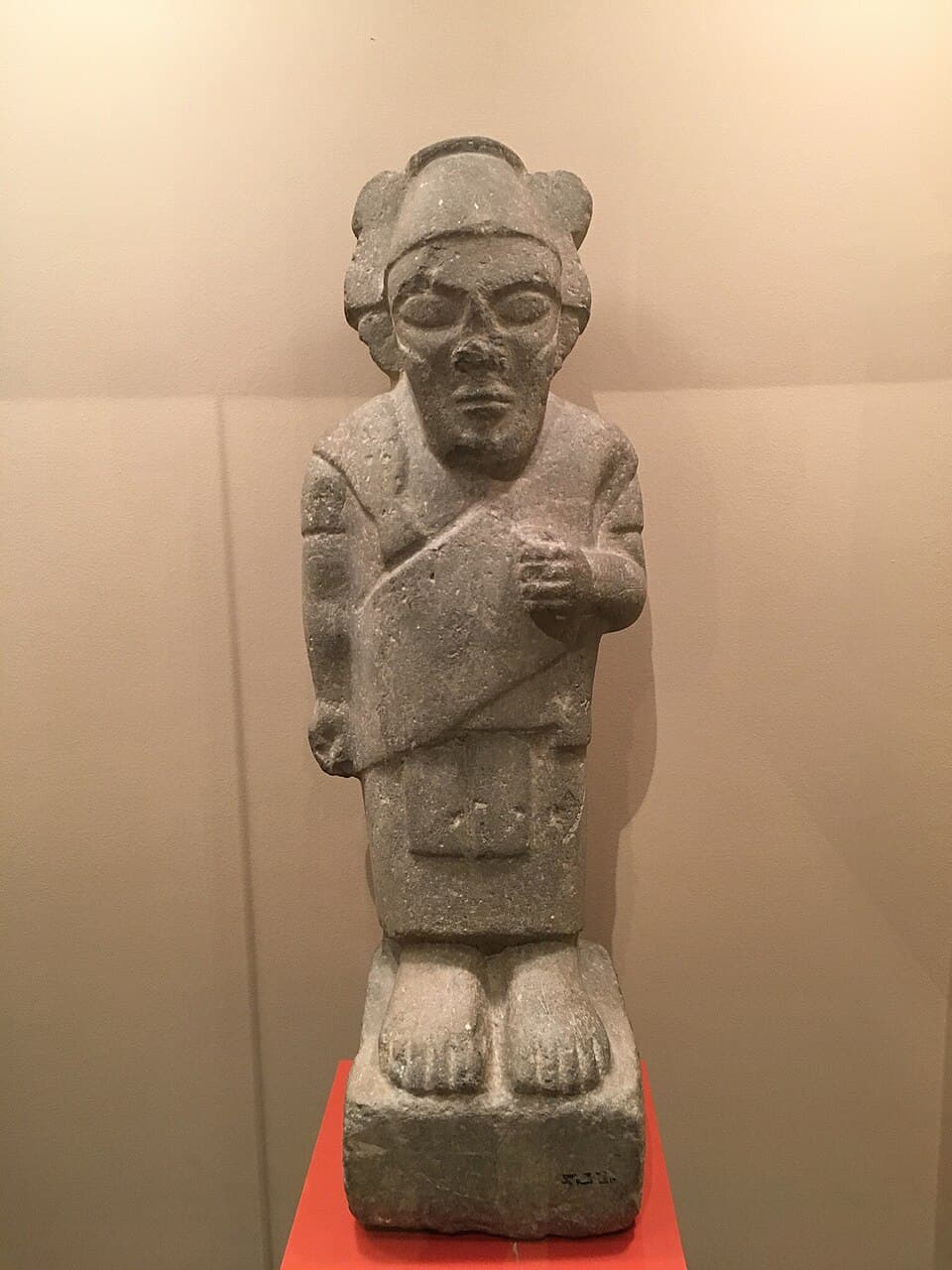
Milcom, also spelled Milkom, was either the national god, or an important god, of the Ammonites. He is attested in the Hebrew Bible and in archaeological finds from the former territory of Ammon. His connections to other deities with similar names attested in the Bible and archaeologically are debated, as well as his relationship to the Canaanite supreme deity El, or the putative deity Moloch.
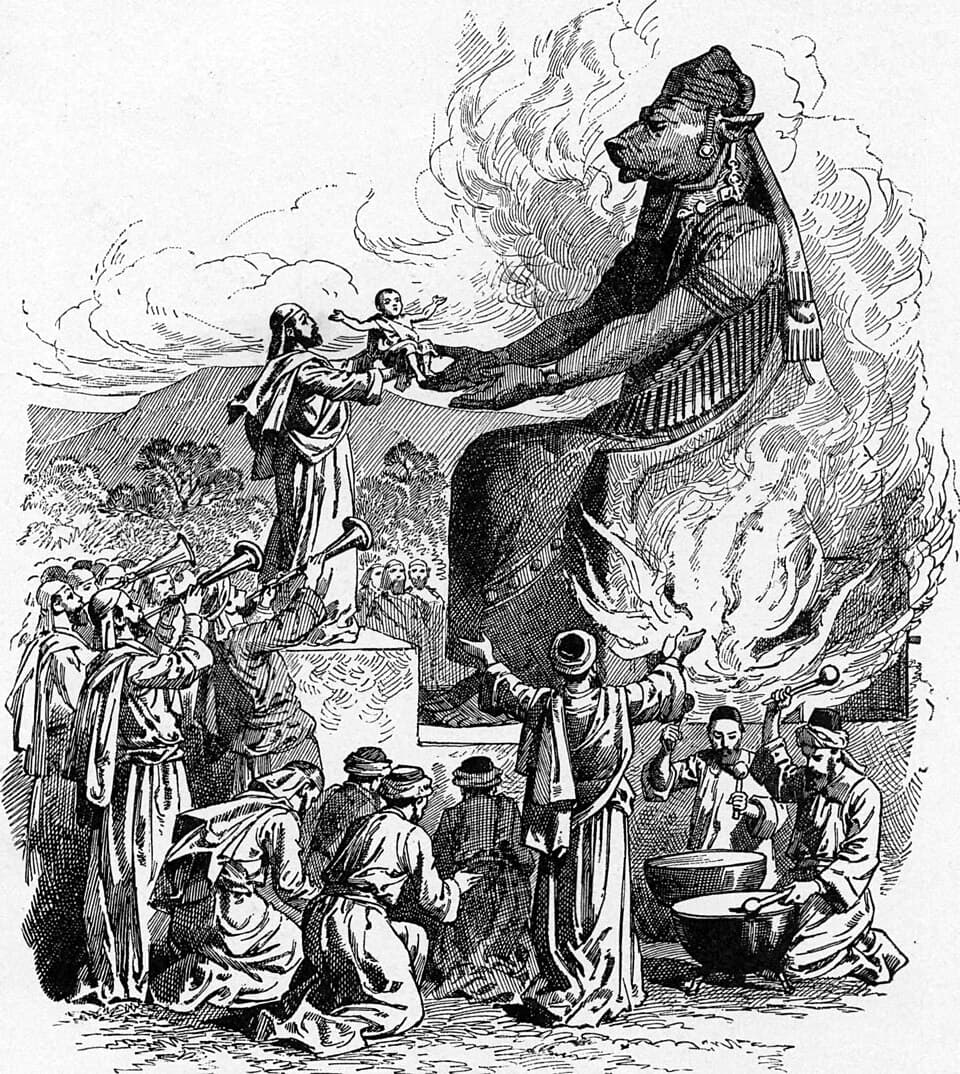
Moloch, Molech, or Molek is a word which appears in the Hebrew Bible several times, primarily in the Book of Leviticus. The Greek Septuagint translates many of these instances as "their king", but maintains the word or name Moloch in others, including one additional time in the Book of Amos where the Hebrew text does not attest the name. The Bible strongly condemns practices that are associated with Moloch, which are heavily implied to include child sacrifice.
In Near Eastern mythology, Monimos (Mun'im) is the Arab god of the evening star (Hesperos), the counterpart of Azizos, the morning star. Both gods were companions of Helios, the sun. Monimos is identified with the Palmyrene god Arsu.
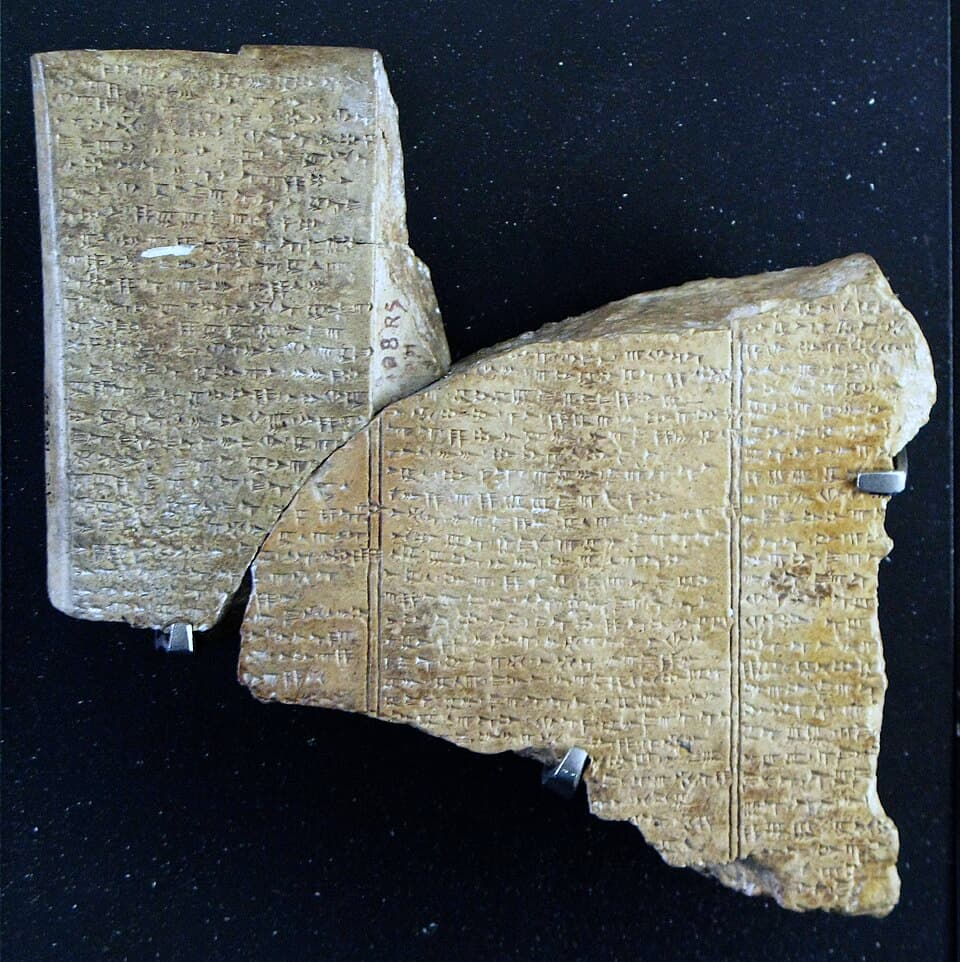
Mot, also known as Maweth, was the Canaanite god of death and the Underworld. He was also known to the people of Ugarit and in Phoenicia, where Canaanite religion was widespread. The main source of information about Mot in Canaanite mythology comes from the texts discovered at Ugarit, but he is also mentioned in the surviving fragments of Philo of Byblos's Greek translation of the writings of the Phoenician Sanchuniathon.
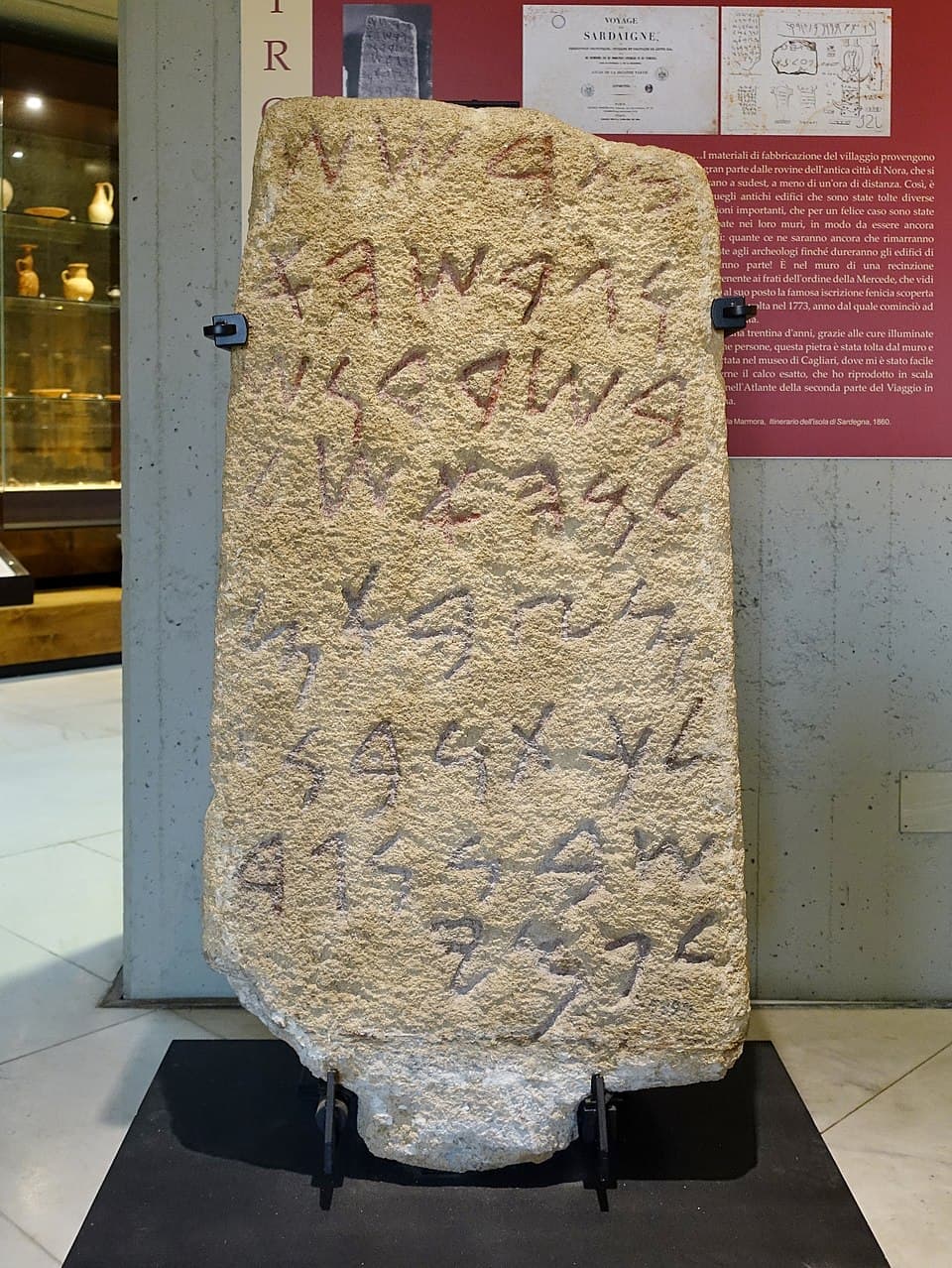
Pummay is a putative Phoenician deity of whom little is known. Pummay is attested to primarily in theophoric names, such as that of Pygmalion of Tyre. Because so little is known about the deity, scholars are unable to assert what Pummay's tutelary function was or what he was associated with.
Qos also Qaus, or Koze was the national god of the Edomites. He was the Idumean structural parallel to Yahweh. The name occurs only twice in the Old Testament in the Book of Ezra and Nehemiah as an element in a personal name, Barqos, referring to the 'father' of a family or clan of perhaps Edomite/Idumaean nəṯīnīm or temple helpers returning from the Babylonian exile.
Resheph was a god associated with war and plague, originally worshiped in Ebla in the third millennium BCE. He was one of the main members of the local pantheon, and was worshiped in numerous hypostases, some of which were associated with other nearby settlements, such as Tunip. He was associated with the goddess Adamma, who was his spouse in Eblaite tradition.
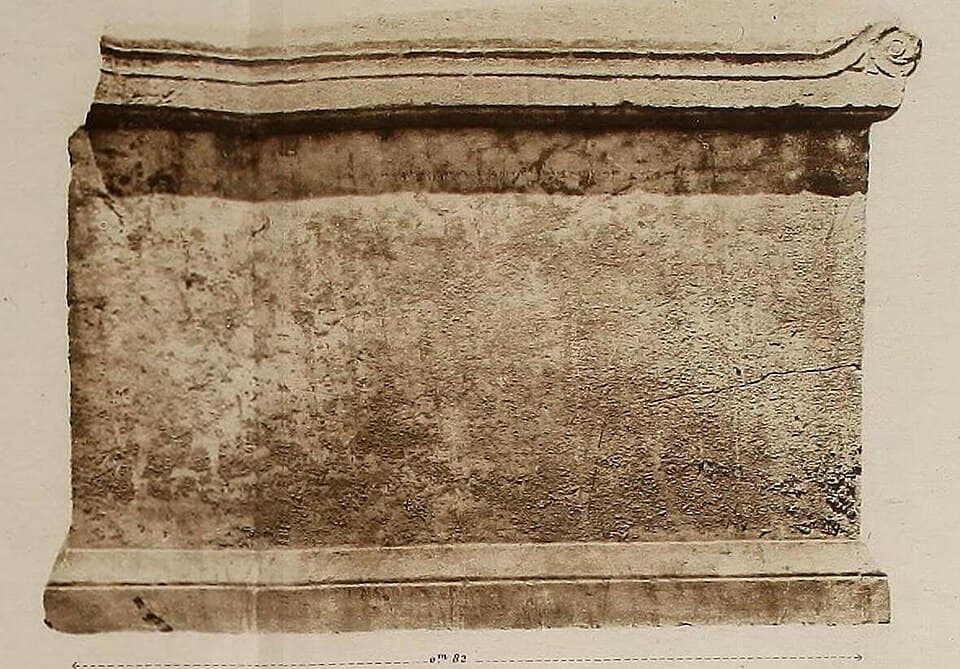
Sakkun was a Phoenician god. He is known chiefly from theophoric names such as Sanchuniathon and Gisgo. As of 1940, his earliest appearance in epigraphical evidence is from the 5th century BC.
Satrapes was a god in the Palmyrene pantheon, the name occurring in Syrian inscriptions from Palmyra and the Hauran. Pausanias mentions 'Satrapes' as the name of a god who had a statue and a cult in Elis and is identified with Korybas.
Shadrafa is a poorly-attested Canaanite (Punic) god of healing or medicine.
Shahar ("dawn") is a god in Ugaritic and Canaanite religion first mentioned in inscriptions found in Ugarit.
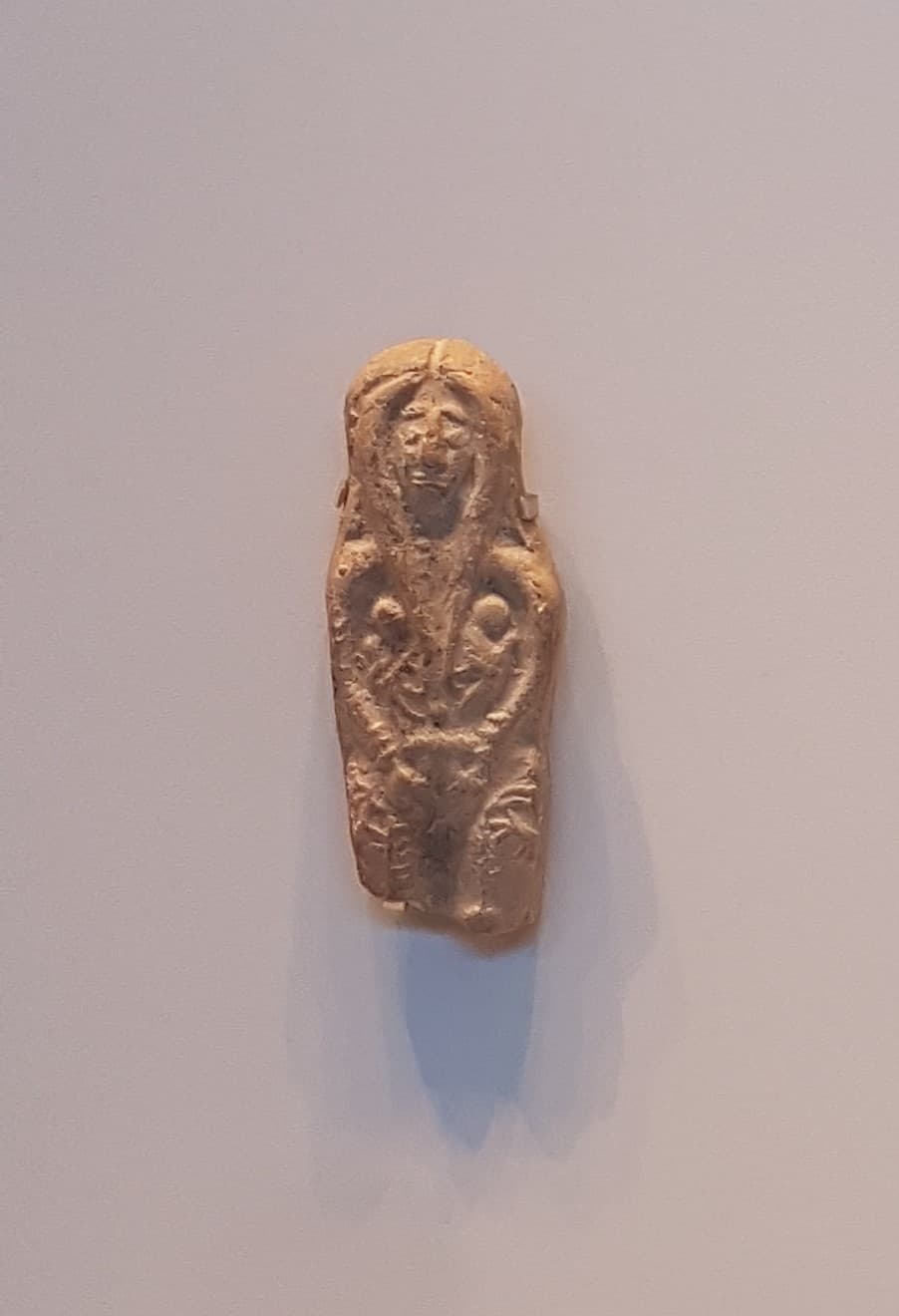
Shalim is a god in Canaanite religion, mentioned in inscriptions found in Ugarit. William F. Albright identified Shalim as the god of the dusk and Shahar as the god of the dawn.
Sydyk was the name of a deity appearing in a theogony provided by Roman-era Phoenician writer Philo of Byblos in an account preserved by Eusebius in his Praeparatio evangelica and attributed to the still earlier Sanchuniathon.
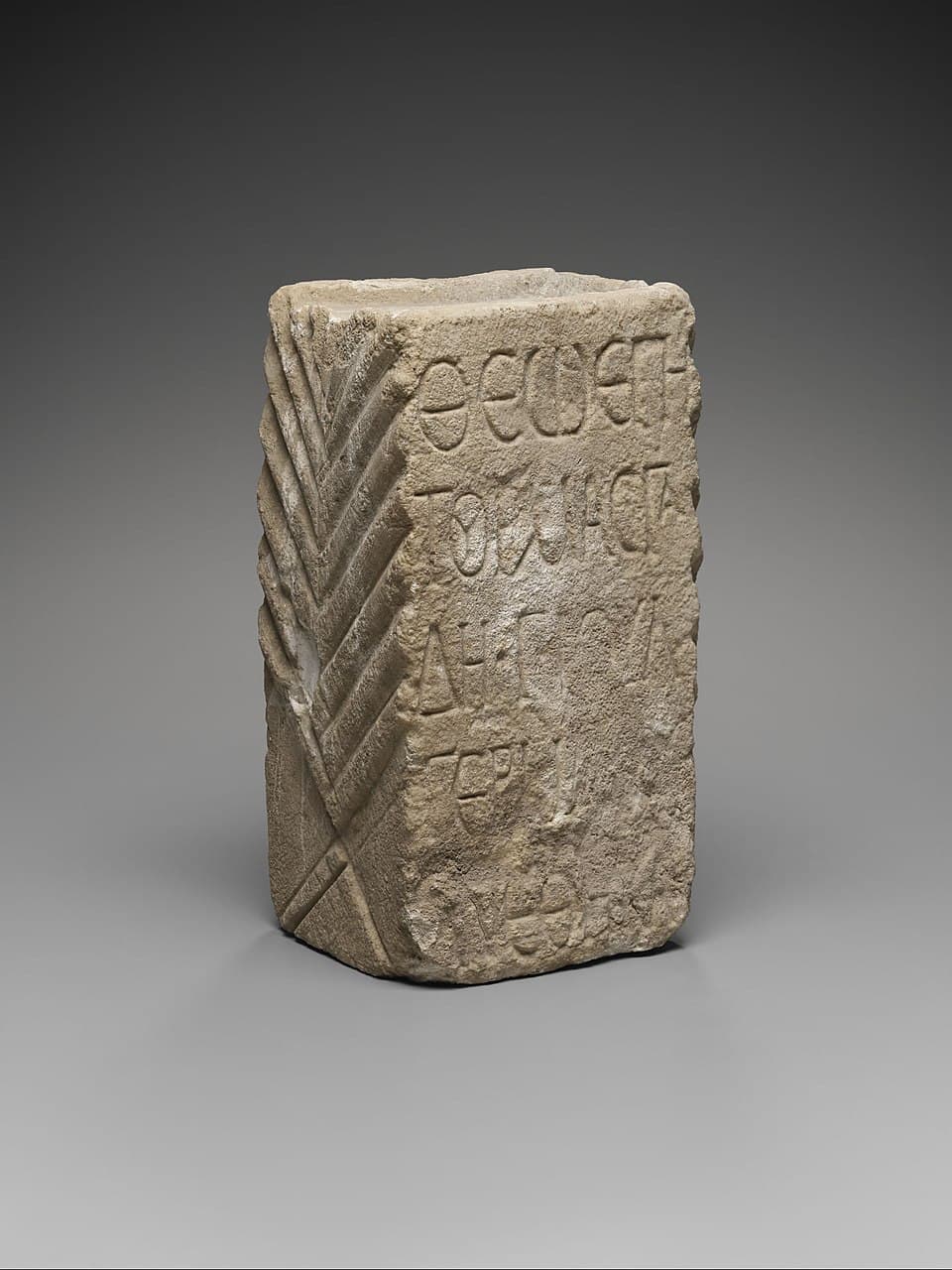
Turmasgade is a little known god, known from about 10 inscriptions from the Roman Empire. The name 'Turmasgade' is Aramaic and means "mountain of worship" or "mountain of sanctuary". Tur means "mountain"; msgd - "worship" or "sanctuary".
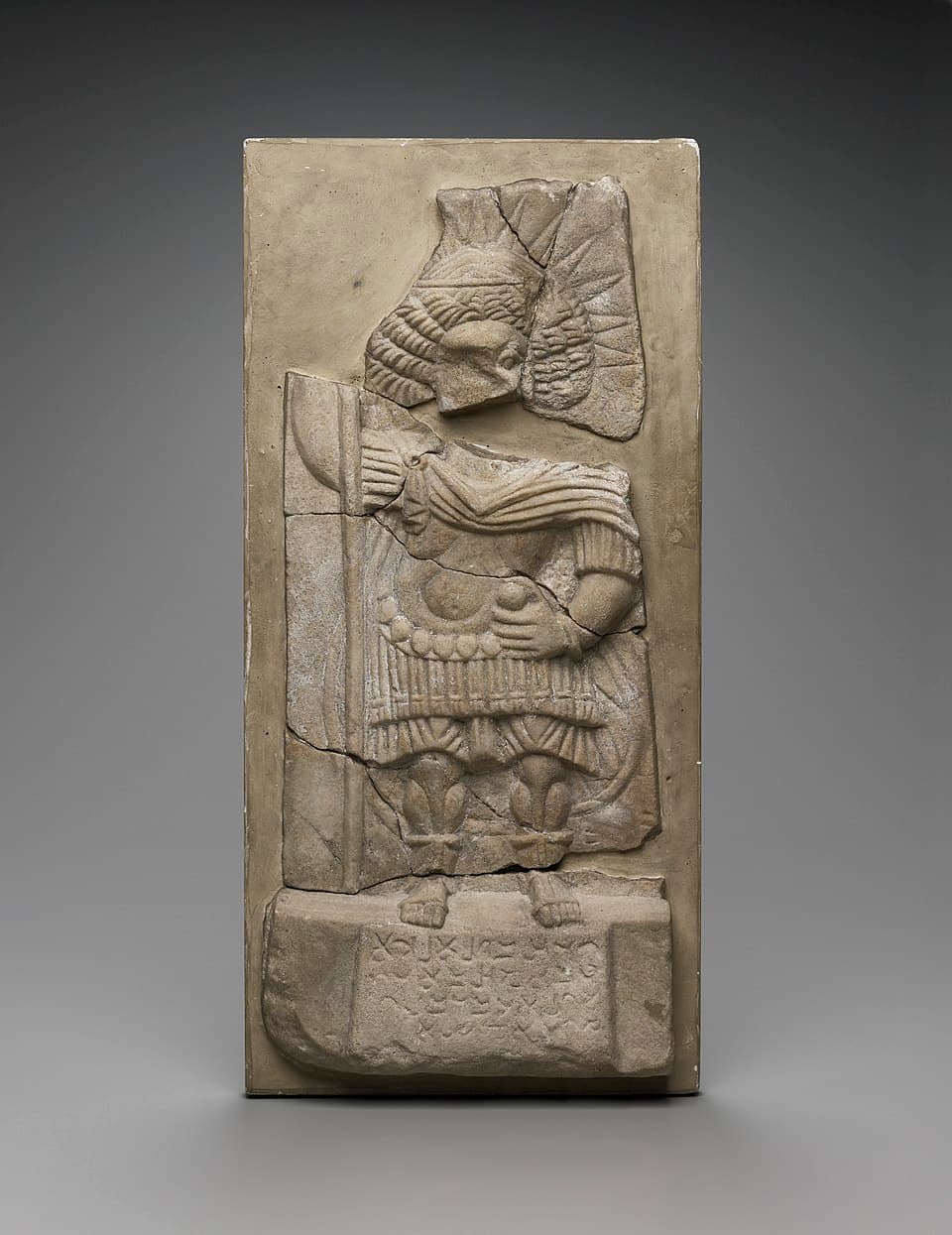
Yarhibol or Iarhibol is an Aramean god who was worshiped mainly in ancient Palmyra, a city in central Syria. He was depicted with a solar nimbus and styled "lord of the spring". He normally appears alongside Bel, who was a co-supreme god of Palmyra, and Aglibol, one of the other top Palmyrene gods.
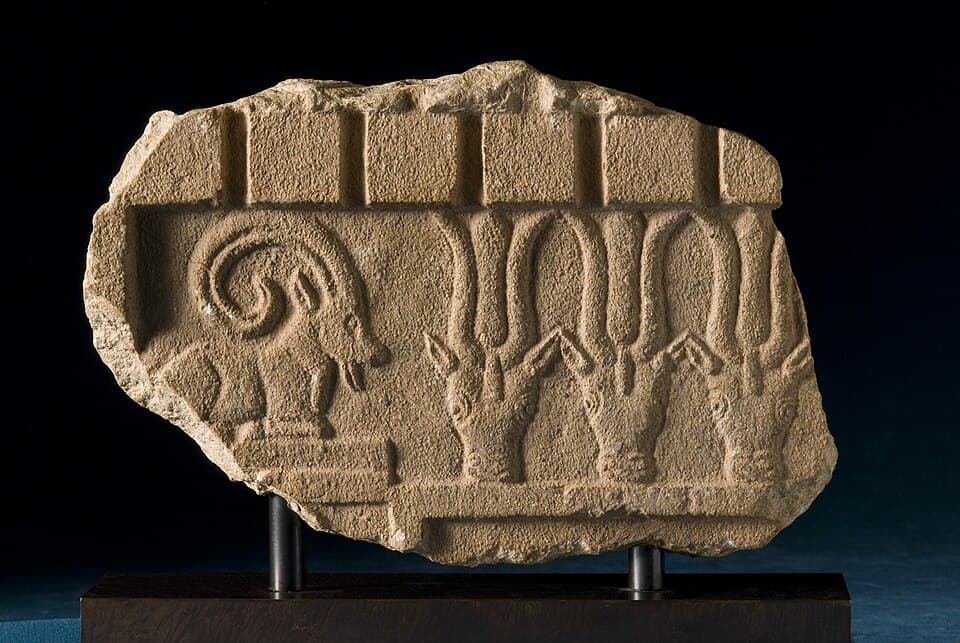
ʿAṯtar is a deity whose role, name, and even gender varied across ancient Semitic religion. In both genders, ʿAṯtar is identified with the planet Venus, the morning and evening star. ʿAṯtar is a prominent character in the Baal Cycle.
Complete index
All 30 names, alphabetically. This pantheon is too small for a letter rail to be worth the space — 30 entries do not fill 26 letters — so it runs as one list.