Abiku
Abiku is a Yoruba word that can be translated as "born to die" and refers to the spirit of a child who dies young. It is derived from (abi) "that which was born" and (iku) "death".
Pantheon
Every entry the archive files to this pantheon, with the record for each shown as it stands.
58 entries
These three are recorded for the Yoruba pantheon as a whole. The archive holds no separate culture, civilization or period for the individual entries below.
Entries
Showing 1–58 of 58, alphabetically.
Abiku is a Yoruba word that can be translated as "born to die" and refers to the spirit of a child who dies young. It is derived from (abi) "that which was born" and (iku) "death".
Aganjú is an Orisha in Yoruba religion and its descendant traditions in the Americas. He is a primordial deity associated with the sun, fire, and the untamed wilderness. In the Cuban tradition of Santería, Aganjú is associated with volcanoes and syncretized with Saint Christopher.

In the Yoruba religion, Agẹmọ is a chameleon spirit that is the servant of Ọlọrun, the Supreme Being who created the Yoruba pantheon of deities known as Orishas. Agemo carries messages between Ọlọrun and the orishas.
Àjìjà is the Orisha of the whirlwind, forest, the animals within it and herbalists. In her forests she would find plants with medicinal properties and mix the herbs and roots and other plant parts together to find cures for the sick. She holds the secrets of botany and can be also looked to for help with trading and economic prosperity.
In Yoruba religion, the Ajogun are malevolent spiritual forces or deities that interfere regularly with mortal lives. The Ajogun are seen as the polar opposite of the benevolent Oriṣa and are believed to be in constant battle with them and at war with mankind, maintaining cosmic balance. They are 200 in number but are led by eight spirits, of whom the spirit of death, Iku, is the head.
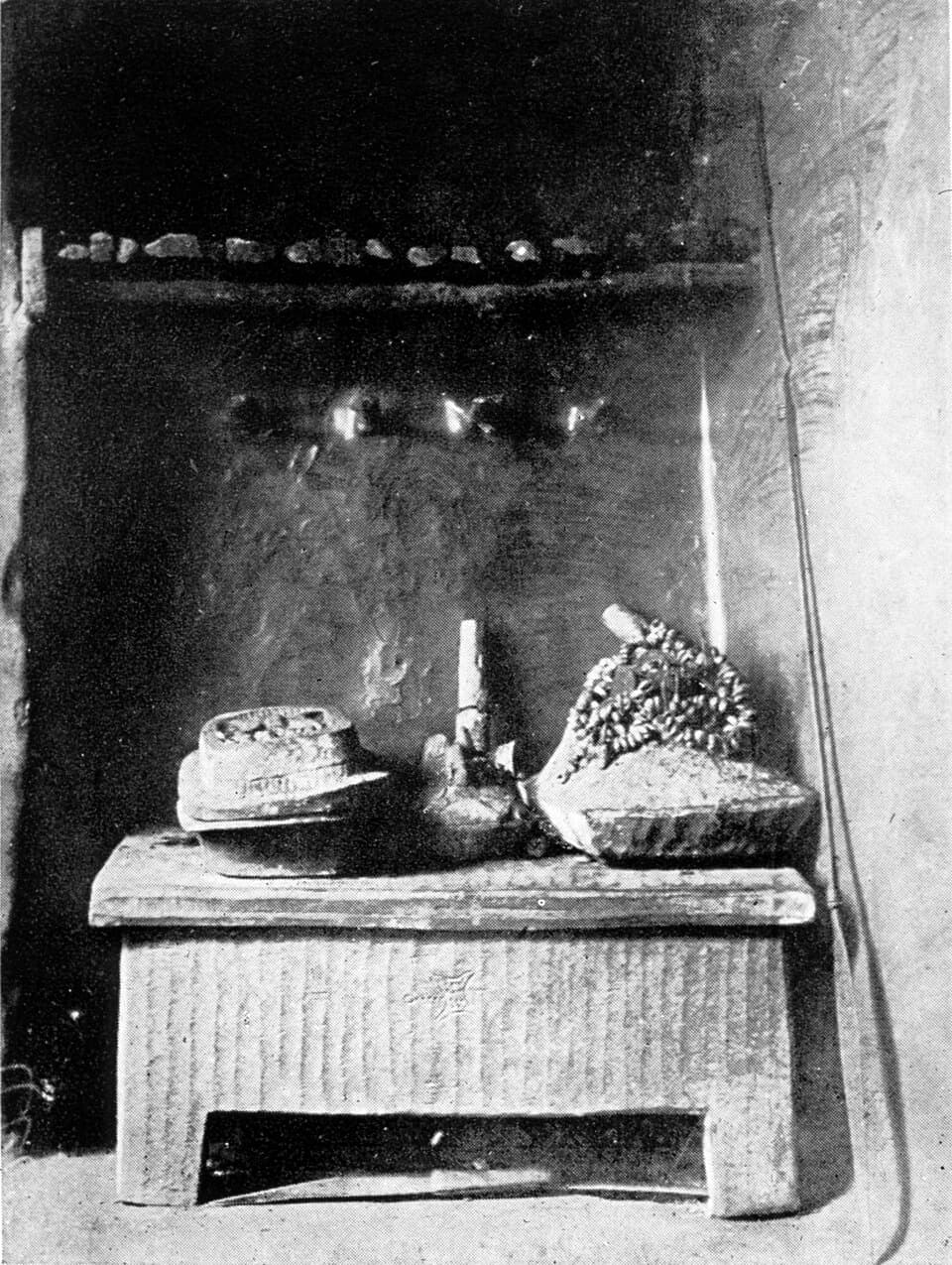
Alusi, also known as arusi, are spirits that are worshipped and served in the Igbo religion. There are many different kinds of alusi, and each has its own purpose and function.
Ajagunda is the youngest path, or avatar, of the Sky Father Obatala in the Lukumi (Santería) pantheon. In this manifestation, Obatala is a youth who battles with a scimitar. He is credited with having spread gunpowder throughout the world.
Ayao is an orisha in the Santería pantheon. She is the orisha of the air, and is considered to reside in both the forest and in the eye of the tornado. She works closely with Ọsanyìn and is a fierce warrior.
Ayé is the personification of the Earth or the physical realm and an oriṣa in Yoruba religion. As the physical realm, it is also referred to as Ile Ayé or Ikole Ayé. It is believed to have been created by Ọbatala, the King of the oriṣa, who descended from the spirit realm, Ọrun, following directions from the Supreme Being Olodumare.
Ayelala is a female deity of justice and retribution widely feared for her instant punishments for those who commit criminal offences. She is also known as a goddess of truth, oath and divination. She originated from the areas inhabited by the Yoruba and Ijaw people in southwestern Nigeria, but later spread to other parts of the country, especially Benin and Edo State.
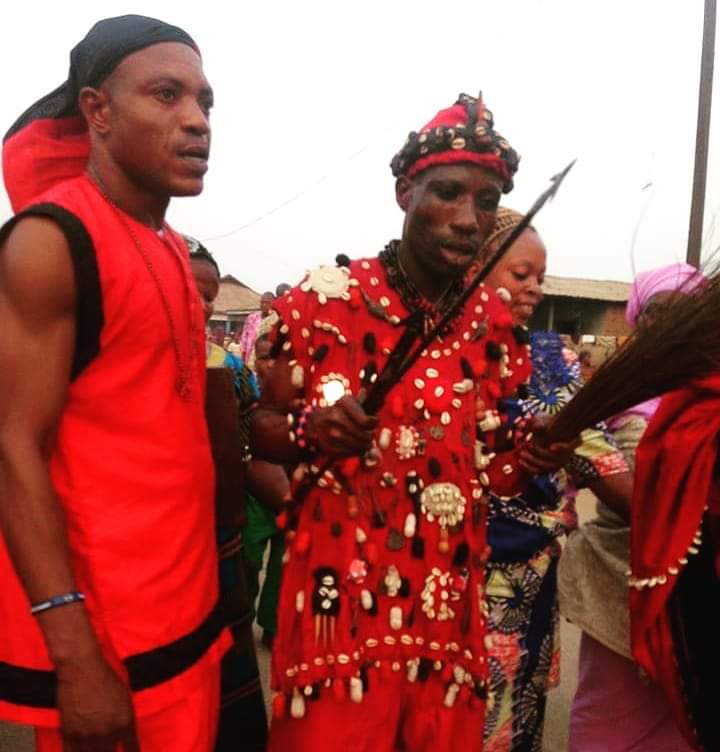
Babalú-Aye is one of the Oriṣa or manifestations of the Supreme Deity Olodumare in the Yoruba religion of West Africa. Babalú-Aye is a spirit of the Earth and is strongly associated with healing and illness.
Bantu religion is a system of various spiritual beliefs and practices that relate to the Bantu people of Central, East, and Southern Africa. Although Bantu peoples account for several hundred different ethnic groups, there is a high degree of homogeneity in Bantu cultures and customs, just as in Bantu languages. Many Bantu cultures traditionally believed in a supreme god whose name is a variation of Nyambe/Nzambe and ancestral veneration.
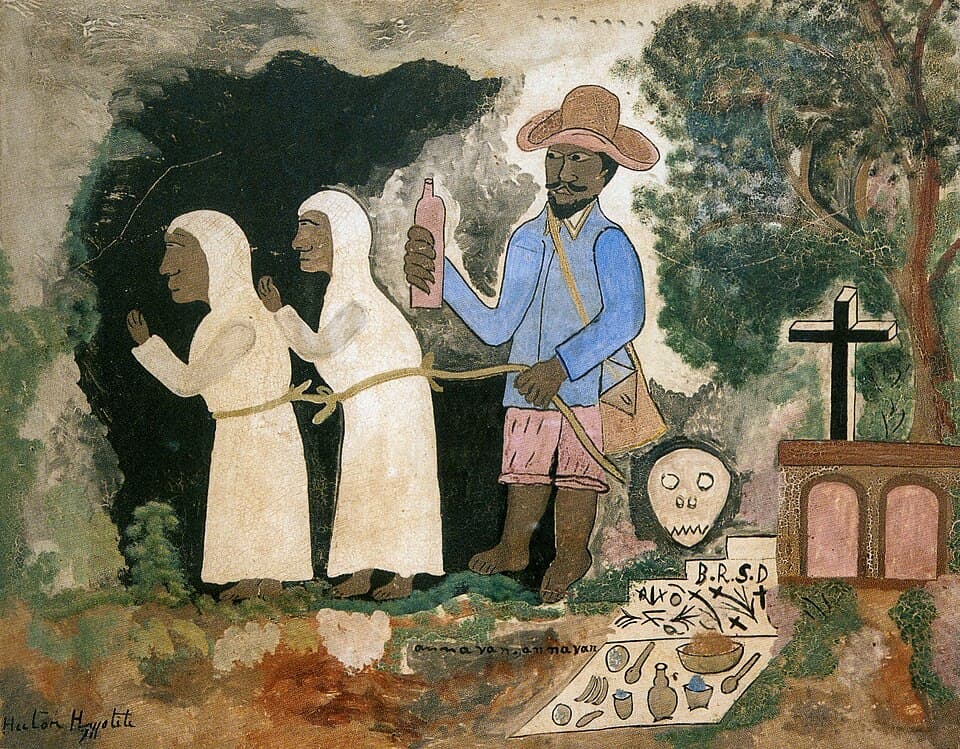
A bokor (male) or caplata (female) is a Vodou priest or priestess for hire in Haiti who is said to serve the loa, "'with both hands', practicing for both good and evil. " Their practice includes the creation of zombies and of ouangas.
This is an incomplete list of humans and angels whom the Catholic Church has canonized as saints. Catholic theology holds that all saints enjoy the beatific vision. Many appear in the General Roman Calendar; others are recorded in the Roman Martyrology; and still others belong to particular local churches or religious institutes, with recognition that does not extend to the universal church.
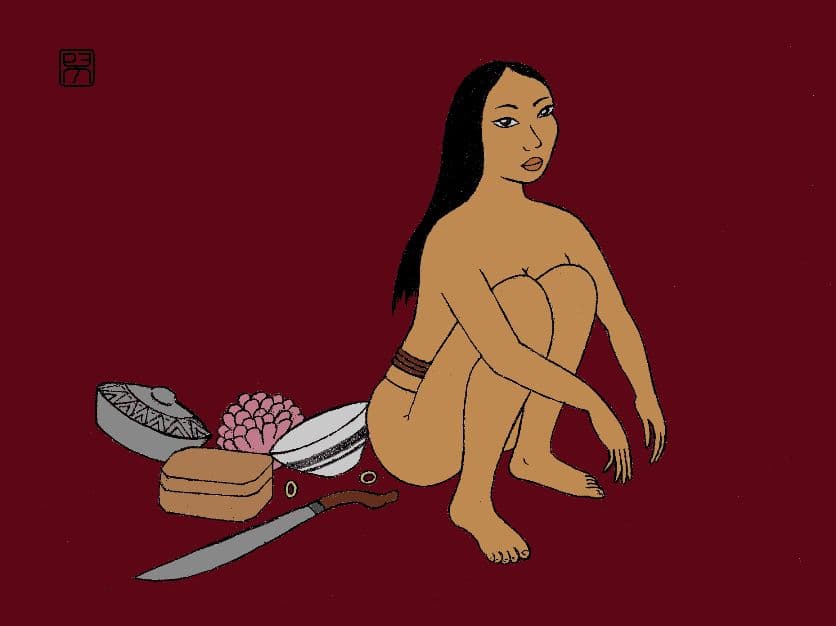
Dema Deity is a concept introduced by Adolf Ellegard Jensen following his research on religious sacrifice. Jensen was a German ethnologist who furthered the theory of Cultural Morphology founded by Leo Frobenius.

Diffused monotheism is a term primarily used by scholars in the philosophy of religion and theology to refer to the belief in one Supreme Being who consigns authority to myriad lesser divinities or deities, creating a belief system where the One God is generally acknowledged but worship is centred on the other divinities, making it seem like polytheism while still established in monotheism. Closely related to the concept of henotheism, it was originated by E. Bolaji Idowu in 1962.
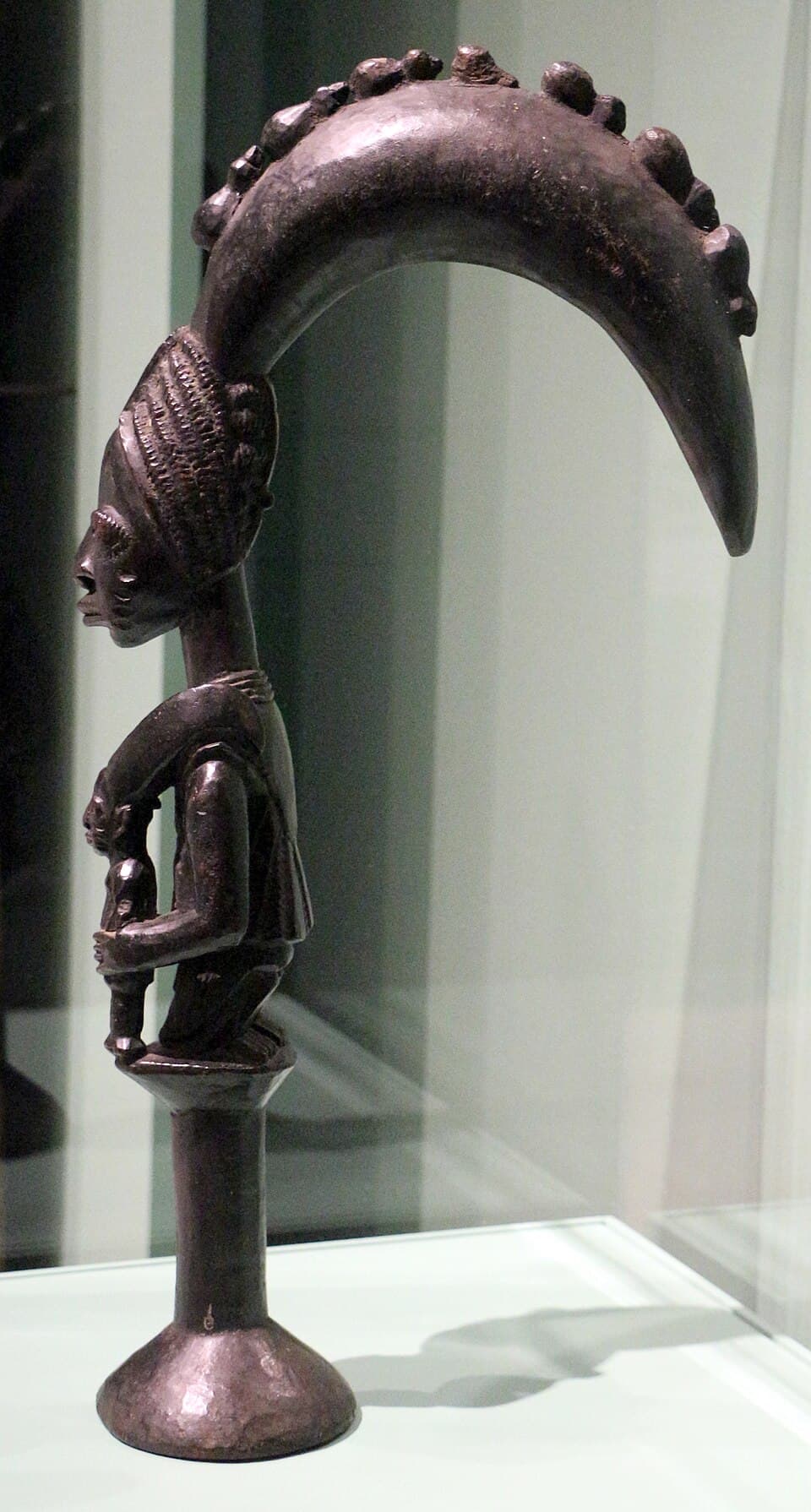
Elegua, Eshu / Elegba in North America, in Cuba spelled Elegguá; also known as Eleguá in Latin America Spanish-speaking Caribbean islands, and Exu in Brasil is an Orisha, a deity of roads in the religions of traditional Ifa-Orisha / Ìṣẹ̀ṣe Yorùbá l / Ẹ̀sìn Òrìṣà Ìbílẹ̀, Santería, Winti, Umbanda, Quimbanda, and Candomblé.
In the Yoruba tradition, Erinlẹ was a great hunter who became an orisha.
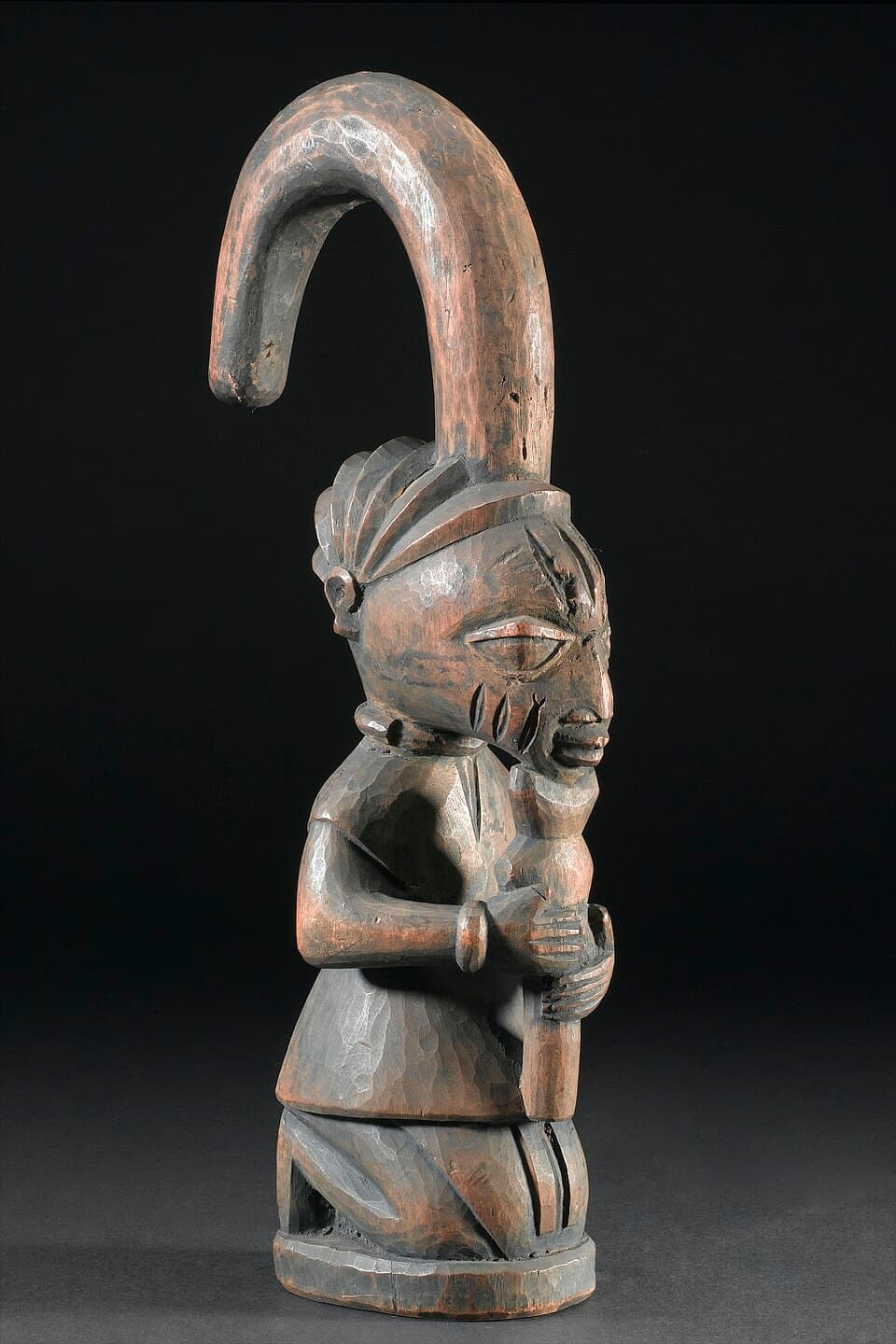
Èṣù is the oriṣa of trickery, chance, crossroads, judgement, duality and languages in the Yoruba religion. Eṣu is a prominent primordial divinity who descended from Ìkọ̀lé Ọ̀run, and the chief enforcer of natural and divine laws. He is in charge of law enforcement and orderliness.
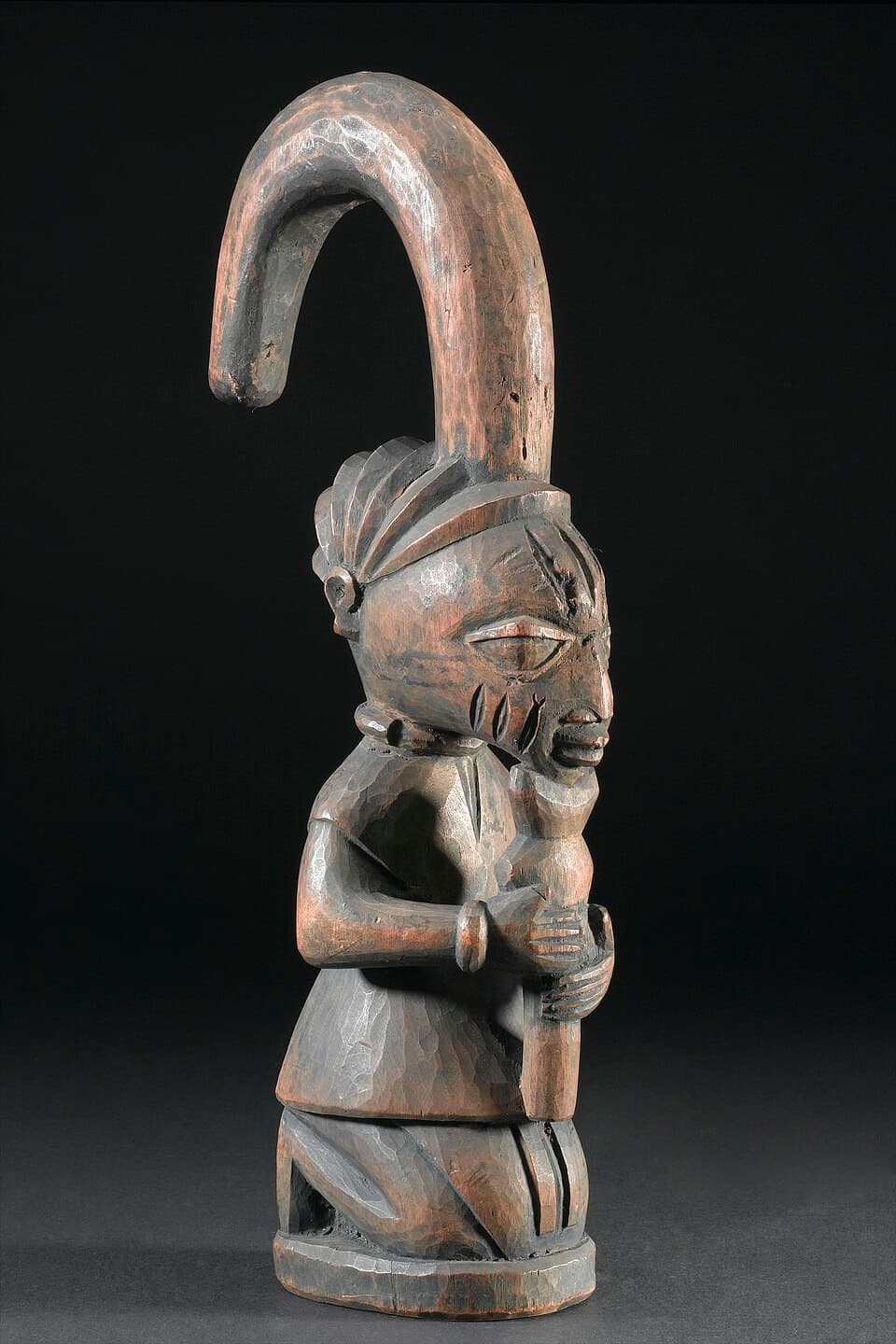
Èṣù is the oriṣa of trickery, chance, crossroads, judgement, duality and languages in the Yoruba religion. Eṣu is a prominent primordial divinity who descended from Ìkọ̀lé Ọ̀run, and the chief enforcer of natural and divine laws. He is in charge of law enforcement and orderliness.

Father Divine, also known as Reverend M. J. Divine, was an American spiritual leader from about 1907 until his death in 1965.

The Gẹlẹdẹ spectacle of the Yoruba is a public display by colorful masks which combines art and ritual dance to amuse, educate and inspire worship. Gelede celebrates “Mothers”, a group that includes female ancestors and deities as well as the elderly women of the community, and the power and spiritual capacity these women have in society. Focusing not only on fertility and motherhood but also on correct social behavior within the Yoruba society.

God's Wife of Amun was the highest-ranking priestess of the Amun cult, an important religious institution in ancient Egypt. The cult was centered in Thebes in Upper Egypt during the Twenty-fifth and Twenty-sixth dynasties. The office had political importance as well as religious, since the two were closely related in ancient Egypt.

Hausa animism, Maguzanci or Bori is a pre-Islamic traditional religion of the Hausa people of West Africa that involves magic and spirit possession. While only a part of the Hausa people converted to Islam before the end of the 18th century, most of the adherents of the religion did the same between the jihad started by the Islamic reformer Usman dan Fodio around 1800 and the beginning of the 20th century, while a small minority converted to Christianity. Religious affiliation to this traditional religion is virtually nonexistent at the beginning of the 21st century; however, Hausa animism and Islam among Hausa people have coexisted for centuries, and some practices related to animism carry on locally.
The High Priest of Amun or First Prophet of Amun was the highest-ranking priest in the priesthood of the ancient Egyptian god Amun. The first high priests of Amun appear in the New Kingdom of Egypt, at the beginning of the Eighteenth Dynasty.

The High Priest of Ptah was sometimes referred to as "the Greatest of the Directors of Craftsmanship". This title refers to Ptah as the patron god of the craftsmen.
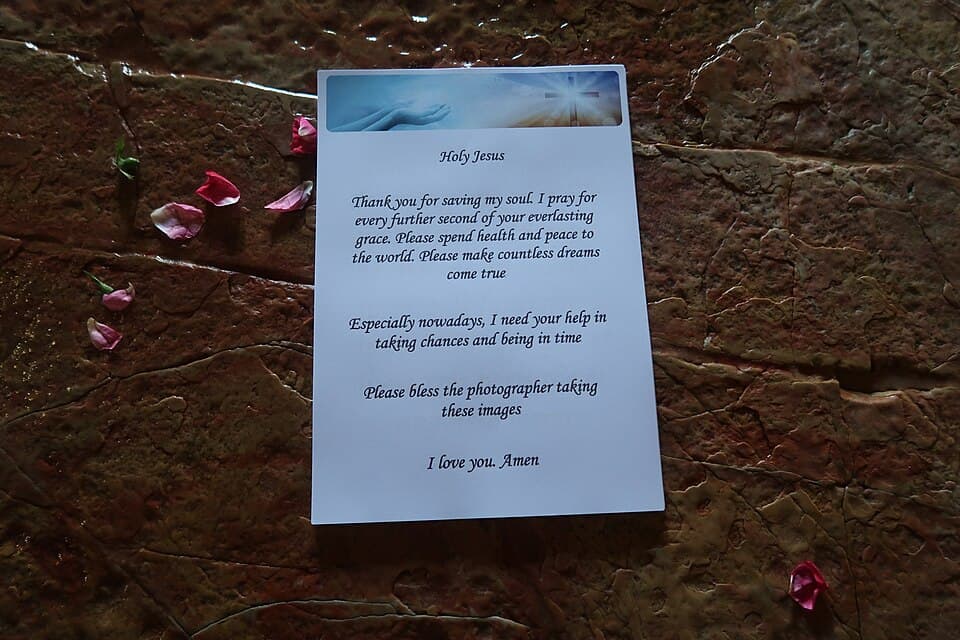
A sacred place or holy site is a location which is regarded to be sacred or hallowed. The sacredness of a natural feature may accrue through tradition or be granted through a blessing. One or more religions may consider sacred locations to be of special significance.
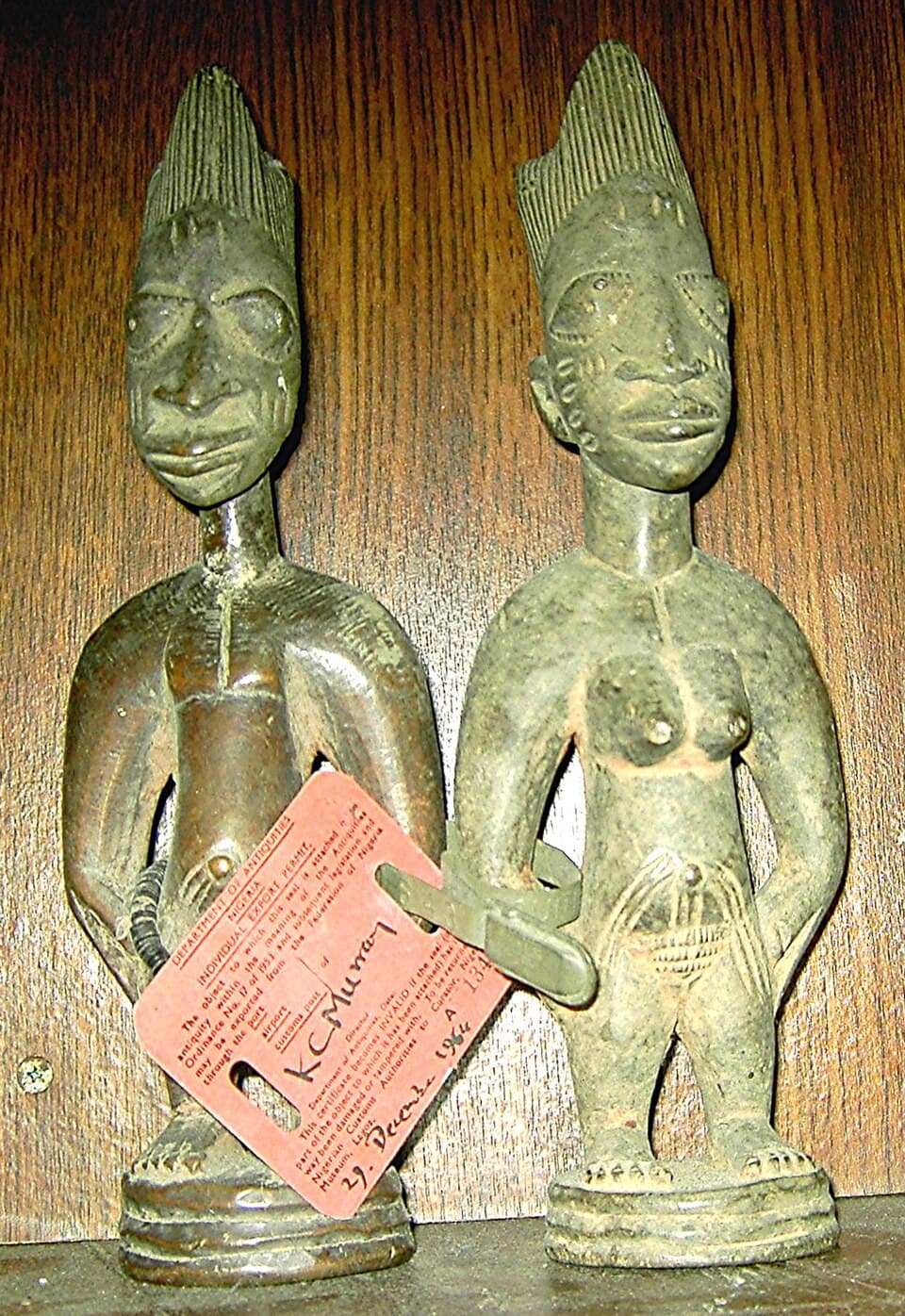
Ibeji is the name of a pair of Orisha representing divine twins in the Yoruba religion of the Yoruba people. In the diasporic Yoruba spirituality of Latin America, Ibeji are syncretized with Saints Cosmas and Damian. In Yoruba culture and spirituality, twins are believed to be sacred, and are granted protection by the Orisha Shango.
The Ijesha are one of the major sub-groups of the Yoruba people of West Africa. Ilesha is the largest town and historic cultural capital of the Ijesha people, and is home to a large kingdom of the same name, ruled by a King titled as his Imperial Majesty, the Owa Obokun Adimula of Ijesaland. The Prince Clement Adesuyi Haastrup from the Bilaro Oluodo Ruling House succeeds the now late Oba Gabriel Adekunle Aromolaran, as the 49th Owa Obokun of Ijesaland.
The International Peace Mission movement is a syncretic religious movement founded and led by Father Divine. His followers worshiped Father Divine as a God. The core belief of the International Peace Mission movement is that everyone is treated equal in the eyes of God.
The Irunmọlẹ are a group of primordial divine beings, or orishas, in the Yoruba religion, a West African religion practised by the Yoruba people. Ọbatala is the oldest Irunmọlẹ, and is regarded as the king of all Orishas.
Ìyá Nlá is the primordial spirit of all creation in Yoruba cosmology. She is believed to be the source of all existence. Iya Nla literally means “Great Mother” in the Yoruba language.
Jacob Kehinde Olupona is a Nigerian-born American professor, writer, and scholar of religious studies. He is a professor of African Religious Traditions at the Harvard Divinity School with a joint appointment as Professor of African and African American Studies in the Faculty of Arts and Sciences at Harvard University. Olupona was elected to the American Academy of Arts and Sciences in April 2023.
Kélé is an Afro-Saint Lucian religion, originated from the Djiné people of the Babonneau region. Its primary deities are Ogun, Shango and Eshu. Kélé ceremonies include the drumming of the tanbou manman and the tanbou ich of the Batá drum family.
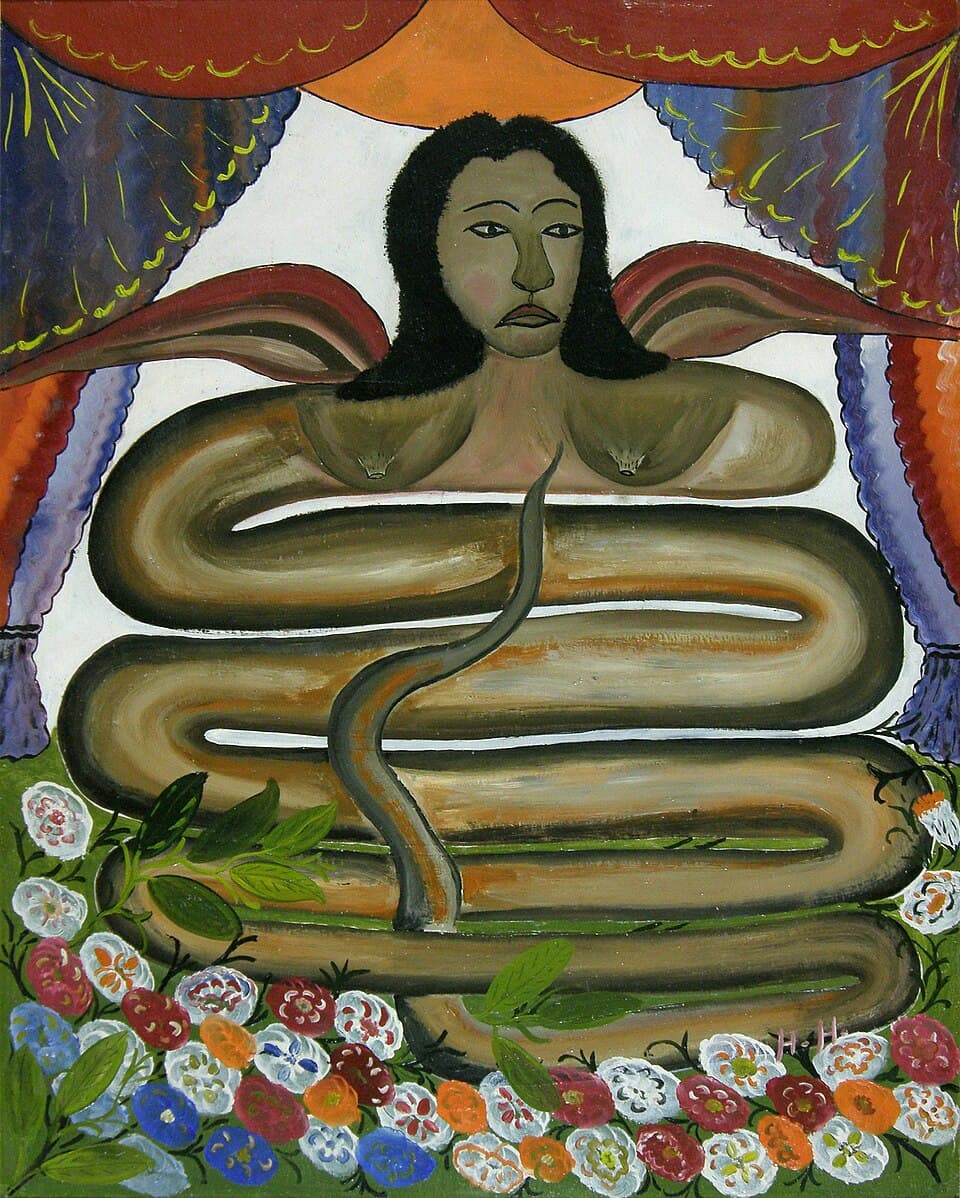
Lwa, also called loa, are spirits in the African diasporic religion of Haitian Vodou. They have also been incorporated into some revivalist forms of Louisiana Voodoo. Many of the lwa derive their identities in part from deities venerated in the traditional religions of West Africa, especially those of the Fon and Yoruba.
The Nation of Yahweh is a Black Hebrew Israelite religious movement which was founded in 1979 in Miami by Hulon Mitchell Jr. , who went by the name Yahweh ben Yahweh. Its goal is to move African Americans, who it believes are the original Israelites, to Israel.
Ọbà is the orisha of the River Oba, the source of which lies near Igbon, where her worship originates. During the wars of the 19th century, her centers of worship moved to the more secure town Ogbomosho. She is traditionally identified as the senior wife of Shango.
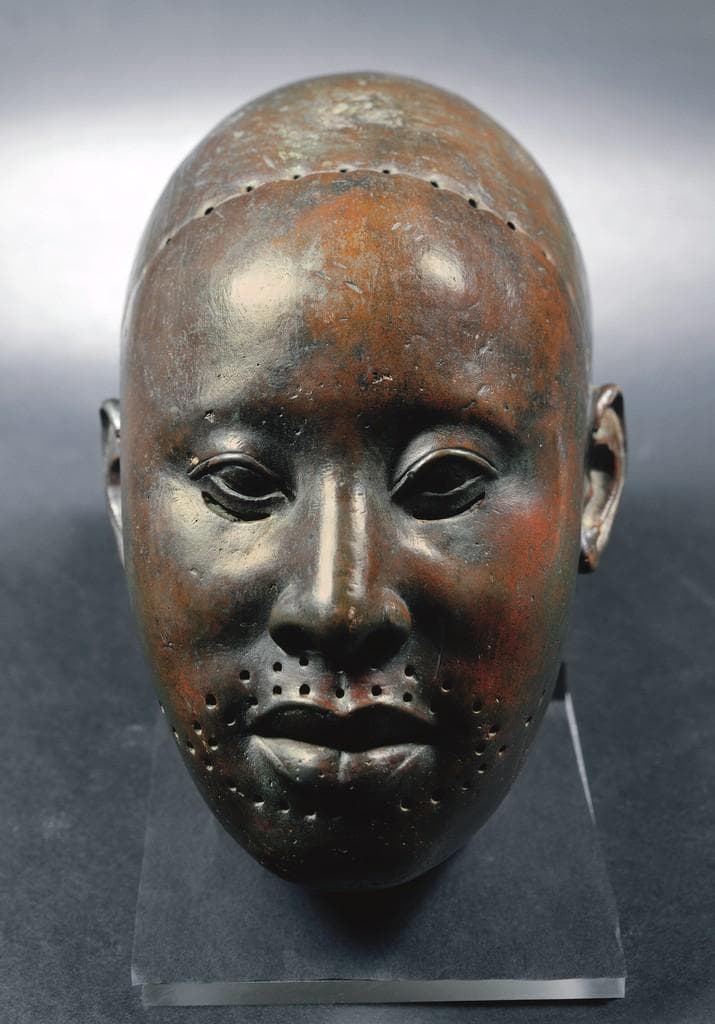
Obalufon Alayemore, also referenced as Ọbalùfọ̀n II or just Alayemore, was the Third Ooni of Ife, a paramount traditional ruler of the Ife Empire. He succeeded his father Obalufon Ogbogbodirin. Obalufon Alayemore was forced out of power by Ooni Oranmiyan and later returned with the help of local residents to reclaim the throne.
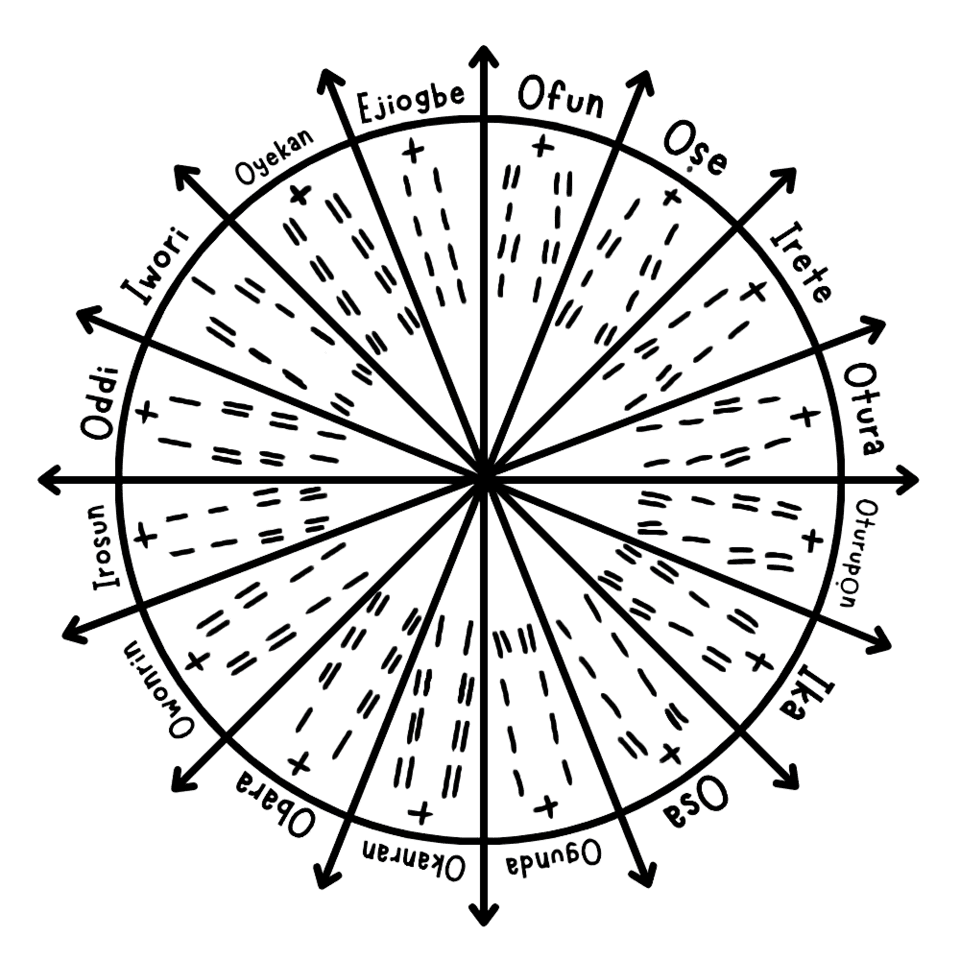
The Odu Ifá, also called the Ifa Literary Corpus is a large collection of allegorical and literal historical proverbs, poetic verses and stories that serves as the central religious scripture of Iṣẹṣe. The Odu Ifa is an oral corpus passed down originally in Yoruba language through generations, believed by the Yoruba to have been revealed by the deity of wisdom, Ọrunmila, to humanity.
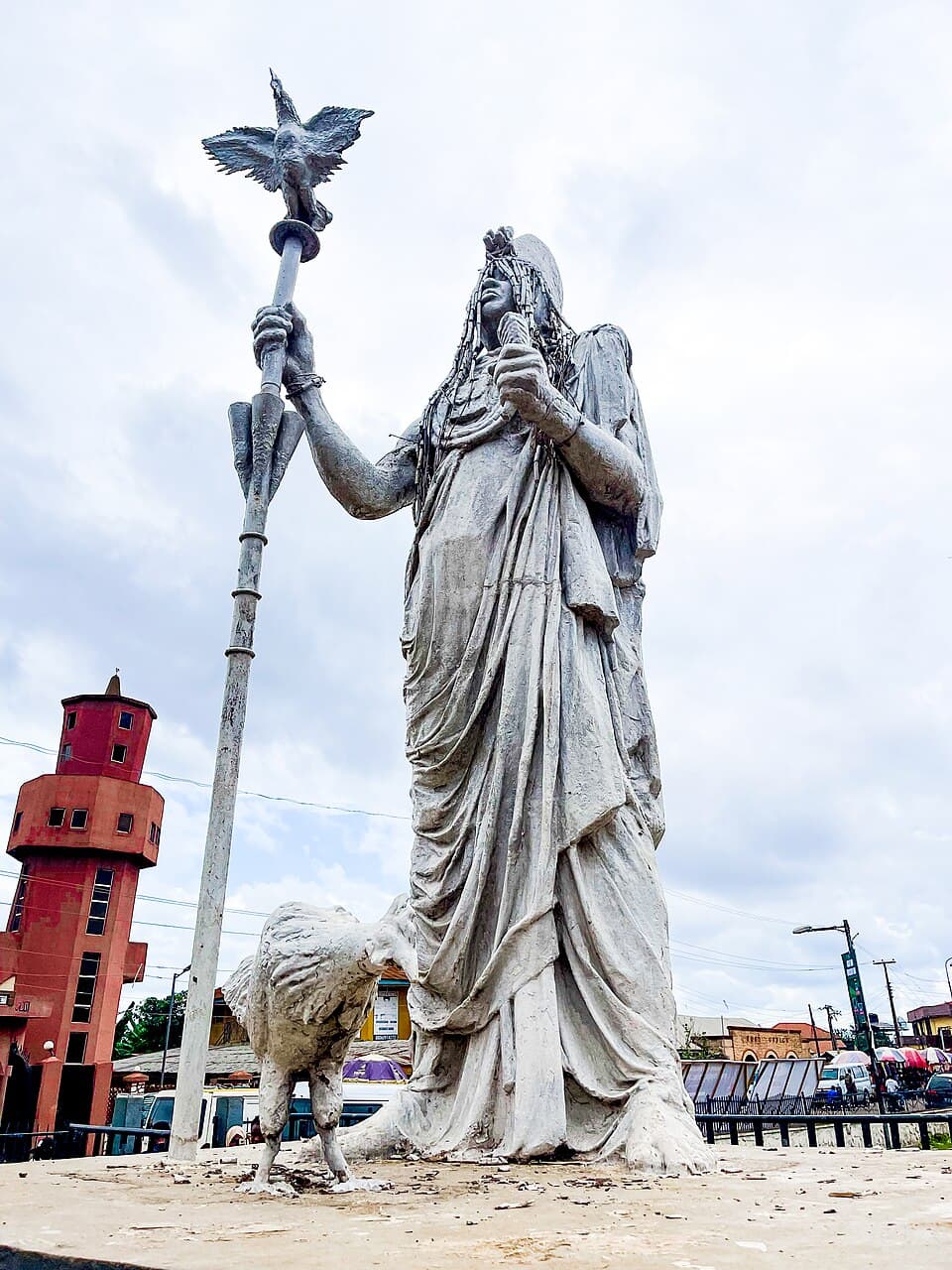
Odùduwà was a Yoruba divine king, an Oriṣa in the Yoruba religion, and the progenitor who ushered in the classical period that later led to the foundation of the Ife Empire. His earthly origins are from the village of Oke Ora. According to tradition, he was the holder of the title of the Olofin of Ile-Ife, the Yoruba holy city.
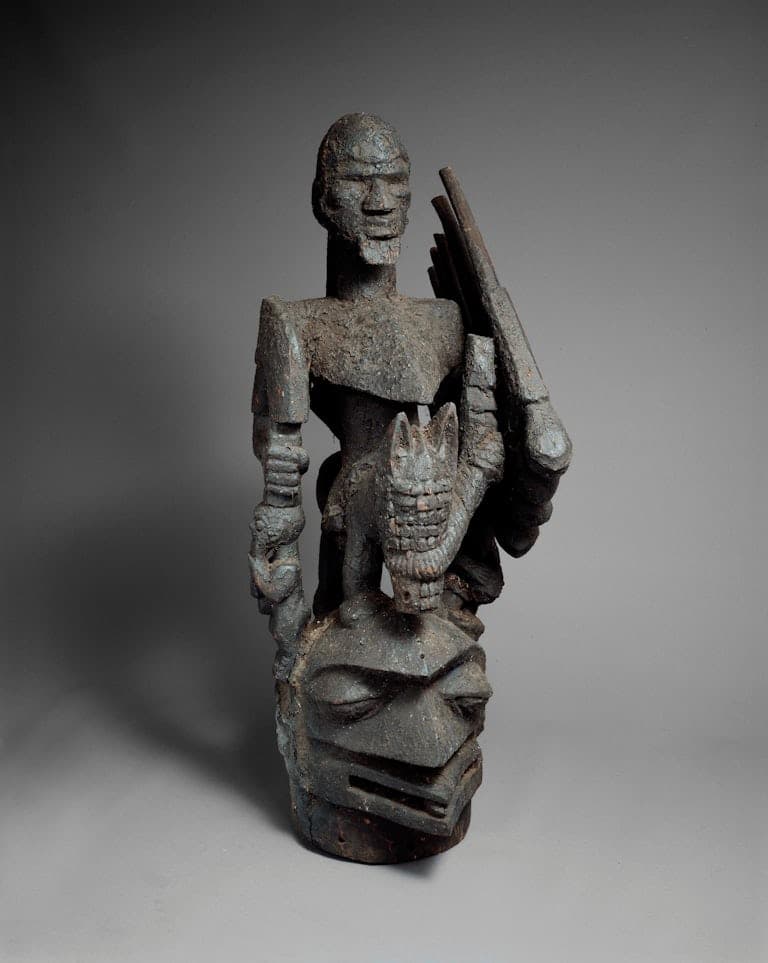
Ogun is a major Orisha in the Yoruba religion that is also adopted in several other African religions. Ògún is revered as a powerful deity of war, iron, hunting, metalworking, metallurgy, blacksmiths, technology, innovation, and divine judgement, as well as of rum and rum-making. He is venerated in Yoruba religion, Santería, Haitian Vodou, West African Vodun, Candomblé, Umbanda and the folk religion of the Gbe people, amongst other religions.
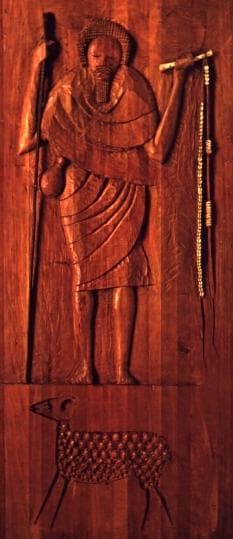
Òrìṣà Oko, also known as Ocô in Brazil, is an Orisha worshipped in the Yoruba religion. According to tradition, before his death and deification, he was a strong hunter and farming deity, as well as a fighter against sorcery. He is associated with the annual new harvest of the white African yam.
Olokun is an orisha in Yoruba religion. Olokun is the deity of the bottom of the ocean and is believed to be the parent of Ajé, the orisha of great wealth. Olokun is revered as the ruler of all bodies of water and for the authority over other water deities.

Ọlọrun is the ruler of the Heavens, creator of the universe, and the Supreme Deity or Supreme Being in the Yoruba religion and related syncretic religions. Ọlọrun is also called numerous other names including Olodumare, Eledumare and Eleduwa/Eledua. However, in some belief systems the different names refer to particular deities or aspects of the same deity.

Olumo Rock is a mountain in south-western Nigeria. It is located in the city of Abeokuta, Ogun State, and was normally used as a natural fortress during inter-tribal warfare in the 19th century. Its patron spirit is venerated in the Yoruba religion as an orisha.
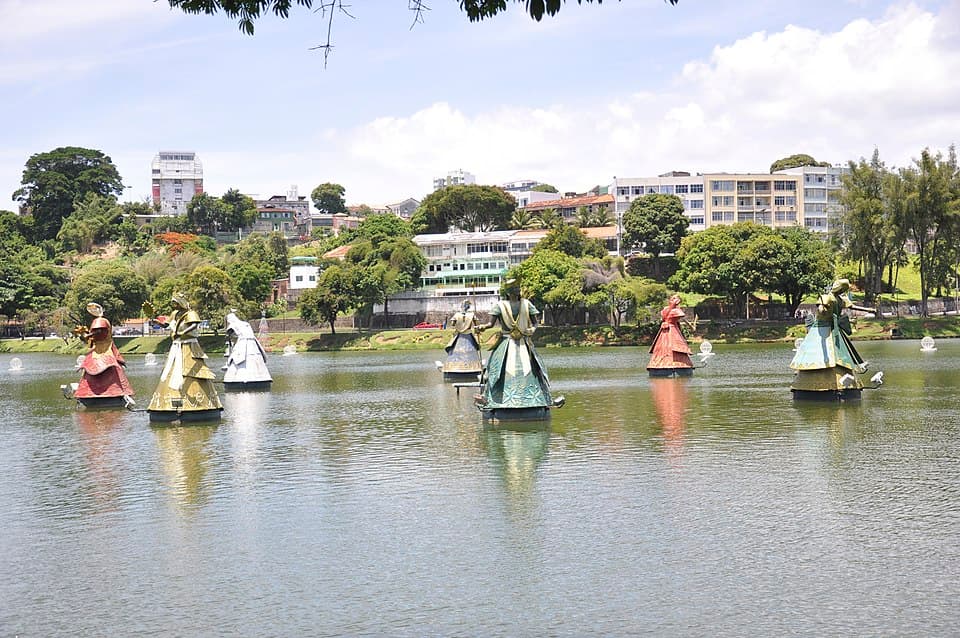
Orishas are divine spirits that play a key role in the Yoruba religion of West Africa and several religions of the African diaspora that derive from it, such as Haitian Vodou, Cuban Santería, and Brazilian Candomblé. The preferred spelling varies depending on the language in question: òrìṣà is the spelling in the Yoruba language, orixá in Portuguese, and orisha, oricha, orichá or orixá in Spanish-speaking countries. In the Lucumí tradition, which evolved in Cuba, the orishas are syncretized with Catholic saints, forming a syncretic system of worship where Yoruba deities were hidden behind Christian iconography.
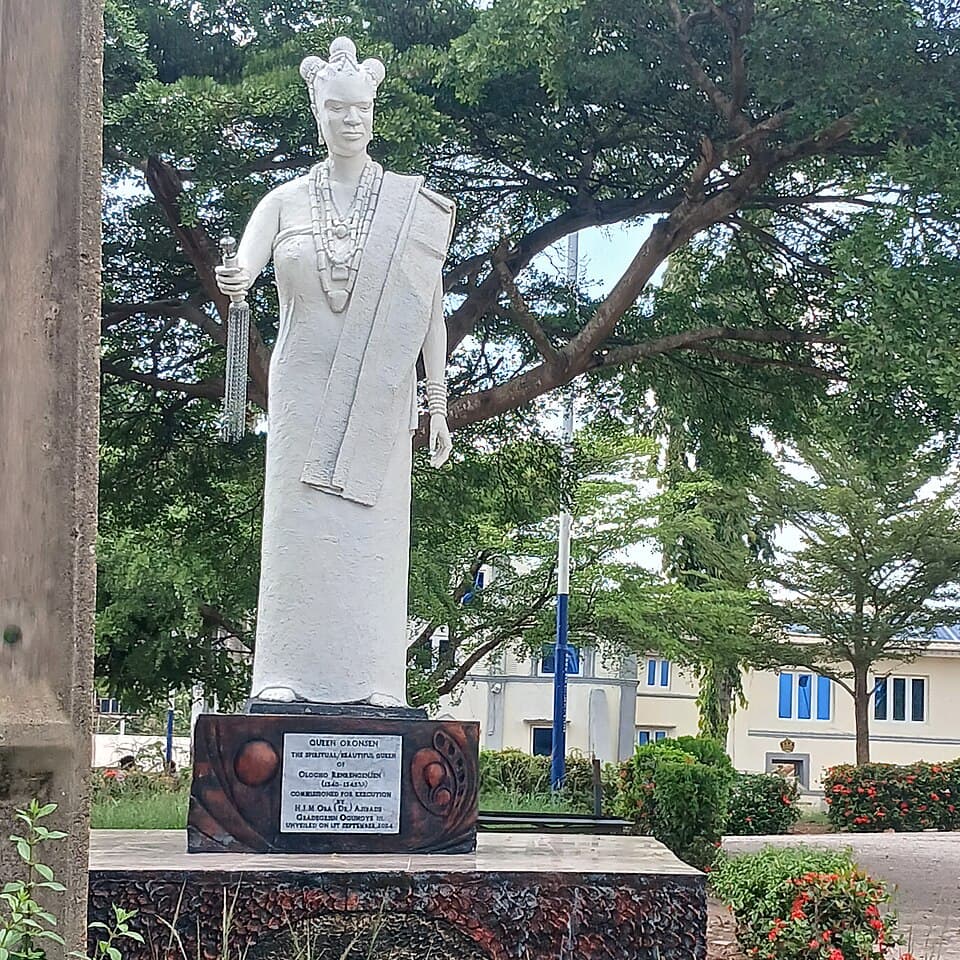
Queen Oronsen is an orisha from Yoruba mythology. She was the spouse of Olowo Rerengejen. The annual Igogo festival in Owo is celebrated in her honour.
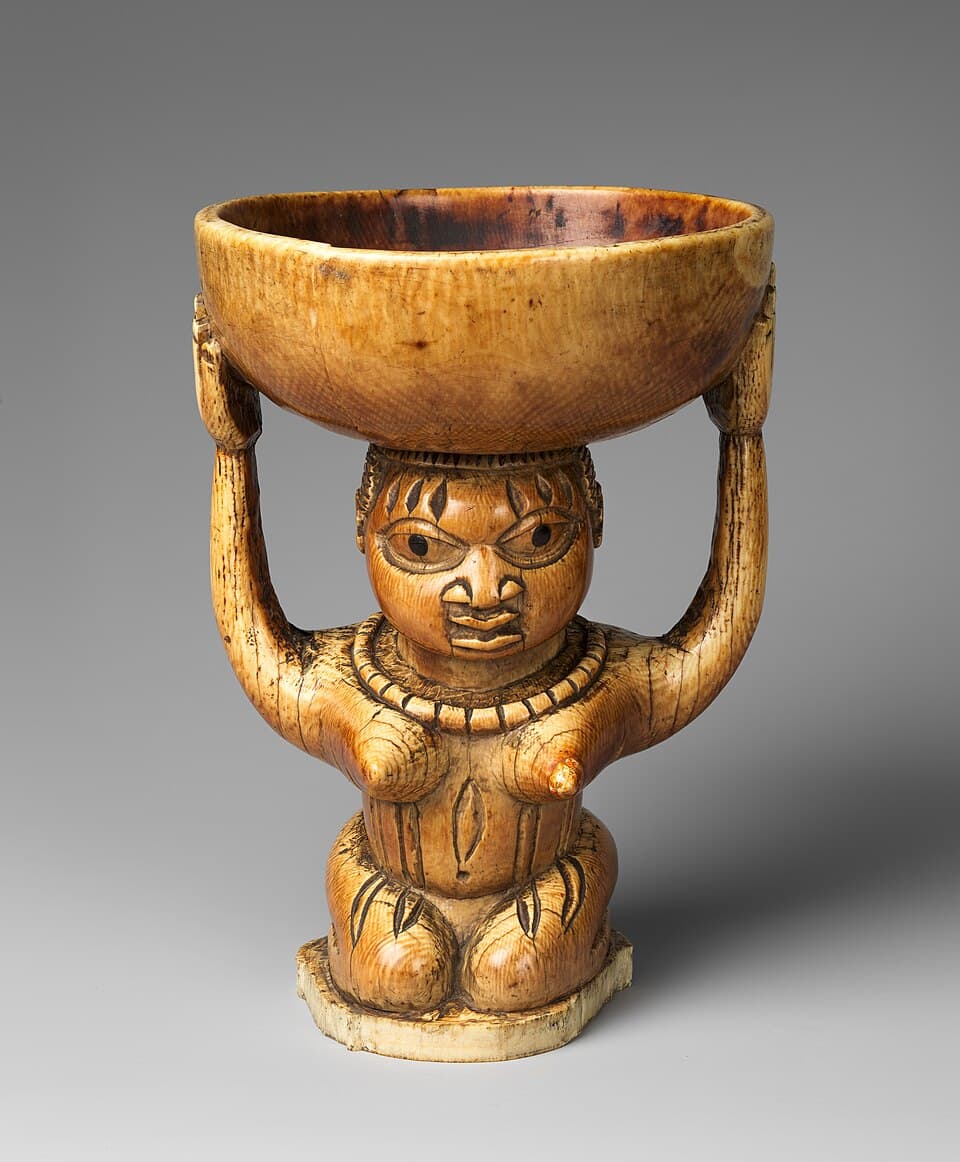
Ọrunmila is one of the most principal deities in the Yoruba religion, venerated as the Orisha of wisdom, knowledge, fate, prophecy, enlightenment, and divination. He is believed to be the creator of the Ifá system.
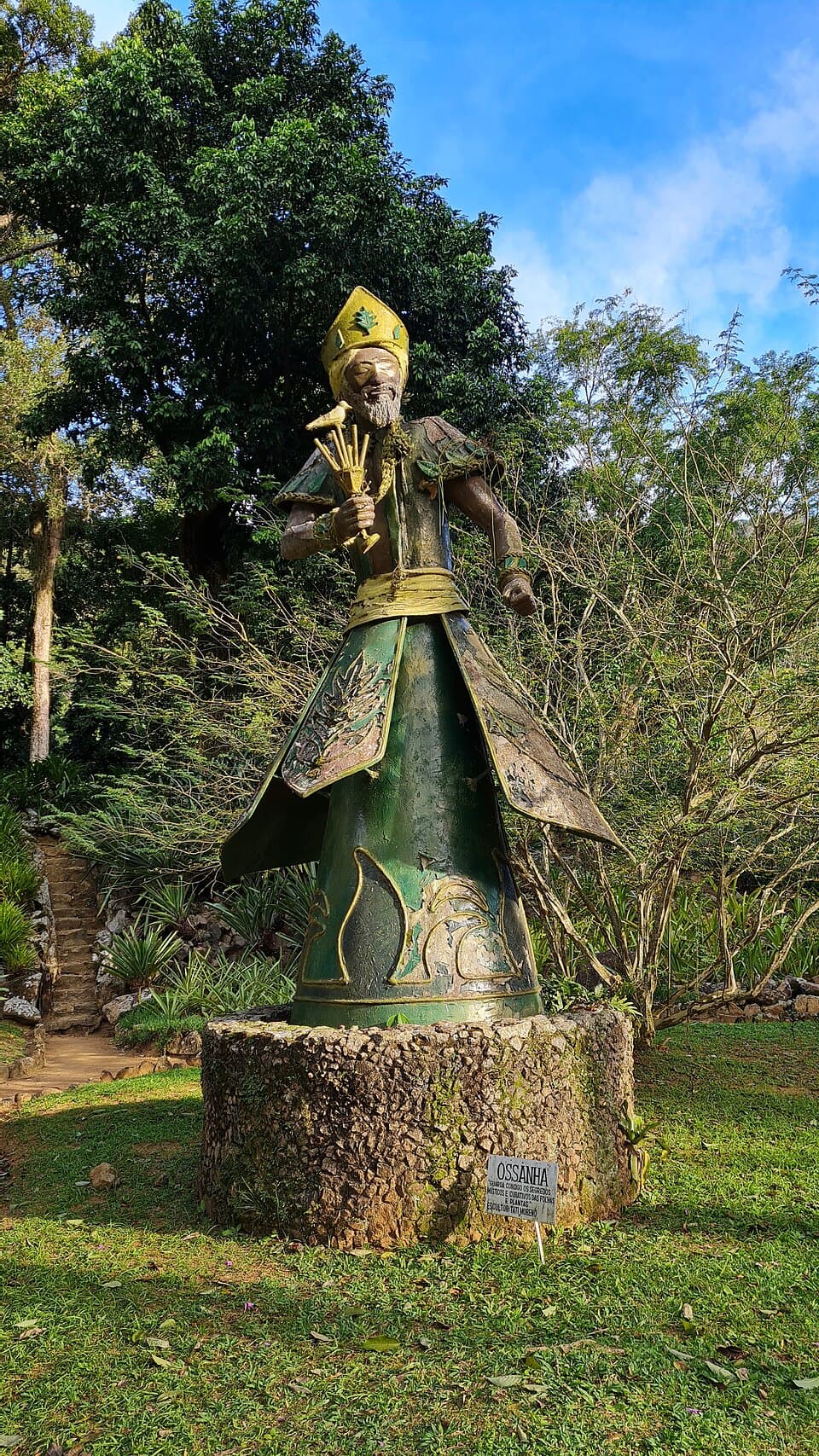
Ọsanyin (Yoruba: Ọ̀sanyìn, rendered Osaín/Ossain/Ossaím in Latin America, Ague (Age) in Fon) is the orisha who has the omniscient knowledge of leaf, herb and matter. He is also known for healing and displaying magic and creating technological tools, and is popularly considered as a herbalist, magician, and technologist. He is the creator of the concept of Oniṣegun.
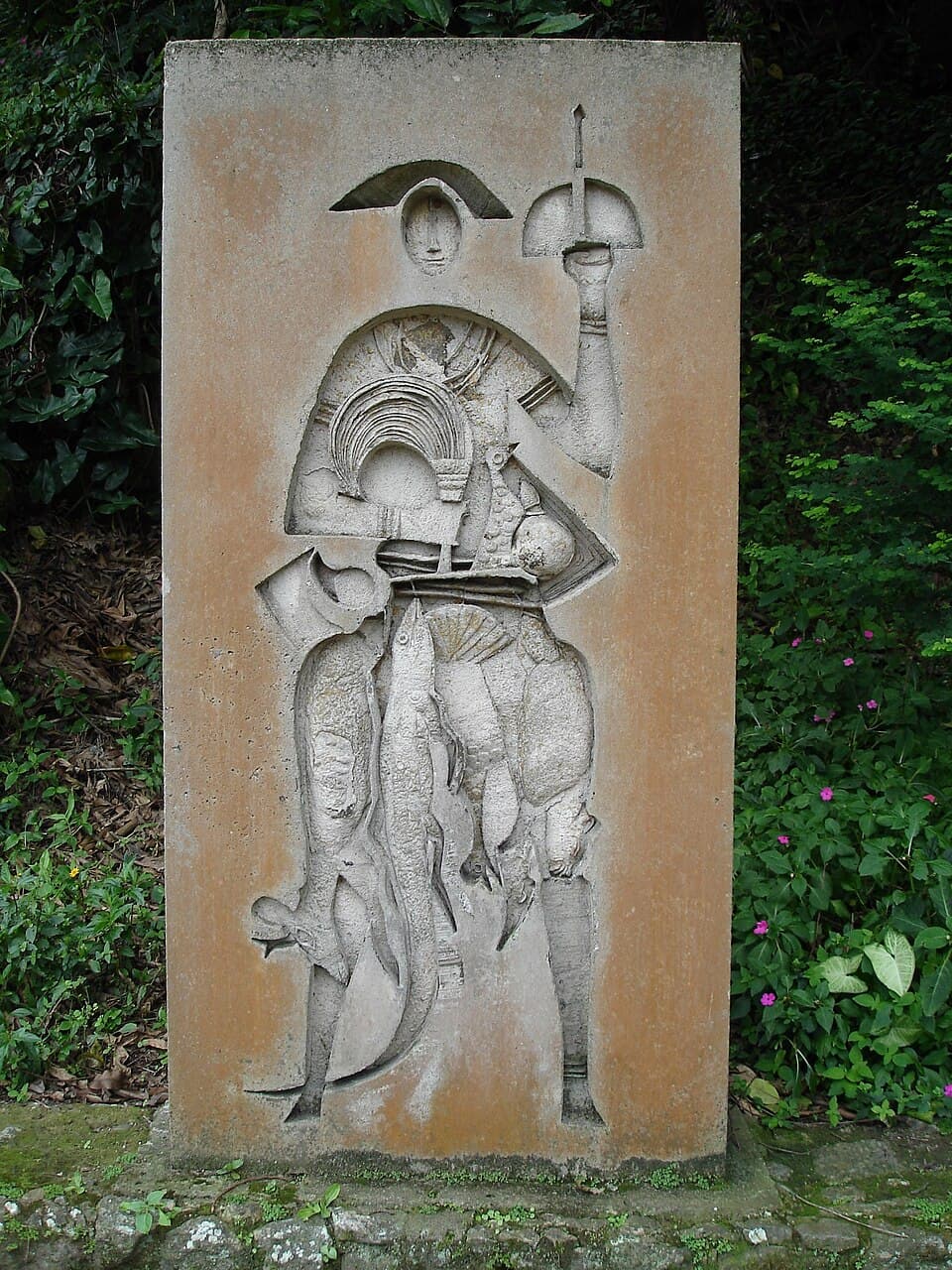
Oshosi is an Orisha of the Yoruba religion in West Africa and subsequently in Brazil and Cuba.
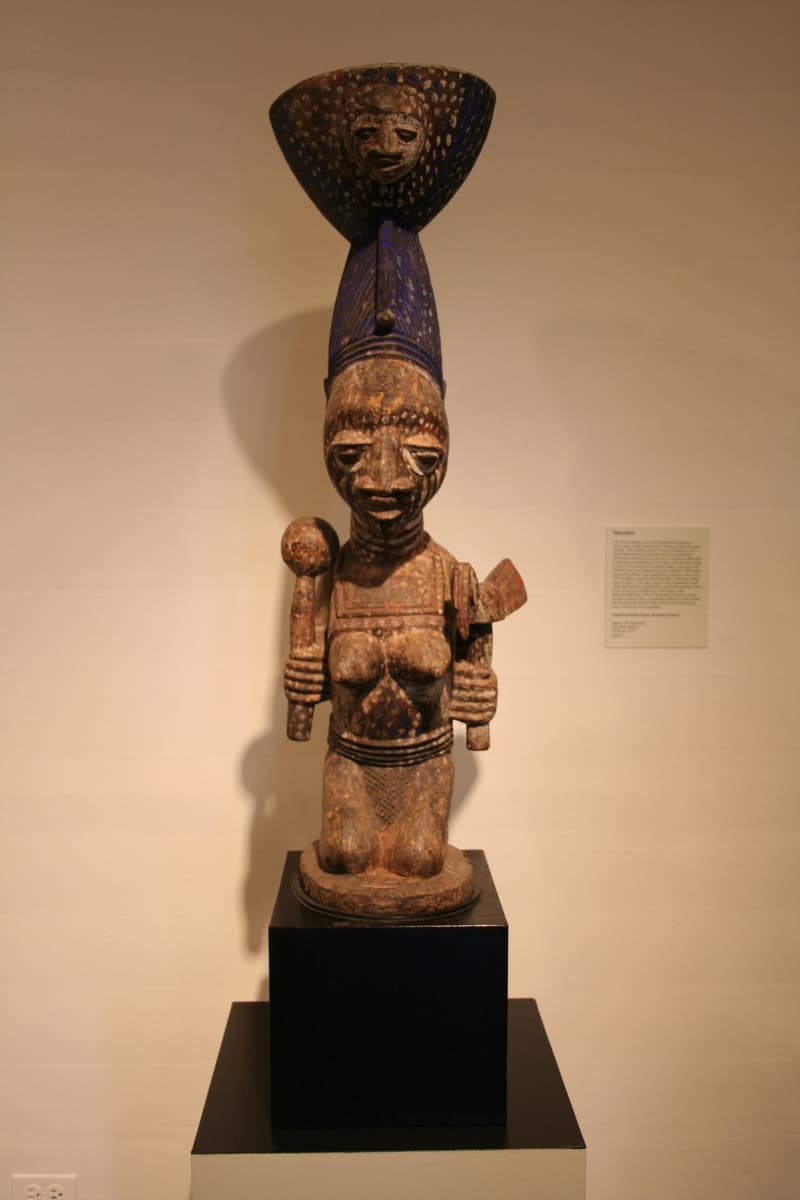
Oshun is the orisha associated with love, sexuality, fertility, femininity, water, destiny, divination, purity, wealth, prosperity and beauty, and the Osun River, in the Yoruba religion. She is considered one of the most popular and venerated of the 401 orishas.
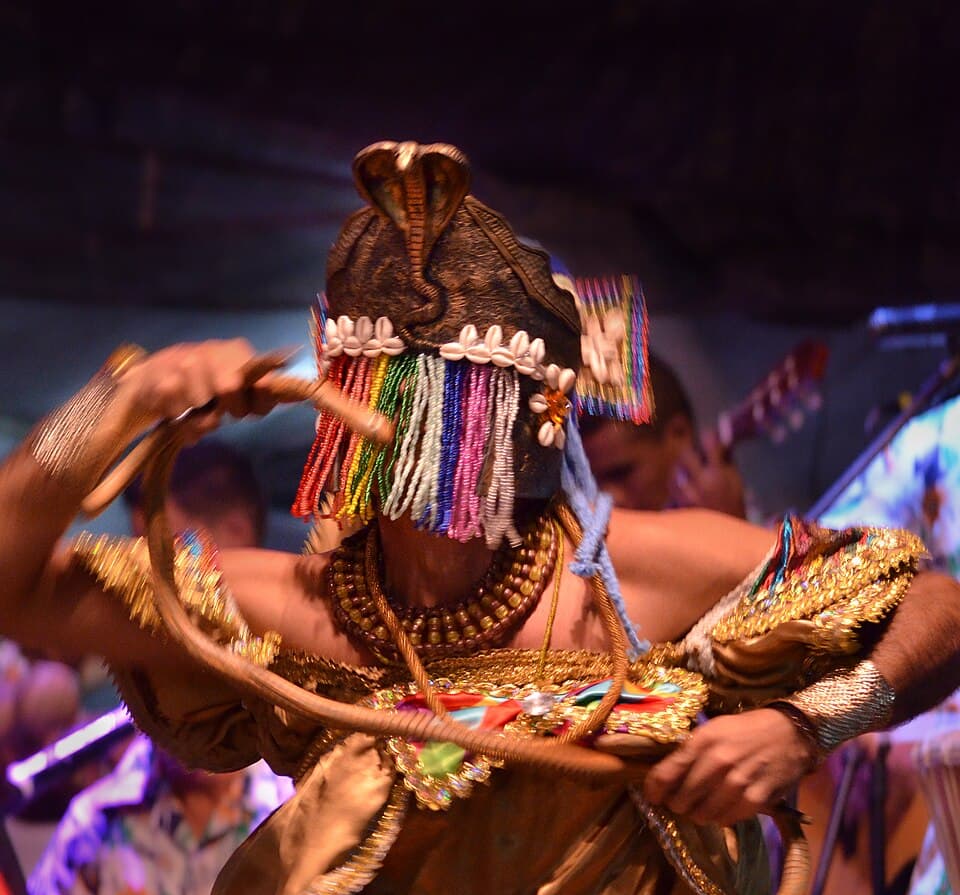
Oshumare is an Orisha. Oshumare is the divine serpent spirit of the rainbow.
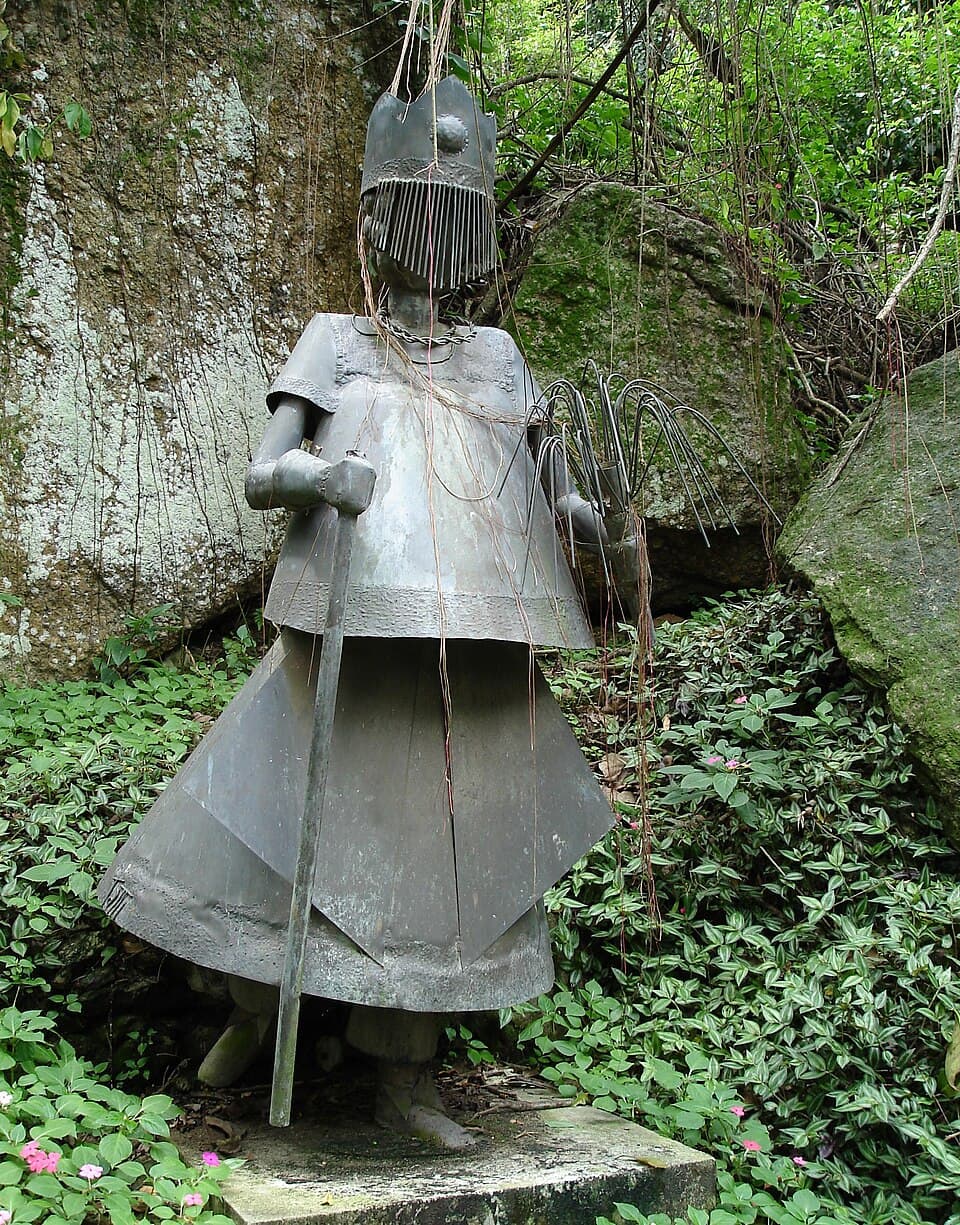
Ọya is one of the principal female deities of the Yoruba pantheon. She is the oriṣa of winds, lightning, and storms and is the only oriṣa capable of controlling the Eégún, a power given to her by Babalú Ayé.
Olowo Rerengenjen was the traditional ruler of Owo Kingdom, an ancient Yoruba city-state, modern day southwestern Nigeria. He was the King that married Oronsen, the goddess that brought about Igogo festival.
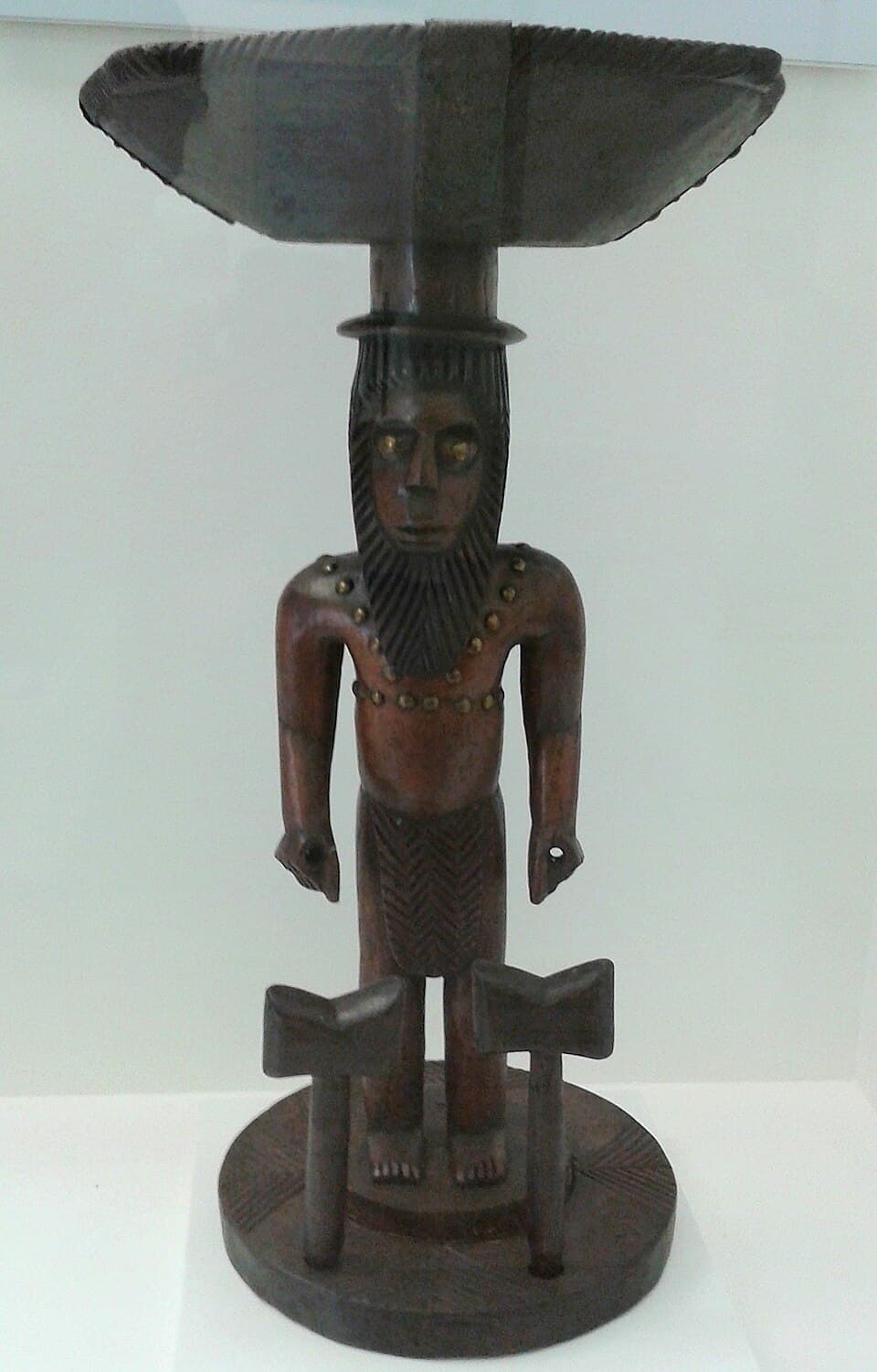
Shango is the Orisha of fire, thunder, lightning, virility, dance, drumming, strength and justice in the Yoruba religion. Genealogically, Shango is a royal ancestor of the Yoruba as he was the third Alaafin of the Oyo Empire prior to his posthumous deification. Shango is known for his double-headed battle-axe (Oṣé) and is considered to be one of the most powerful rulers in Yoruba history.
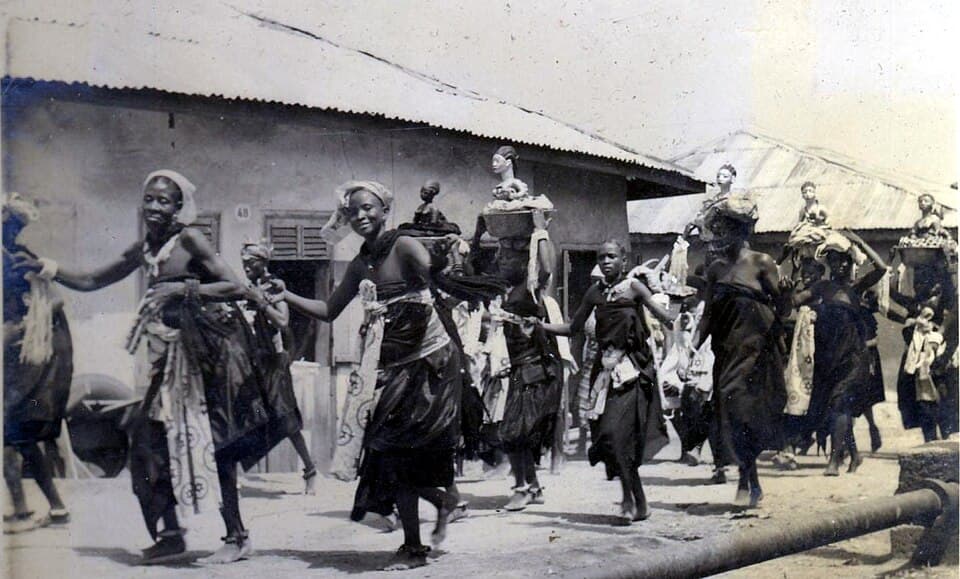
Yemọja is a major water deity in the Yoruba religion. She is an oriṣa, and the patron spirit of rivers, particularly the Ogun River in Nigeria, and of oceans in Cuban and Brazilian Orisha religions. She is often syncretized with either Our Lady of Regla in the Afro-Cuban diaspora or various other Virgin Mary figures of the Catholic Church, a practice that emerged during the era of the Trans-Atlantic slave trade.
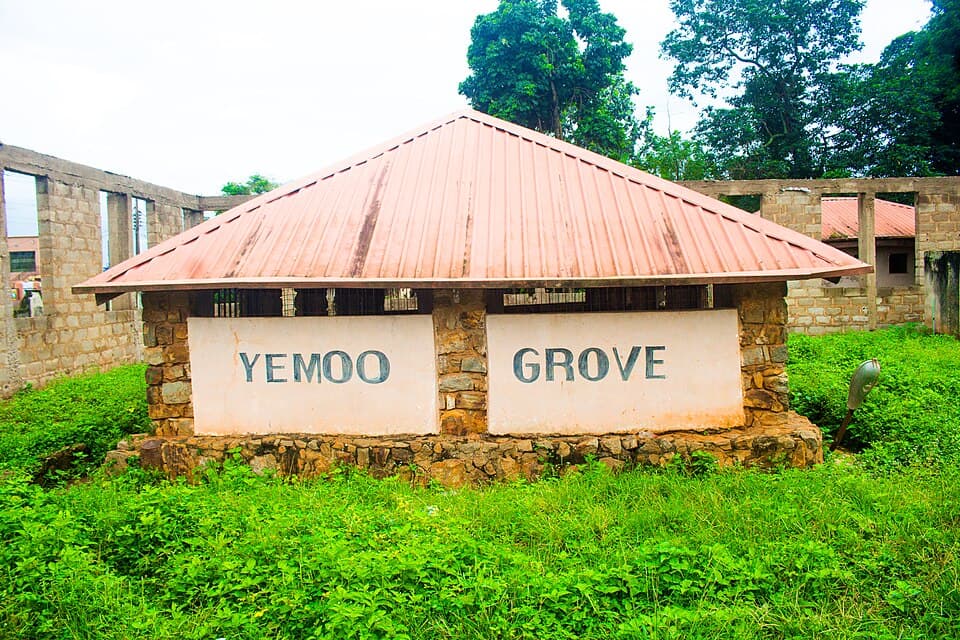
In Yoruba religion, Yemowo is an oriṣa of water, maternity and creation, and her consort is Ọbatala.
The Ẹgbado, now Yewa, are a subgroup of the Yoruba people and mostly inhabit Ogun West Senatorial District, Ogun State, in south-west Nigeria, Africa. In 1995, the group's name was changed to Yewa after the Yewa River, the river they foraged towards. The name of this river is derived from the Yoruba deity Yewá.
Complete index
All 58 names, alphabetically. This pantheon is too small for a letter rail to be worth the space — 58 entries do not fill 26 letters — so it runs as one list.