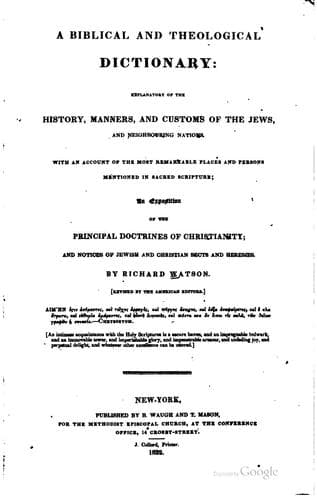
A Biblical and Theological Dictionary: explanatory of the history, manners, and customs of the Jews, and neighbouring nationsWatson, Richard
Religion
A Biblical and Theological Dictionary: explanatory of the history, manners, and customs of the Jews, and neighbouring nations
Watson, Richard
Bible -- Dictionaries; Theology -- Dictionaries
BABEL, the tower and city founded by the descendants of Noah in the
plain of Shinar. The different tribes descended from Noah were here
collected, and from this point were dispersed, through the confusion of
their language. The time when this tower was built is differently stated
in the Hebrew and Samaritan chronologies. The former fixes it in the
year 101 after the flood, which Mr. Faber thinks encumbered with
insuperable difficulties. This writer then goes on to show, that the
chronology of the Samaritan Pentateuch reconciles every date, and
surmounts every difficulty. It represents Shem as dying nearly a century
and a half before the death of Peleg, instead of more than that number
of years afterward, and almost four centuries and a half before the
death of Abraham; whom, in accordance with the history, it makes to
survive his father Terah precisely a hundred years. It removes the
difficulties with which the Hebrew chronology invests the whole history,
by giving time, while it allows the dispersion to have taken place in
the latter part of Peleg’s life, for the thirteen sons of his younger
brother Joktan to have become heads of families; for Noah and his sons
to have died, as it is proved they must have done, prior to the
emigration from Armenia; for Nimrod, instead of being a boy, to have
been of an age suitable to his exploits, and to have acquired the
sovereign command, not, in the face of all probability, while the four
great patriarchs were living, but after their decease; and for the
families of mankind to have multiplied sufficiently to undertake the
stupendous work of the tower. It explains also the silence respecting
Shem in the history of Abraham, by making the former die in Armenia four
hundred and forty years before the latter was born, instead of surviving
him thirty-five years; and, lastly, it makes sacred history accord with
profane; the Babylonic history of Berosus, and the old records consulted
by Epiphanius, both placing the death of Noah and his sons before the
emigration from Armenia.
Public-domain text, read in full here on John Shaqi.
Reviews
Reviews
No reviews yet
Be the first to share your thoughts on this work.
Elsewhere in the archive
Join the Discussion
Join the discussion
Sign in to leave a comment or review.
Sign InorCreate an account