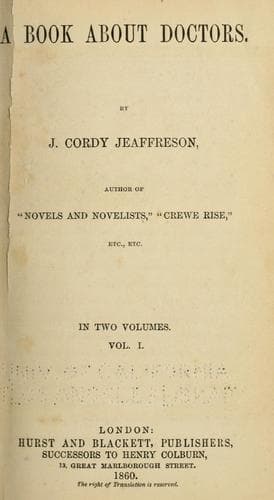
Medicine -- Anecdotes; Physicians -- Great Britain
He tells of the virtues of Suffolk sage (a herb that the nurses of
that county still believe in as having miraculous effects, when
administered in the form of "sage-tea"). Of Suffolk hops (now but
little grown in the county) he mentions in terms of high
praise--especially of those grown round Framlingham Castle, and "the
late house of nunnes at Briziarde." "I know in many places of the
country of Suffolke, where they brew theyr beere with hoppes that
growe upon theyr owne groundes, as in a place called Briziarde, near
an old famous castle called Framingham, and in many other places of
the country." Of the peas of Orford the following mention is
made:--"In a place called Orforde, in Suffolke, betwene the haven and
the mayne sea, wheras never plow came, nor natural earth was, but
stones onely, infinite thousand ships loden in that place, there did
pease grow, whose roots were more than iii fadome long, and the coddes
did grow uppon clusters like the keys of ashe trees, bigger than
fitches, and less than the fyeld peason, very sweete to eat upon, and
served many pore people dwelling there at hand, which els should have
perished for honger, the scarcity of bread was so great. In so much
that the playne pore people did make very much of akornes; and a
sickness of a strong fever did sore molest the commons that yere, the
like whereof was never heard of there. Now, whether th' occasion of
these peason, in providence of God, came through some shipwracke with
much misery, or els by miracle, I am not able to determine thereof;
but sowen by man's hand they were not, nor like other pease."[4]
[4] The tradition of this timely and unaccountable growth of peas
still exists amongst the peasants in the neighbourhood of Orford. J.
C. J.
In the same way one has in the Doctor's "Book of Simples" pleasant
gossip about the more choice productions of the garden and of
commerce, showing that horticulture must have been far more advanced
at that time than is generally supposed, and that the luxuries
imported from foreign countries were largely consumed throughout the
country. Pears, apples, peaches, quinces, cherries, grapes, raisins,
prunes, barberries, oranges, medlars, raspberries and strawberries,
spinage, ginger, and lettuces are the good things thrown upon the
board.
Of pears, the author says: "There is a kynd of peares growing in the
city of Norwich, called the black freere's peare, very delicious and
pleasaunt, and no lesse profitable unto a hoate stomacke, as I heard
it reported by a ryght worshipful phisicion of the same city, called
Doctour Manfield." Other pears, too, are mentioned, "sutch as have
names as peare Robert, peare John, bishop's blessyngs, with other
prety names. The red warden is of greate vertue, conserved, roasted
or baken to quench choller." The varieties of the apple especially
mentioned are "the costardes, the greene cotes, the pippen, the queene
aple."
Public-domain text, read in full here on John Shaqi.
Reviews
Reviews
No reviews yet
Be the first to share your thoughts on this work.
Join the Discussion
Join the discussion
Sign in to leave a comment or review.
Sign InorCreate an account