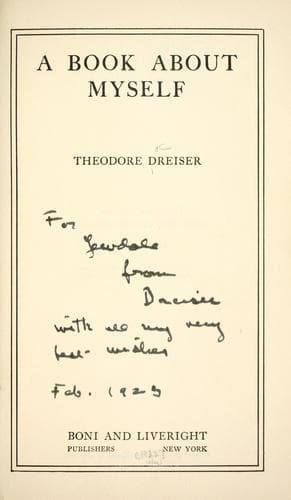
Dreiser, Theodore, 1871-1945; Journalists -- United States -- Biography; Novelists, American -- 20th century -- Biography
One of the most interesting things in my life at this time was that same
North Seventh Street police station previously mentioned, to which I
went daily and which was a center for a certain kind of news at
least—rapes, riots, murders, fantastic family complications of all
kinds, so common to very poor and highly congested neighborhoods. This
particular station was the very center of a mixed ghetto, slum and negro
life, which even at this time was still appalling to me in some of its
aspects. It was all so dirty, so poor, so stuffy, so starveling. There
were in it all sorts of streets—Jewish, negro, and run-down American, or
plain slum, the first crowded with long-bearded Jews and their fat
wives, so greasy, smelly and generally offensive that they sickened me:
rag-pickers, chicken-dealers and feather-sorters all. In their streets
the smell of these things, picked or crated chickens, many of them
partially decayed, decayed meats and vegetables, half-sorted dirty
feathers and rags and I know not what else, was sickening in hot
weather. In the negro streets—or rather alleys, for they never seemed to
occupy any general thoroughfare—were rows or one-, two-, three-and
four-story shacks or barns of frame or brick crowded into back yards and
with thousands of blacks of the most shuffling and idle character
hanging about. In these hot days of June, July and August they seemed to
do little save sit or lie in the shade of buildings in this vicinity and
swap yarns or contemplate the world with laughter or in silence.
Occasionally there was a fight, a murder or a low love affair among them
which justified my time here. In addition, there were those other
streets of soggy, decayed Americans—your true slum—filled with as low
and cantankerous a population of whites as one would find anywhere, a
type of animal dangerous to the police themselves, for they could riot
and kill horribly and were sullen at best. Invariably the police
traveled here in pairs, and whenever an alarm from some policeman on his
beat was turned in from this region a sergeant and all the officers in
the station at the time would set forth to the rescue, sometimes as many
as eight or ten in a police wagon, with orders, as I myself have heard
them given, “to club the —— heads off them” or “break their —— bones,
but bring them in here. I’ll fix ’em”; in response to which all the
stolid Irish huskies would go forth to battle, returning frequently with
a whole vanload of combatants or alleged combatants, all much the worse
for the contest.
Public-domain text, read in full here on John Shaqi.
Reviews
Reviews
No reviews yet
Be the first to share your thoughts on this work.
Elsewhere in the archive
Join the Discussion
Join the discussion
Sign in to leave a comment or review.
Sign InorCreate an account