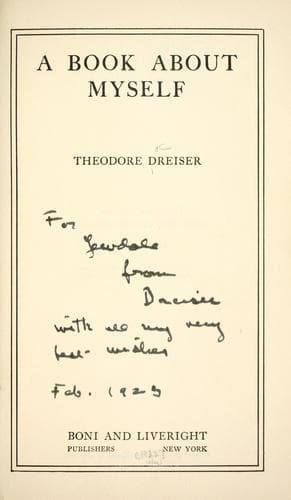
Dreiser, Theodore, 1871-1945; Journalists -- United States -- Biography; Novelists, American -- 20th century -- Biography
DISHEARTENING as this village and country life might seem as a permanent
field of endeavor, it was pleasing enough as a spectacle or as the scene
of a vacation. Although it was late February when I came and there was
snow on the ground, a warm wind came in a day or two and drove most of
it away. A full moon rose every night in the east and there was a sense
of approaching Spring. Before the charming old farmhouse flowed the
wonderful little Maumee River, dimpling over stones and spreading out
wide, as though it wished to appear much more than it was. There is
madness in moonlight, and there is madness in that chemical compound
which is youth. Here in this simple farming region, once free of the
thought that by any chance I might be compelled to remain here, I felt
strangely renewed and free as a bird, though at the same time there was
an undercurrent of sadness, not only for myself but for life itself, the
lapse and decay of things, the impossibility of tasting or knowing more
than a fraction of the glories and pleasures that are everywhere
outspread. Although I had not had a vacation in years, I was eager to be
at work. The greatness of life, its possibilities, the astounding dreams
of supremacy which might come true, were calling to me. I wanted to be
on, to find what life had in store for me; and yet I wanted to stay here
for a while.
Mich’s father, as well as his mother and wife, interested me intensely,
for they were simple, industrious, believing. They were good Baptists or
Methodists or Presbyterians. The grizzled little old farmer who had
built up this place or inherited a part and added the rest, was exactly
like all the other farmers I have ever known: genial, kindly, fairly
tolerant, curious as to the wonders of the world without, full of a
great faith in America and its destiny, sure that it is the greatest
country in the world, and that there has never been one other like it.
That first night at supper, and the next morning at breakfast, and all
my other days here, the old man questioned me as to life, its ways, my
beliefs or theories, and I am positive that he was delighted to have me
there, for it was winter and he had little to do besides read his paper.
Public-domain text, read in full here on John Shaqi.
Reviews
Reviews
No reviews yet
Be the first to share your thoughts on this work.
Elsewhere in the archive
Join the Discussion
Join the discussion
Sign in to leave a comment or review.
Sign InorCreate an account