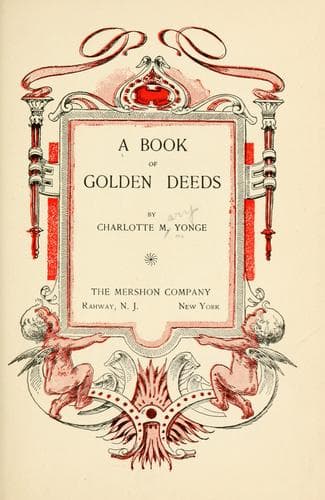
We all of us enjoy a story of battle and adventure. Some of us delight
in the anxiety and excitement with which we watch the various strange
predicaments, hairbreadth escapes, and ingenious contrivances that
are presented to us; and the mere imaginary dread of the dangers
thus depicted, stirs our feelings and makes us feel eager and full of
suspense.
This taste, though it is the first step above the dullness that cannot
be interested in anything beyond its own immediate world, nor care for
what it neither sees, touches, tastes, nor puts to any present use, is
still the lowest form that such a liking can take. It may be no better
than a love of reading about murders in the newspaper, just for the
sake of a sort of startled sensation; and it is a taste that becomes
unwholesome when it absolutely delights in dwelling on horrors and
cruelties for their own sake; or upon shifty, cunning, dishonest
stratagems and devices. To learn to take interest in what is evil is
always mischievous.
But there is an element in many of such scenes of woe and violence that
may well account for our interest in them. It is that which makes the
eye gleam and the heart throb, and bears us through the details of
suffering, bloodshed, and even barbarity--feeling our spirits moved
and elevated by contemplating the courage and endurance that they have
called forth. Nay, such is the charm of brilliant valor, that we often
are tempted to forget the injustice of the cause that may have called
forth the actions that delight us. And this enthusiasm is often united
with the utmost tenderness of heart, the very appreciation of suffering
only quickening the sense of the heroism that risked the utmost, till
the young and ardent learn absolutely to look upon danger as an occasion
for evincing the highest qualities.
'O Life, without thy chequer'd scene
Of right and wrong, of weal and woe,
Success and failure, could a ground
For magnanimity be found?'
The true cause of such enjoyment is perhaps an inherent consciousness
that there is nothing so noble as forgetfulness of self. Therefore it
is that we are struck by hearing of the exposure of life and limb to
the utmost peril, in oblivion, or recklessness of personal safety, in
comparison with a higher object.
That object is sometimes unworthy. In the lowest form of courage it is
only avoidance of disgrace; but even fear of shame is better than mere
love of bodily ease, and from that lowest motive the scale rises to the
most noble and precious actions of which human nature is capable--the
truly golden and priceless deeds that are the jewels of history, the
salt of life.
And it is a chain of Golden Deeds that we seek to lay before our
readers; but, ere entering upon them, perhaps we had better clearly
understand what it is that to our mind constitutes a Golden Deed.
Public-domain text, read in full here on John Shaqi.
Reviews
Reviews
No reviews yet
Be the first to share your thoughts on this work.
Join the Discussion
Join the discussion
Sign in to leave a comment or review.
Sign InorCreate an account