Mythology; Mythology, Greek -- Juvenile literature
In days when the world was young and when the gods walked on the
earth, there reigned over the island of Cyprus a sculptor-king, and
king of sculptors, named Pygmalion. In the language of our own day, we
should call him "wedded to his art." In woman he only saw the bane of
man. Women, he believed, lured men from the paths to which their
destiny called them. While man walked alone, he walked free--he had
given no "hostages to fortune." Alone, man could live for his art,
could combat every danger that beset him, could escape, unhampered,
from every pitfall in life. But woman was the ivy that clings to the
oak, and throttles the oak in the end. No woman, vowed Pygmalion,
should ever hamper him. And so at length he came to hate women, and,
free of heart and mind, his genius wrought such great things that he
became a very perfect sculptor. He had one passion, a passion for his
art, and that sufficed him. Out of great rough blocks of marble he
would hew the most perfect semblance of men and of women, and of
everything that seemed to him most beautiful and the most worth
preserving.
When we look now at the Venus of Milo, at the Diana of Versailles, and
at the Apollo Belvidere in the Vatican, we can imagine what were the
greater things that the sculptor of Cyprus freed from the dead blocks
of marble. One day as he chipped and chiselled there came to him,
like the rough sketch of a great picture, the semblance of a woman.
How it came he knew not. Only he knew that in that great mass of pure
white stone there seemed to be imprisoned the exquisite image of a
woman, a woman that he must set free. Slowly, gradually, the woman
came. Soon he knew that she was the most beautiful thing that his art
had ever wrought. All that he had ever thought that a woman _should_
be, this woman was. Her form and features were all most perfect, and
so perfect were they, that he felt very sure that, had she been a
woman indeed, most perfect would have been the soul within. For her he
worked as he had never worked before. There came, at last, a day when
he felt that another touch would be insult to the exquisite thing he
had created. He laid his chisel aside and sat down to gaze at the
Perfect Woman. She seemed to gaze back at him. Her parted lips were
ready to speak--to smile. Her hands were held out to hold his hands.
Then Pygmalion covered his eyes. He, the hater of women, loved a
woman--a woman of chilly marble. The women he had scorned were
avenged.
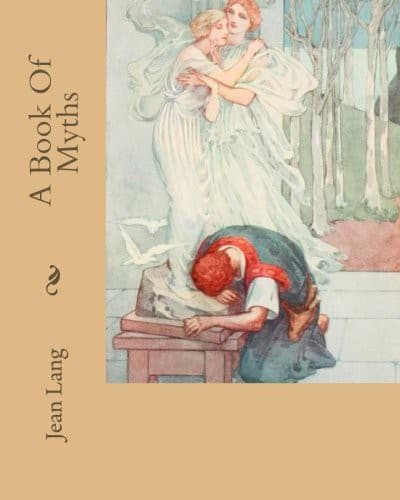
[Illustration: THEN PYGMALION COVERED HIS EYES]
Public-domain text, read in full here on John Shaqi.
Reviews
Reviews
No reviews yet
Be the first to share your thoughts on this work.
Join the Discussion
Join the discussion
Sign in to leave a comment or review.
Sign InorCreate an account