Mythology; Mythology, Greek -- Juvenile literature
The eyes of Pluto and Proserpine did not dare to meet, yet with one
accord was their answer given. Eurydice should be given back to him,
but only on one condition. Not until he had reached the light of earth
again was he to turn round and look upon the face for a sight of which
his eyes were tired with longing. Eagerly Orpheus complied, and with a
heart almost breaking with gladness he heard the call for Eurydice and
turned to retrace his way, with the light footfall of the little feet
that he adored making music behind him. Too good a thing it
seemed--too unbelievable a joy. She was there--quite close to him.
Their days of happiness were not ended. His love had won her back,
even from the land of darkness. All that he had not told her of that
love while yet she was on earth he would tell her now. All that he had
failed in before, he would make perfect now. The little limping
foot--how it made his soul overflow with adoring tenderness. So near
she was, he might even touch her were he to stretch back his hand....
And then there came to him a hideous doubt. What if Pluto had played
him false? What if there followed him not Eurydice, but a mocking
shade? As he climbed the steep ascent that led upwards to the light,
his fear grew more cruelly real. Almost he could imagine that her
footsteps had stopped, that when he reached the light he would find
himself left once more to his cruel loneliness. Too overwhelming for
him was the doubt. So nearly there they were that the darkness was no
longer that of night, but as that of evening when the long shadows
fall upon the land, and there seemed no reason for Orpheus to wait.
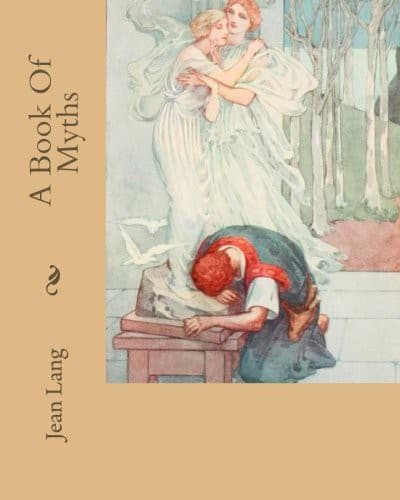
Swiftly he turned, and found his wife behind him, but only for a
moment she stayed. Her arms were thrown open and Orpheus would fain
have grasped her in his own, but before they could touch each other
Eurydice was borne from him, back into the darkness.
"Farewell!" she said--"Farewell!" and her voice was a sigh of hopeless
grief. In mad desperation Orpheus sought to follow her, but his
attempt was vain. At the brink of the dark, fierce-flooded Acheron the
boat with its boatman, old Charon, lay ready to ferry across to the
further shore those whose future lay in the land of Shades. To him ran
Orpheus, in clamorous anxiety to undo the evil he had wrought. But
Charon angrily repulsed him. There was no place for such as Orpheus in
his ferry-boat. Those only who went, never to return, could find a
passage there. For seven long days and seven longer nights Orpheus
waited beside the river, hoping that Charon would relent, but at last
hope died, and he sought the depths of the forests of Thrace, where
trees and rocks and beasts and birds were all his friends.
He took his lyre again then and played:
"Such strains as would have won the ear
Of Pluto, to have quite set free
His half-regained Eurydice."
Milton.
Public-domain text, read in full here on John Shaqi.
Reviews
Reviews
No reviews yet
Be the first to share your thoughts on this work.
Join the Discussion
Join the discussion
Sign in to leave a comment or review.
Sign InorCreate an account