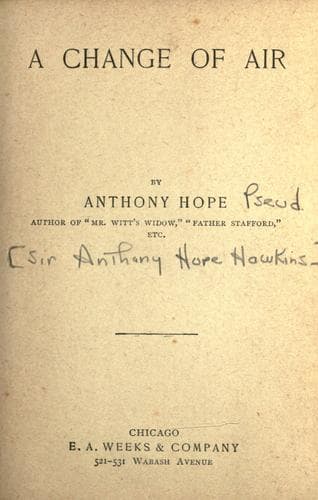
Country homes -- Fiction; England -- Social life and customs -- 19th century -- Fiction; Fame -- Fiction; Poets -- Fiction
A man may not unreasonably write what a young girl's father may very
reasonably not like her to read. Nevertheless, Dale Bannister felt
rather uncomfortable.
"Those were the shocking political ones, I suppose?" he asked.
"No; I read most of those. These were against religion and----"
"Well?"
"Morality, papa said," she answered, with the same grave look of
inquiry.
Dale rose and held out his hand, saying petulantly:
"Good-by, Miss Delane. You evidently don't think me fit to enter your
house."
"Oh, now I have made you angry. I have no right to speak about it, and,
of course, I know nothing about it. Only----"
"Only what?"
"Some things are right and some are wrong, aren't they?"
"Oh, granted--if we could only agree which were which."
"As to some we have been told. And I don't think that about you at
all--I really don't. Do wait till papa comes."
Dale sat down again. He had had his lecture; experience told him
that a lecture from such lecturers is tolerably often followed by a
petting, and the pettings were worth the lectures. In this instance
he was disappointed. Janet did not pet him, though she displayed much
friendliness, and he took his leave (for the Squire did not appear)
feeling somewhat put out.
Approbation and applause were dear to this man, who seemed to spend his
energies in courting blame and distrust; whatever people thought of his
writings, he wished them to be fascinated by him. He was not sure that
he had fascinated Miss Delane.
"I should like to see more of her," he thought. "She's rather an odd
girl."
CHAPTER VI.
=Littlehill Goes into Society.=
Mr. Delane's late return from his public duties was attributable simply
to Colonel Smith's obstinacy. He and the Colonel sat together on the
bench, and very grievously did they quarrel over the case of a man
who had been caught in the possession of the body of a fresh-killed
hare. They differed first as to the policy of the law, secondly as to
its application, thirdly as to its vindication; and when the Vicar
of Denborough, who was a county justice and present with them, sided
with the Squire on all these points, the Colonel angrily denounced the
reverend gentleman as a disgrace, not only to the judicial bench, but
even to his own cloth. All this took time, as did also the Colonel's
cross-examination of the constable in charge of the case, and it was
evening before the dispute was ended, and a fine imposed. The Colonel
paid the fine, and thus everyone, including the law and the prisoner,
was in the end satisfied.
Mr. Delane and the Colonel, widely and fiercely as they differed on
every subject under the sun, were very good friends, and they rode
home together in the dusk of a September evening, for their roads lay
the same way for some distance. Presently they fell in with Sir Harry
Fulmer, who had been to see Dale Bannister, and, in his absence, had
spent the afternoon with Nellie Fane and Philip Hume.
Public-domain text, read in full here on John Shaqi.
Reviews
Reviews
No reviews yet
Be the first to share your thoughts on this work.
Join the Discussion
Join the discussion
Sign in to leave a comment or review.
Sign InorCreate an account