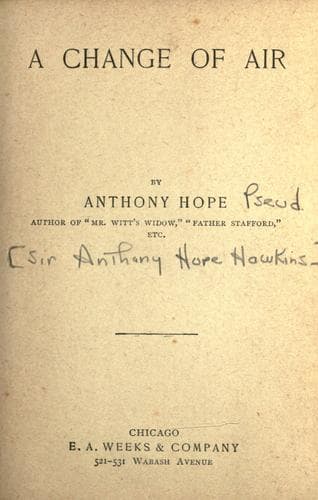
Country homes -- Fiction; England -- Social life and customs -- 19th century -- Fiction; Fame -- Fiction; Poets -- Fiction
The gentleman to whom they referred sat looking on at them with no
great pleasure, though they found one another entertaining enough to
prevent them noticing him. Dale Bannister said that his new friend took
life seriously, and the charge was too true for the Doctor's happiness.
Dale Bannister had taken hold of his imagination. He expected Dale to
do all he would give his life to see done, but could not do himself.
The effect of Dale was to be instantaneous, enormous, transforming
Denborough and its inhabitants. He regarded the poet much as a man
might look upon a benevolent volcano, did such a thing exist in the
order of nature. His function was, in the Doctor's eyes, to pour forth
the burning lava of truth and justice, wherewith the ignorance,
prejudice, and cruelty of the present order should be consumed and
smothered; let the flood be copious, scorching, and unceasing! The
Doctor could do little more than hail the blessed shower and declare
its virtues; but that he was ready to do at any cost. And the volcano
would not act! The eruptions were sadly intermittent. The hero, instead
of going forth to war, was capering nimbly in a lady's chamber, to the
lascivious pleasing of a lute; that is to say, he was talking trifles
to Tora Smith, with apparent enjoyment, forgetful of his mission,
ignoring the powers of darkness around. No light-spreading saying, no
swordflash had come from him all the evening. He was fiddling while
Rome was--waiting for the burning it needed so badly.
Perhaps it was a woebegone look about the Doctor that made Philip Hume
take the chair next him after dinner, while Dale was, still as if in
play, emitting anarchist sparks for the Colonel's entertainment.
"Is it possible," asked the Doctor in low, half-angry tones, "that he
thinks these people are any good--that they are sincere or thorough in
the matter? He's wasting his time."
"Well, well, my dear fellow, we must all dine, whatever our opinions."
"Oh, yes; we must dine, while the world starves."
"The bow can't be always stretched," said Philip, with a slight smile.
"You don't think, Hume, do you, that he's getting any less--less in
earnest, you know?"
"Oh, he wrote a scorcher this very morning."
"Did he? That's good news. Where is it to appear?"
"I don't know. He didn't write it on commission."
"His poems have such magnificent restlessness, haven't they? I can't
bear to see him idle."
"Poor Dale! You must give him some holidays. He likes pleasure like the
rest of us."
The Doctor sighed impatiently, and Philip looking at him anxiously,
laid a hand on his arm.
"Roberts," he said, "there is no need that you should be ground to
powder."
"I don't understand."
"I hope you never will. Your wife doesn't look very strong. Why don't
you give her a change?"
"A change? How am I to afford a change? Besides, who wants a change?
What change do most workers get?"
"Hang most workers! Your wife wants a change."
"I haven't got the money, anyhow."
Public-domain text, read in full here on John Shaqi.
Reviews
Reviews
No reviews yet
Be the first to share your thoughts on this work.
Join the Discussion
Join the discussion
Sign in to leave a comment or review.
Sign InorCreate an account