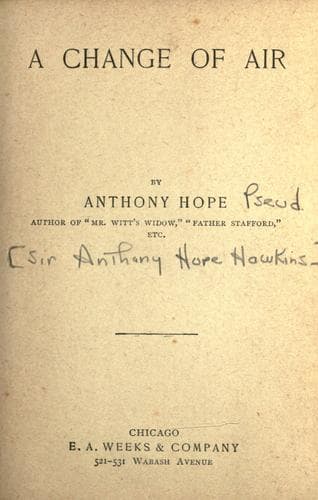
Country homes -- Fiction; England -- Social life and customs -- 19th century -- Fiction; Fame -- Fiction; Poets -- Fiction
"You and me and the Recorder 'ud drive up in the coach," said the
Mayor, with the air of one who regretfully pictures an impossible
ideal; "and the ladies--Mrs. Hedger and you, ma'am--was to follow in a
carriage and pair with a postilion--his Lordship 'ud send one for ye."
"I'd wear my ruby velvet," murmured Mrs. Johnstone in the voice of
soliloquy, "and my gold earrings."
"Well, I must be goin'," said the Mayor. "It's a cryin' shame you won't
come, Johnstone. What's that mad feller Roberts to you?"
"A dirty villain as starves his wife!" ejaculated Mrs. Johnstone, with
sudden violence.
The Alderman looked up with a start.
"Take a day to think it over," said the Mayor. "Take a day, ma'am;" and
he disappeared with a smile on his shrewd, good-tempered face.
There was silence for a moment after he went. The Alderman sat in
his chair, glancing at his wife out of the corner of his eye. Mrs.
Johnstone gazed fixedly at the shop-window. The Alderman looked at
her again: she was, he thought (with much justice), a fine woman; she
would look well in the ruby velvet and the gold earrings, and the
swells would wonder where old Johnstone picked up that strapping young
woman--for she was his junior by twenty years. The Alderman sighed, and
looked down again at his poster.
Presently Mrs. Johnstone stole quietly toward the window, the Alderman
covertly watching her. When she reached it, she threw a coquettish
glance over her shoulder at her elderly husband: did she not know, as
well as he, that she was a fine young woman?
Then she began to take Dale Bannister's books out of their place,
piling them behind the counter, and to tear down the bills and
placards. The Alderman sat and watched her, till she had finished her
task. Then he rose and thundered:
"Put them things back, Sally! Do you 'ear _me_? I aint going to be made
a fool of."
Probably Mrs. Johnstone was not so sure. She burst into tears and flung
her arms round the Alderman's neck.
"There! what's there to cry about?" said he, drawing her on to his knee.
While the Mayor was still in the shop, James Roberts had gone home to
his midday meal. He ate it with good appetite, not knowing who had paid
for it, and not noticing his wife's terror lest he should ask her.
After the meal he went to his study and read some of Dale's poetry,
declaiming it loudly and with fury, while Ethel listened with the
horror that had begun to gain on her increasing and increasing as she
listened. She was afraid of him now--afraid most for him, but also for
the child and herself; and she thanked Heaven every time he went out
peacefully, and again when he came back unhurt.
It was about four when the Doctor took his hat and walked down the
street to resume his patrol. To his amazement, the window was bare, the
books gone, the placards and posters all torn down. With an oath he
rushed into the shop, and found the Alderman sitting behind a pile of
volumes, on the top of which lay an envelope addressed to himself.
Public-domain text, read in full here on John Shaqi.
Reviews
Reviews
No reviews yet
Be the first to share your thoughts on this work.
Elsewhere in the archive
Join the Discussion
Join the discussion
Sign in to leave a comment or review.
Sign InorCreate an account