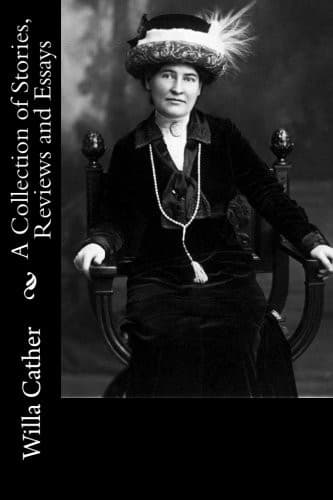
A Collection of Stories, Reviews and EssaysCather, Willa
General
A Collection of Stories, Reviews and Essays
Cather, Willa
Essays; Short stories; United States -- Social life and customs -- Fiction
The Shakespeare society of New York, which is really about the only
useful literary organization in this country, is making vigorous
efforts to redress an old wrong and atone for a long neglect.
Sunday, Sept. 22, it held a meeting at the Poe cottage on
Kingsbridge road near Fordham, for the purpose of starting an
organized movement to buy back the cottage, restore it to its
original condition and preserve it as a memorial of Poe. So it has
come at last. After helping build monuments to Shelley, Keats and
Carlyle we have at last remembered this man, the greatest of our
poets and the most unhappy. I am glad that this movement is in the
hands of American actors, for it was among them that Poe found his
best friends and warmest admirers. Some way he always seemed to
belong to the strolling Thespians who were his mother's people.
Among all the thousands of life's little ironies that make history
so diverting, there is none more paradoxical than that Edgar Poe
should have been an American. Look at his face. Had we ever another
like it? He must have been a strange figure in his youth, among
those genial, courtly Virginians, this handsome, pale fellow,
violent in his enthusiasm, ardent in his worship, but spiritually
cold in his affections. Now playing heavily for the mere excitement
of play, now worshipping at the shrine of a woman old enough to be
his mother, merely because her voice was beautiful; now swimming six
miles up the James river against a heavy current in the glaring sun
of a June midday. He must have seemed to them an unreal figure, a
sort of stage man who was wandering about the streets with his mask
and buskins on, a theatrical figure who had escaped by some strange
mischance into the prosaic daylight. His speech and actions were
unconsciously and sincerely dramatic, always as though done for
effect. He had that nervous, egotistic, self-centered nature common
to stage children who seem to have been dazzled by the footlights
and maddened by the applause before they are born. It was in his
blood. With the exception of two women who loved him, lived for him,
died for him, he went through life friendless, misunderstood, with
that dense, complete, hopeless misunderstanding which, as Amiel
said, is the secret of that sad smile upon the lips of the great.
Men tried to befriend him, but in some way or other he hurt and
disappointed them. He tried to mingle and share with other men, but
he was always shut from them by that shadow, light as gossamer but
unyielding as adamant, by which, from the beginning of the world,
art has shielded and guarded and protected her own, that
God-concealing mist in which the heroes of old were hidden, immersed
in that gloom and solitude which, if we could but know it here, is
but the shadow of God's hand as it falls upon his elect.
Public-domain text, read in full here on John Shaqi.
Reviews
Reviews
No reviews yet
Be the first to share your thoughts on this work.
Elsewhere in the archive
Join the Discussion
Join the discussion
Sign in to leave a comment or review.
Sign InorCreate an account