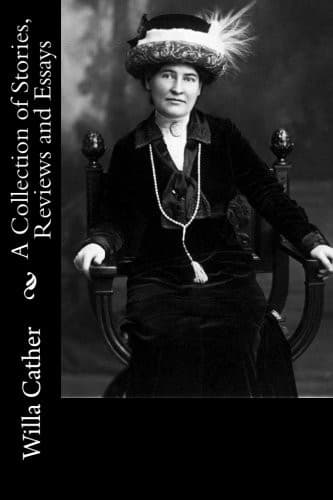
A Collection of Stories, Reviews and EssaysCather, Willa
General
A Collection of Stories, Reviews and Essays
Cather, Willa
Essays; Short stories; United States -- Social life and customs -- Fiction
We lament our dearth of great prose. With the exception of Henry
James and Hawthorne, Poe is our only master of pure prose. We lament
our dearth of poets. With the exception of Lowell, Poe is our only
great poet. Poe found short story writing a bungling makeshift. He
left it a perfect art. He wrote the first perfect short stories in
the English language. He first gave the short story purpose, method,
and artistic form. In a careless reading one can not realize the
wonderful literary art, the cunning devices, the masterly effects
that those entrancing tales conceal. They are simple and direct
enough to delight us when we are children, subtle and artistic
enough to be our marvel when we are old. To this day they are the
wonder and admiration of the French, who are the acknowledged
masters of craft and form. How in his wandering, laborious life,
bound to the hack work of the press and crushed by an ever-growing
burden of want and debt, did he ever come upon all this deep and
mystical lore, this knowledge of all history, of all languages, of
all art, this penetration into the hidden things of the East? As
Steadman says, "The self training of genius is always a marvel." The
past is spread before us all and most of us spend our lives in
learning those things which we do not need to know, but genius
reaches out instinctively and takes only the vital detail, by some
sort of spiritual gravitation goes directly to the right thing.
Poe belonged to the modern French school of decorative and
discriminating prose before it ever existed in France. He rivalled
Gautier, Flaubert and de Maupassant before they were born. He
clothed his tales in a barbaric splendor and persuasive unreality
never before heard of in English. No such profusion of color,
oriental splendor of detail, grotesque combinations and mystical
effects had ever before been wrought into language. There are tales
as grotesque, as monstrous, unearthly as the stone griffens and
gargoyles that are cut up among the unvisited niches and towers of
Notre Dame, stories as poetic and delicately beautiful as the golden
lace work chased upon an Etruscan ring. He fitted his words together
as the Byzantine jewelers fitted priceless stones. He found the
inner harmony and kinship of words. Where lived another man who
could blend the beautiful and the horrible, the gorgeous and the
grotesque in such intricate and inexplicable fashion? Who could
delight you with his noun and disgust you with his verb, thrill you
with his adjective and chill you with his adverb, make you run the
whole gamut of human emotions in a single sentence? Sitting in that
miserable cottage at Fordham he wrote of the splendor of dream
palaces beyond the dreams of art. He hung those grimy walls with
dream tapestries, paved those narrow halls with black marble and
polished onyx, and into those low-roofed chambers he brought all the
treasured imagery of fancy, from the "huge carvings of untutored
Public-domain text, read in full here on John Shaqi.
Reviews
Reviews
No reviews yet
Be the first to share your thoughts on this work.
Elsewhere in the archive
Join the Discussion
Join the discussion
Sign in to leave a comment or review.
Sign InorCreate an account