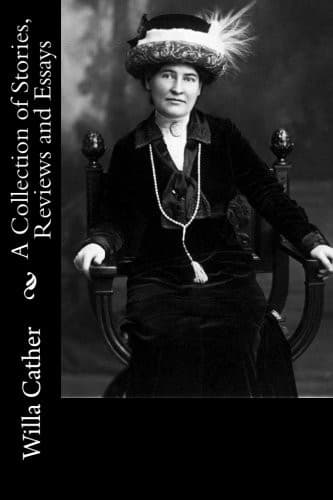
A Collection of Stories, Reviews and EssaysCather, Willa
General
A Collection of Stories, Reviews and Essays
Cather, Willa
Essays; Short stories; United States -- Social life and customs -- Fiction
I have wondered so often how he did it. How he kept his purpose
always clean and his taste always perfect. How it was that hard
labor never wearied nor jaded him, never limited his imagination,
that the jarring clamor about him never drowned the fine harmonies
of his fancy. His discrimination remained always delicate, and from
the constant strain of toil his fancy always rose strong and
unfettered. Without encouragement or appreciation of any sort,
without models or precedents he built up that pure style of his that
is without peer in the language, that style of which every sentence
is a drawing by Vedder. Elizabeth Barrett and a few great artists
over in France knew what he was doing, they knew that in literature
he was making possible a new heaven and a new earth. But he never
knew that they knew it. He died without the assurance that he was or
ever would be understood. And yet through all this, with the whole
world of art and letters against him, betrayed by his own people, he
managed to keep that lofty ideal of perfect work. What he suffered
never touched or marred his work, but it wrecked his character.
Poe's character was made by his necessity. He was a liar and an
egotist; a man who had to beg for bread at the hands of his
publishers and critics could be nothing but a liar, and had he not
had the insane egotism and conviction of genius, he would have
broken down and written the drivelling trash that his countrymen
delighted to read. Poe lied to his publishers sometimes, there is no
doubt of that, but there were two to whom he was never false, his
wife and his muse. He drank sometimes too, when for very ugly and
relentless reasons he could not eat. And then he forgot what he
suffered. For Bacchus is the kindest of the gods after all. When
Aphrodite has fooled us and left us and Athene has betrayed us in
battle, then poor tipsy Bacchus, who covers his head with vine
leaves where the curls are getting thin, holds out his cup to us and
says, "forget." It's poor consolation, but he means it well.
Public-domain text, read in full here on John Shaqi.
Reviews
Reviews
No reviews yet
Be the first to share your thoughts on this work.
Elsewhere in the archive
Join the Discussion
Join the discussion
Sign in to leave a comment or review.
Sign InorCreate an account