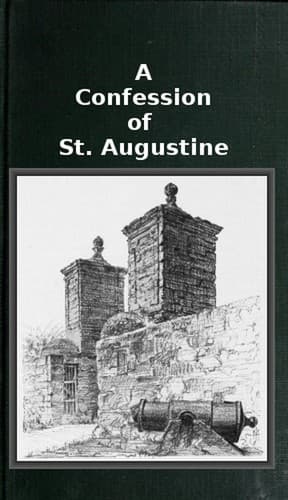
A Confession of St. AugustineHowells, William Dean
History
A Confession of St. Augustine
Howells, William Dean
Saint Augustine (Fla.) -- Guidebooks
THOUGH it was in 1513 that Ponce de Leon came sailing from Puerto Rico
to find the waters of youth, it was not till 1565 that the terrible, the
cruel (yet no more responsibly cruel or terrible than a tiger) Pedro
Menendez de Aviles came in sight of those sands, and fell upon the
weak-minded, fever-wasted Huguenots whom he found in possession and
captured and slaughtered these heretics, and put Spain and God in
keeping of their own again. The tale need hardly be repeated here; once
for all the pious, pitiless Pedro has told it for himself to his king,
the pious, pitiless Philip, in a letter found among the colonial
archives at Seville and included among other curious documents in _The
Unknown History of Our Country_, as it is entitled by the lady of St.
Augustine who compiled it. The Lutherans, as Menendez, like all the
Spaniards of his time, called the Huguenots, were by the laws and usage
of the time illegally there, and it was his duty as a loyal subject and
a good Christian to destroy them. He was much concerned besides in
saving the souls of the savages from these Lutherans who had the gift of
insinuating affection for themselves among the Indians along with their
heretical instruction.
There is something wonderful in the moral security of the murderer’s
account of his crime, which was not a private or personal murder so much
as a political act duly avenged on the Spaniards by the French, when
their turn came. For the present the French were miserably officered;
they were spent by hunger and sickness; the winds and waves were leagued
with the Spaniards against them; and they gave themselves up to
Menendez, as he had fairly stipulated, without any promise of mercy.
Then he took them out from their comrades’ sight by tens till he had put
them all to death, except a few who proved to be of the true faith just
in time, and other few who were such excellent artificers that their
skill could not be spared by the captors who spared their lives. There
is a touch in the fashion of their taking off by Menendez worthy of an
hidalgo who was born in Granada and who knew how a gentleman should
behave in such a matter. He had their hands bound, and led them aside,
and then, to spare their feelings, he had them stabbed in the back.
Public-domain text, read in full here on John Shaqi.
Reviews
Reviews
No reviews yet
Be the first to share your thoughts on this work.
Join the Discussion
Join the discussion
Sign in to leave a comment or review.
Sign InorCreate an account